Quick answer
Before freezing weather, disconnect every hose, splitter, timer, nozzle, and accessory from the outdoor faucet and drain and store the hose. Identify the home's main water shutoff for emergencies. If the faucet has a known, dedicated indoor shutoff, close it gently, then open the outdoor faucet so the isolated section can drain; leave it in the position specified by the plumbing or faucet manufacturer. If there is no dedicated shutoff or you are unsure which valve serves the faucet, do not guess or close the whole-house water solely for this task. Check for a drip, crack, loose body, or water inside the wall. After the faucet and surrounding area are dry, fit a molded insulating cover without forcing the handle or trapping a hose. Frost-free faucets still need all attachments removed so they can drain. Follow the installer or manufacturer for irrigation and backflow equipment; compressed-air blowout is professional work. Do not add automotive antifreeze, use a torch, force a seized valve, or heat a wall. Call a licensed plumber for a leaking or damaged faucet, an inaccessible or uncertain shutoff, a frozen line, reduced flow after a freeze, water inside the wall, or any burst pipe.
Safety before you start
Work only from stable ground in dry conditions. Do not climb, enter an unsafe crawl space, force a corroded valve, loosen a pressurized fitting, or use pliers on a faucet that will not move. Water near electrical equipment requires power isolation by a qualified person. Never thaw plumbing with a torch, open flame, kerosene or propane heater, or charcoal device, and never put automotive antifreeze into potable or landscape water lines. If a pipe has frozen, know that it may already be split; shut off water if leakage appears and call a licensed plumber. Irrigation blowout uses compressed air and can injure people or damage components when done incorrectly.
What you need
- Work gloves and eye protection
- Bucket and absorbent towel
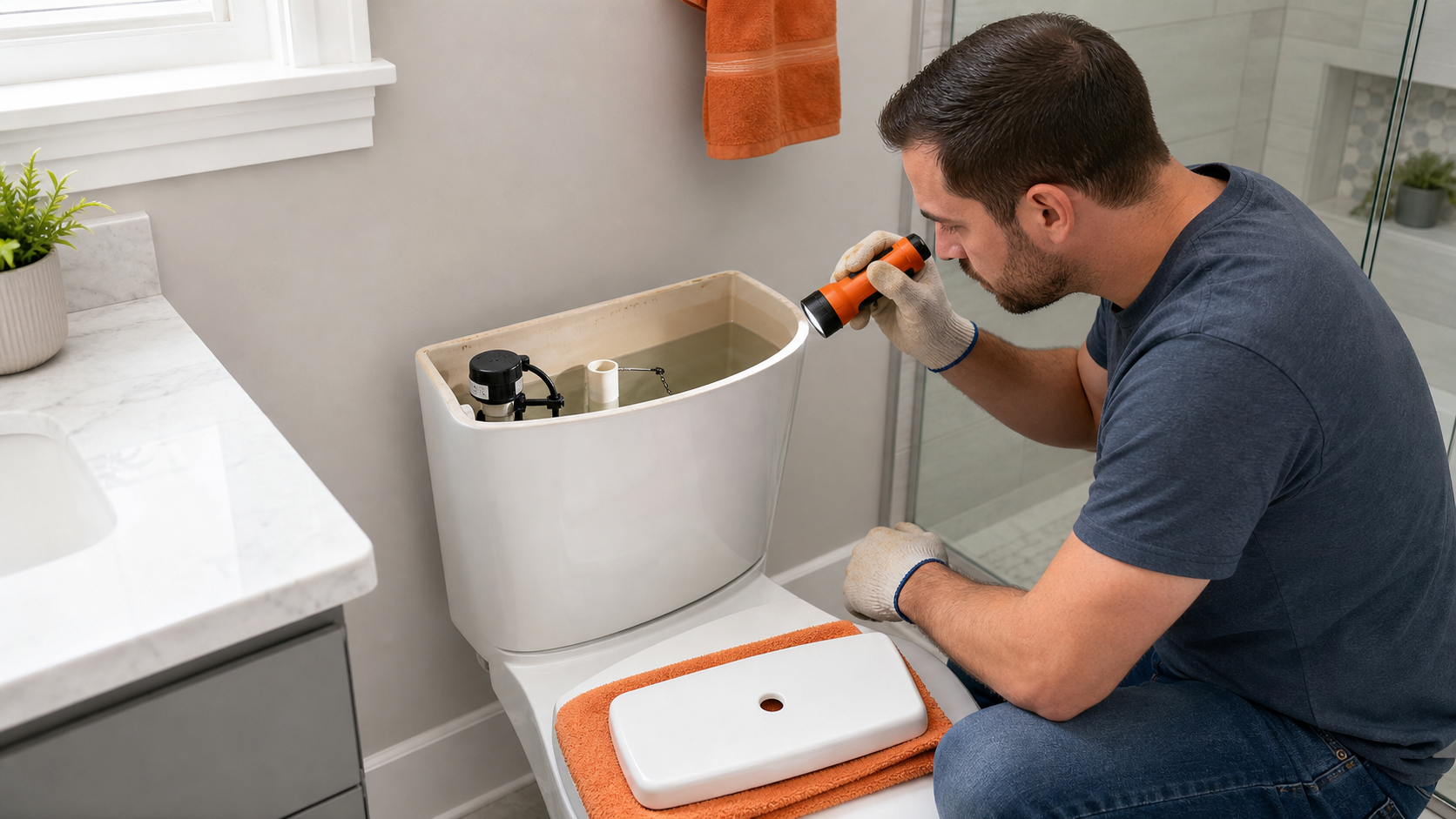
- Flashlight for the faucet and known indoor shutoff
- Molded foam outdoor-faucet cover sized to the fixture
- Pipe insulation for accessible exposed piping
- Labels for the dedicated and whole-house shutoff valves
Step-by-step
Locate emergency water control first
Find and label the home's normal whole-house shutoff before cold weather. Do not operate a street-side utility valve. If the home has a dedicated indoor valve for the outdoor faucet, confirm its service from existing labels, plans, or a plumber rather than guessing among valves.
Remove every hose and attachment
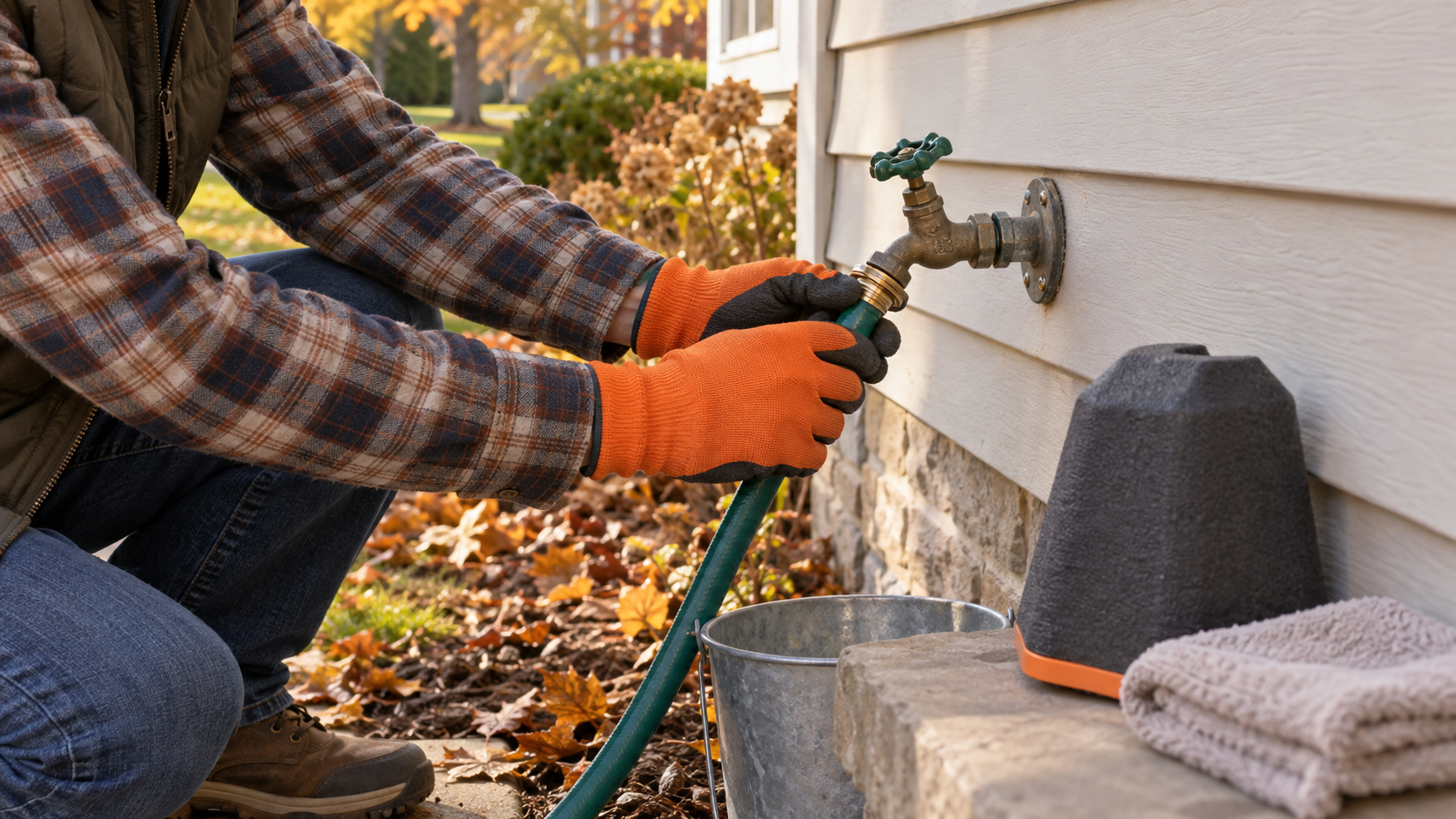
Unscrew the garden hose, splitter, timer, quick connector, vacuum accessory, and nozzle while the system is unfrozen. A connected accessory can hold water at the outlet and prevent a frost-free faucet from draining. Do not force a seized coupling; call a plumber before the freeze.
Drain and store the hose
Lay the hose downhill or stretch it out to drain without whipping the ends, then coil it loosely in a protected location. Empty nozzles and timers according to their instructions. A water-filled hose can split and can keep pressure against the faucet.
Inspect for leaks and movement
With the wall and ground visible, briefly operate the faucet only if temperatures are above freezing and the fixture is undamaged. Check the handle, stem, outlet, wall penetration, and nearby interior area for drips or movement. Repair leakage before winter rather than hiding it under a cover.
Use a dedicated shutoff only when it is known
If a verified indoor valve serves only this faucet, close it gently. Do not force a stuck valve or loosen a packing nut. Homes with frost-free faucets or different plumbing layouts may not use this arrangement, so follow the exact fixture or installer guidance.
Drain the isolated outdoor section
After a dedicated valve is closed, open the outdoor faucet and let the trapped water drain into a bucket. Leave the outside faucet open only when that matches the plumbing design and local or manufacturer guidance. Do not open an unfamiliar drain cap or bleeder under pressure.
Insulate the dry faucet and exposed pipe
Fit a molded foam cover over the dry faucet without reconnecting any attachment or stressing the handle. Insulate accessible piping in unheated spaces with material made for pipes, without covering combustion-air openings, furnace or water-heater vents, or electrical hazards.
Escalate irrigation and freeze damage
Winterize sprinklers, backflow assemblies, pools, and other outdoor systems only by their manufacturer or installer instructions. Use a qualified irrigation or plumbing professional for compressed-air blowout, buried leaks, frozen piping, reduced flow, or water appearing after a thaw.
Conventional and frost-free faucets drain differently
A conventional hose bib may have a dedicated shutoff inside the heated part of the building so the exposed section can be isolated and drained. A frost-free or freeze-resistant faucet places its closing point farther inside, but it can drain only when the hose and attachments are removed and the installation slopes correctly.
Do not identify the type from handle shape alone or assume the word frost-free means freeze-proof. Use the model or installation information when available, and have a plumber identify an uncertain arrangement before operating hidden or corroded valves.
The connected hose is the first preventable risk
The American Red Cross and municipal water departments consistently advise removing, draining, and storing outdoor hoses before cold weather. Trapped water expands as it freezes and can place pressure on the faucet and the pipe behind the wall.
A foam cover adds insulation but does not drain a hose, stop an active leak, correct a badly sloped frost-free faucet, or replace a working shutoff. Use the cover as one layer after the fixture is disconnected and checked.
Low flow after a freeze can mean hidden damage
If the faucet produces only a trickle after freezing weather, suspect ice or damage and avoid forcing the handle or applying flame. A frozen pipe may leak only after it thaws, so know the main shutoff location and watch the wall, ceiling below, crawl space, or basement for water.
The Red Cross advises gentle heat only on an accessible frozen section and a licensed plumber when the location is inaccessible or will not thaw. For an outdoor faucet line inside a wall, professional diagnosis is the safer threshold.
Common questions
Do frost-free outdoor faucets still need winterizing?
Yes. Remove every hose and attachment so the faucet can drain, inspect for leaks, and follow the exact manufacturer or installer instructions. Frost-free does not mean immune to trapped water or poor installation.
Should I leave the outdoor faucet open all winter?
Only when a verified dedicated indoor shutoff has isolated the line and the plumbing or faucet guidance calls for the outside valve to remain open. Different systems drain differently, so do not use this as a universal rule.
Can I use automotive antifreeze in an outdoor line?
No. The Red Cross says not to put antifreeze into sprinkler or pool supply lines unless specifically directed, because it is harmful to people, pets, wildlife, and landscaping. Potable plumbing and irrigation winterization should follow system-specific guidance.
Prefer to hire a professional?
Find a local plumbing company
Browse business profiles with published services, coverage, and direct contact information in the FixMate directory.
Sources and further reading
This article is original FixMate editorial content informed by the references below. Always follow manufacturer instructions and local code.