Quick answer
Start by deciding whether the bowl rises dangerously, drains slowly, or simply gets too little water and motion. Do not flush again if the water climbs; close the toilet's supply valve and use a flange plunger only when there is safe room in the bowl. If there is no overflow risk, remove the tank lid, set it on a towel, and compare the tank water level with the manufacturer's molded or printed line. Watch one flush to see whether the handle lifts the flapper or canister fully and whether the refill tube remains routed as the manual shows. Mineral-blocked rim holes can weaken bowl wash, while a trapway clog, waste-line restriction, or blocked vent can prevent evacuation. Clean only by the fixture manufacturer's method and never mix drain cleaner, bleach, acids, vinegar, or other products. Call a plumber for recurring clogs, multiple slow fixtures, gurgling, sewage odor, wastewater backup, a suspected vent or sewer problem, a cracked toilet, or any leak at the floor.
Safety before you start
Stop flushing if the bowl water rises, sewage appears, or another drain backs up. Close the toilet's local supply valve if it turns easily; do not force a corroded valve. Keep the floor dry, wear gloves and eye protection for contaminated water, and disinfect according to public-health guidance. Never mix cleaning products or add chemical drain opener to a toilet; splashing, toxic gas, fixture damage, and later exposure for a plumber can result. Do not remove the toilet, open a wall or floor, climb onto a roof to clear a vent, or cable a shared drain unless you are qualified. A cracked bowl or tank, leaking base, repeated blockage, multiple affected fixtures, gurgling, sewage odor, or wastewater backup needs a licensed plumber.
What you need
- Exact toilet model or manufacturer instructions, if available
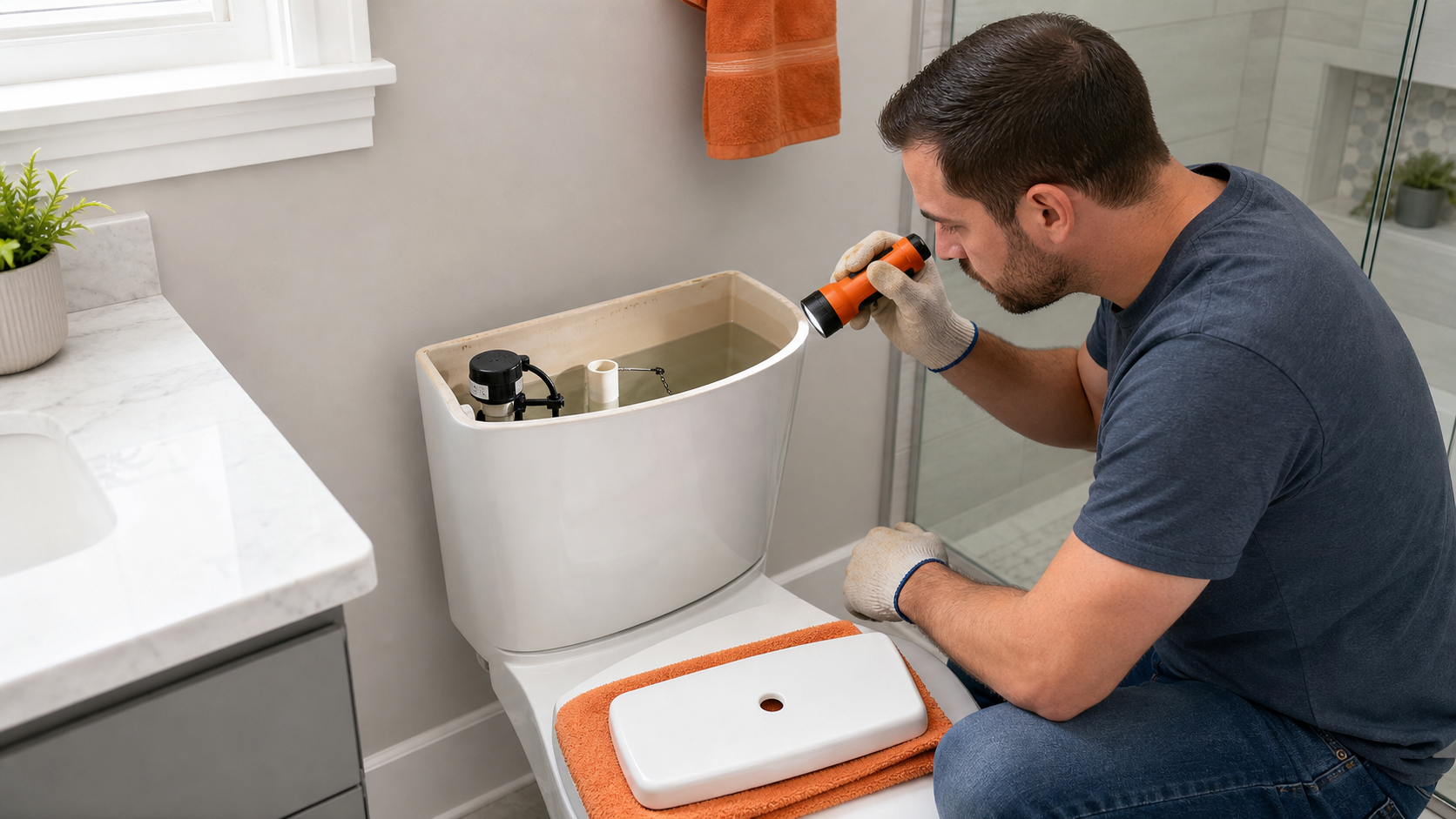
- Flashlight
- Absorbent towels and household gloves
- Flange-style toilet plunger
- Plastic mirror for viewing under the bowl rim
- Manufacturer-approved mineral-deposit cleaner only if instructed
Step-by-step
Read the bowl's first movement
Make one observation, not a series of test flushes. If the water rises toward the rim, stop and close the local supply valve if it moves easily. A bowl that rises or drains slowly points toward a trapway or drain restriction; a normal drain with weak swirl points more toward tank delivery or rim flow.
Inspect the tank water level
Set the tank lid on a padded towel where it cannot fall. Compare the resting water with the model's waterline mark, usually inside the tank or on the overflow tube. A low level means less water and energy are available for the flush. Adjust only by the fill-valve procedure in the exact toilet instructions.
Watch the handle, chain, and flush valve
With hands clear, operate one flush and watch whether the chain has excessive slack, catches, or fails to lift the flapper or canister fully. Do not shorten a chain until the manual confirms the correct arrangement; too little slack can hold the seal open and create a continuous leak.
Check refill-tube routing
Confirm the small refill tube is attached and routed to the overflow opening exactly as the manufacturer shows, without being pushed so far down that it can siphon. This tube restores bowl water after a flush; incorrect routing can leave the next flush starting with too little water.
Plunge a suspected simple clog
If the bowl has safe headroom and the symptom suggests a trapway clog, use a toilet-specific flange plunger with controlled strokes and enough water to cover the cup. Stop if the bowl climbs, the toilet rocks, water appears at the base, or plunging does not restore a normal test flush.
Inspect rim flow without mixing chemicals
Use a plastic mirror and flashlight to look for mineral deposits at the rim holes or jet. Follow only the toilet maker's cleaning method and approved product. Do not combine a mineral remover with bleach, acid, vinegar, drain cleaner, or any product already in the bowl or tank.
Escalate drain and vent clues
A clear-looking toilet that still evacuates poorly may have a deeper trapway obstruction, restricted waste line, or vent problem. Stop DIY work and call a plumber when the symptom recurs, affects other fixtures, produces gurgling or sewage odor, causes backup, or requires removing the toilet or accessing the vent.
The water pattern separates two problem paths
- Bowl rises, then drains slowly: suspect a trapway or downstream restriction.
- Weak swirl with normal draining: check tank level, flush-valve travel, refill routing, and rim flow.
- Tank fills slowly: verify the supply valve is open and use the fill-valve manual; do not disassemble a pressurized connection while water is on.
- Multiple fixtures gurgle or drain slowly: stop and call a plumber for a branch, stack, or sewer diagnosis.
- Water at the toilet base: stop using it; a failed seal, crack, or unstable mounting needs repair before floor damage spreads.
Rim deposits reduce delivery, not drain capacity
Kohler identifies obstructed rim holes as one cause of poor rim wash and documents a model-specific mineral-removal procedure. That is different from a clog in the bowl trapway or waste line, so chemical treatment of the rim should not be treated as a universal fix for slow evacuation.
Use the exact fixture guidance because finishes, internal passages, and approved cleaners vary. If a cleaner has already been added and you do not know what it is, do not add anything else; ventilate the room, avoid splashing, and tell any plumber what may be present.
Recurring weakness can be a system warning
Kohler notes that poor evacuation can continue when a vent is restricted even after the trapway is clear. Roof-vent access and concealed drain diagnosis introduce fall, contamination, and property-damage risks, so they are professional work rather than the next DIY step.
EPA WaterSense recommends investigating toilets that will not flush or run continuously and contacting a plumber when needed. A plumber is the right next call for repeat clogs, multiple affected drains, sewage odor, wastewater backup, a leak at the floor, or a fixture that rocks or is cracked.
Common questions
Will more tank water always make the toilet flush better?
No. Set the water only to the toilet's specified line. Overfilling can send water into the overflow tube and waste water, while a weak flush may instead come from the flush mechanism, rim passages, trapway, waste line, or vent.
Can I pour drain cleaner into a weak-flushing toilet?
No. Chemical drain opener can splash, damage components, react with other products, and expose anyone who later plunges or services the toilet. Use mechanical diagnosis and manufacturer-approved cleaning only.
When is a weak flush a plumber problem?
Call a plumber for repeated clogs, more than one slow or gurgling fixture, sewage odor, wastewater backup, a suspected vent or sewer restriction, a leaking or rocking toilet, a crack, or any repair requiring fixture removal.
Prefer to hire a professional?
Find a local plumbing company
Browse business profiles with published services, coverage, and direct contact information in the FixMate directory.
Sources and further reading
This article is original FixMate editorial content informed by the references below. Always follow manufacturer instructions and local code.