Quick answer
Compare the kitchen faucet with nearby fixtures and compare full-cold with full-hot flow. If the whole home changed suddenly, or pressure pulses, call the water utility or a plumber rather than dismantling the faucet. If only this faucet has weak hot and cold flow, verify that the accessible shutoff valves have not been partly closed and inspect the aerator or spray-head screen using the exact faucet instructions. Moen identifies the aerator as the first check for overall low flow on conventional kitchen faucets, and its pullout/pulldown guidance separates good hose flow from a blocked screen or spray wand. Delta says mineral deposits can be soaked from a removable aerator with white vinegar and the parts reassembled in their original order. Stop for a seized hidden aerator, leaking valve, corroded supply line, weak flow from only hot or only cold after basic checks, or any work requiring a cartridge, supply hose, wall valve, or pressure measurement.
Safety before you start
Clear the sink and protect the drain before removing small parts. Keep the faucet off whenever an aerator or spray head is loose, and never leave a hose unsecured where it can retract or spray into the cabinet. Do not force a hidden aerator without its correct key, twist braided supply lines, disconnect plumbing under pressure, alter a flow restrictor, or disassemble a cartridge or touchless solenoid by guesswork. Stop and close the local shutoff valves for any leak; if a valve will not close, the cabinet is wet near electricity, piping is corroded, or pressure is abnormal across the home, use a plumber or the water utility.
What you need
- Exact faucet model or a clear photo for manufacturer identification
- Matching owner guide and aerator key if specified
- White towel and small bowl for parts
- Soft toothbrush
- White vinegar for manufacturer-approved mineral cleaning
- Flashlight
- Phone camera to record gasket and screen order
Step-by-step
Decide whether the problem is one faucet or the home
Run a nearby bathroom faucet briefly and ask whether outdoor or other fixtures changed at the same time. Low flow at several fixtures, sudden pressure loss after utility work, spurting, discolored water, or a meter or pump issue belongs with the water utility, building manager, well professional, or plumber.
Compare hot, cold, spout, and spray behavior
At the kitchen faucet, compare full cold with full hot, then compare the spout with the side spray or pull-down head if fitted. Moen separates temperature-specific reduction from low flow affecting both sides; that distinction helps avoid cleaning the aerator for a hot-side supply or cartridge problem.
Inspect without moving supply lines
Look under the sink for active drips, corrosion, kinked hoses, or a shutoff handle that was recently moved. Confirm only by sight and gentle touch that accessible shutoffs are in their normal open position. Do not force a stuck valve or rotate a hose connection.
Identify the aerator or spray-head design
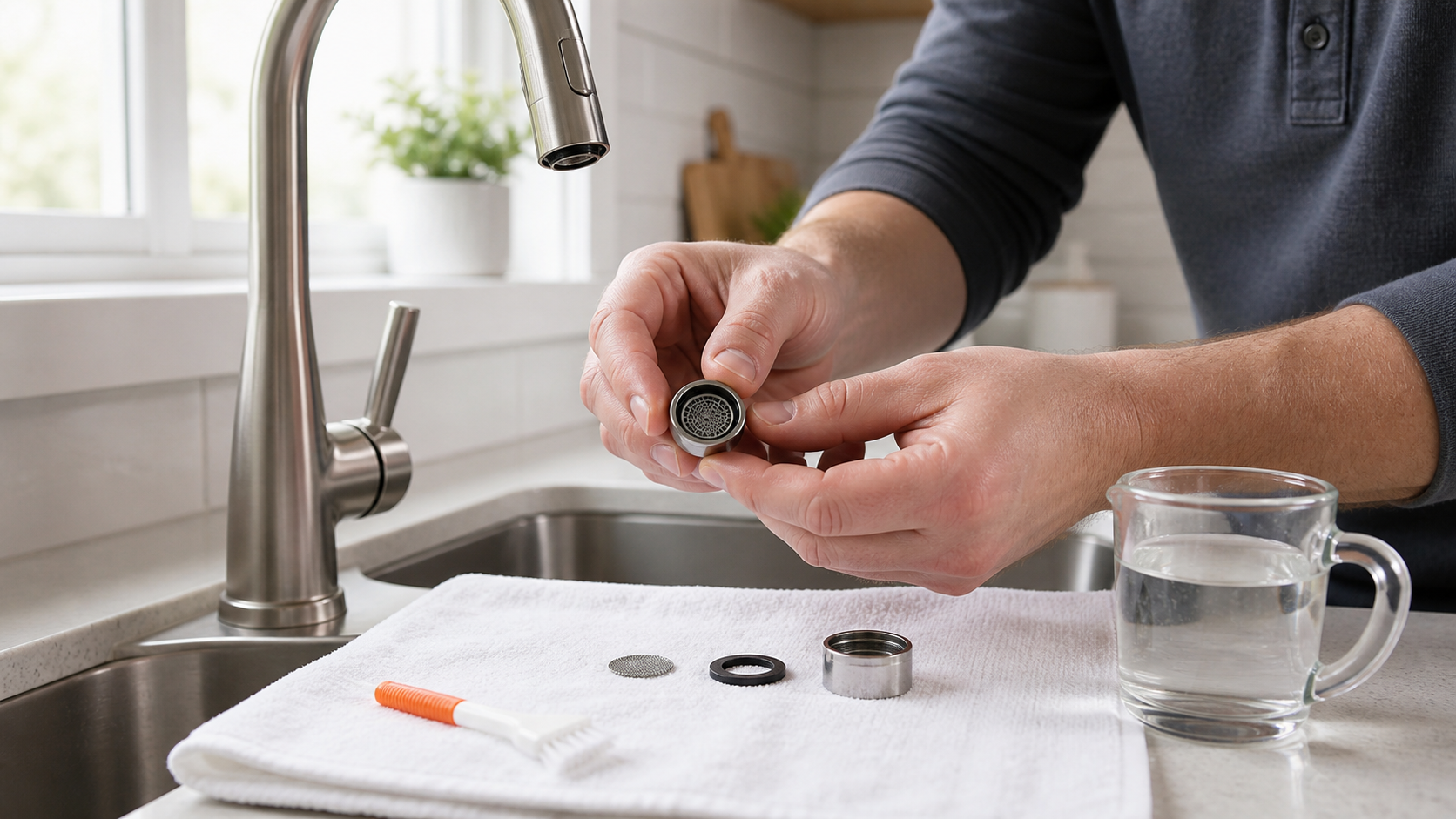
Use the faucet model instructions to locate a conventional threaded aerator, hidden cache aerator, pull-down screen washer, or another outlet device. Cover the drain, spread a towel, and photograph the assembly before removal. Use the manufacturer key when required rather than pliers on a hidden insert.
Clean removable parts without changing them
Remove loose debris with a soft brush. If the manufacturer permits it, soak mineral-coated aerator pieces in white vinegar, keeping gaskets and finishes out unless the guide allows them. Delta recommends tracking the order of the small components and hand-tightening the reassembled aerator.
Test once and watch for leaks
Reinstall every screen, gasket, and aerator in its original orientation. Turn the faucet on gradually while watching the outlet and cabinet. A restored even stream supports a blocked outlet diagnosis. Shut the faucet and local valves immediately if any connection leaks.
Escalate the result instead of opening the valve body
If flow remains weak, document whether it affects hot, cold, both, the spout, or the spray. Moen's guide can then distinguish aerator, diverter, spray-wand, screen, or cartridge paths by faucet style. Internal cartridges, solenoids, failed shutoffs, supply hoses, and house-pressure problems require model-specific parts and often a plumber.
The flow pattern is more useful than the word pressure
- Weak hot and cold at one plain spout: start with the aerator and local shutoff position.
- Weak only on hot or only on cold: suspect that side's supply path or faucet cartridge, not general house pressure.
- Good hose flow with a weak pull-down head: inspect the head's user-serviceable screen or outlet device.
- Good side-spray flow with weak spout flow: use the model guide to evaluate the spout aerator or diverter path.
- Weak flow at multiple fixtures: stop at the faucet and investigate the building or utility supply professionally.
An aerator is a calibrated outlet, not disposable packing
The screens and flow-control pieces shape the stream and limit flow by design. Removing them permanently can create splashing, waste water, violate product specifications, and damage some faucet internals.
EPA WaterSense recommends periodic inspection for scale and cleaning or replacement when buildup restricts flow. Match a replacement to the faucet and intended flow rather than installing an arbitrary insert.
Stop before a low-flow check becomes water damage
Seized shutoffs, green corrosion, wet cabinet wiring, bulging hoses, leaking connections, and sudden whole-home changes are not aerator-cleaning jobs. Close water only with a valve that operates normally and call the appropriate professional.
A plumber should also handle pressure measurement, pressure-reducing valves, well equipment, concealed restrictions, cartridge replacement when identification is uncertain, and any repair requiring supply-line disconnection. Give them the symptom map and faucet model to shorten diagnosis.
Common questions
Why is only the kitchen faucet losing pressure?
If other fixtures are normal, the restriction is likely local to the faucet or its supplies. Compare hot and cold, verify accessible shutoffs, and inspect the model-specific aerator or spray screen before assuming a house-pressure problem.
Can I soak a kitchen faucet aerator in vinegar?
Delta recommends white vinegar for stubborn mineral deposits on removable aerator pieces. Follow the exact faucet guide, keep finishes and incompatible materials out of the soak, and preserve the order of screens and gaskets.
Should I remove the faucet flow restrictor for more pressure?
No. Clean or replace the specified aerator or outlet device rather than deleting calibrated parts. Removing a restrictor can waste water, alter spray behavior, violate specifications, or damage the faucet.
Prefer to hire a professional?
Find a local plumbing company
Browse business profiles with published services, coverage, and direct contact information in the FixMate directory.
Sources and further reading
This article is original FixMate editorial content informed by the references below. Always follow manufacturer instructions and local code.