Quick answer
Record whether the noise starts with the fan, only during cooling, during wind, or when water drips outside. Frigidaire says rushing air, high-pitched compressor chatter, refrigerant gurgling or hissing, and water pinging or swishing can be normal, while vibration can come from the wall, window, or installation. Turn the unit off and unplug it, then clean the removable filter by the model instructions and check only visible grille, side-panel, curtain, and window contact. Compare the installed position and pitch with the exact installation manual; do not loosen mounting hardware or move a heavy unit alone. Never drill the base pan. Stop for grinding, repeated hard impacts, a shifting cabinet, hot plug, tripped breaker, smoke, damaged cord, indoor leaking, ice, or suspected refrigerant trouble.
Safety before you start
A window air conditioner is heavy and can fall. Do not loosen the sash, bracket, screws, or exterior support unless the exact manual permits the task and a capable helper secures the unit. Switch it off and unplug from a dry, reachable receptacle before touching the filter, grille, or side panels. Never remove the metal cabinet, reach through vents, drill the base pan, bend coil fins, probe wiring, open the refrigerant system, or bypass a plug-mounted safety device. Stop if the outlet or plug is hot, the breaker trips, water reaches electrical parts, the unit shifts, or outside access would require leaning from a window or working at height.
What you need
- Exact model number, owner’s manual, and installation instructions
- Phone for a short sound recording
- Flashlight
- Soft brush or vacuum attachment approved for the removable filter
- Mild soap and water only if the filter instructions permit washing
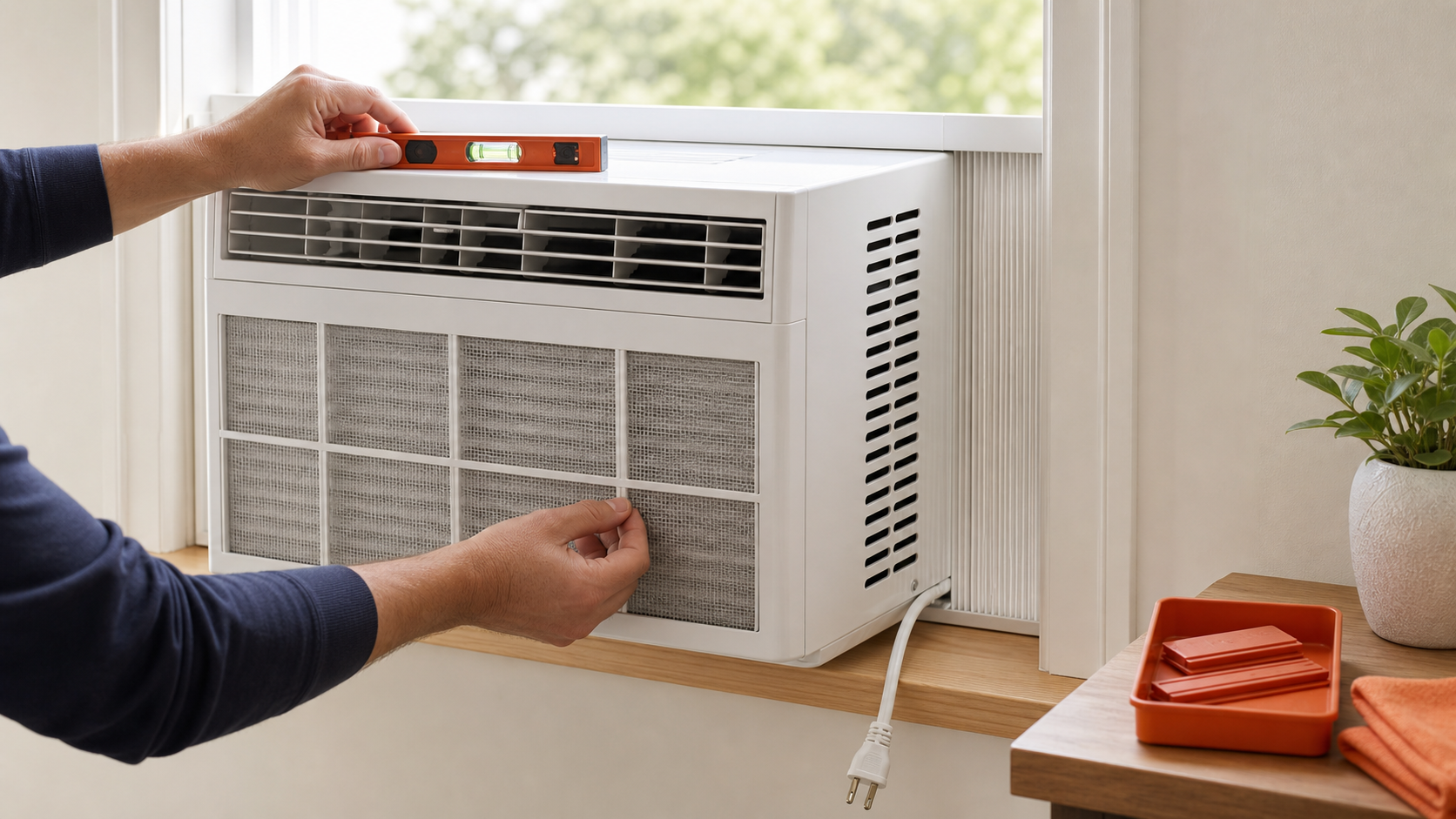
- Small bubble level for comparison with the required installation pitch
- A capable helper if the installation must be evaluated or serviced
Step-by-step
Record when the sound occurs
From a safe indoor position, make a short recording and note the operating mode. Distinguish fan-only noise from a sound that begins with cooling, wind, rain, or condensate. Switch off immediately if the unit moves, grinds, bangs repeatedly, smells hot, or affects the outlet or breaker.
Compare the sound with normal operation
Frigidaire lists rushing fan air, high-pitched compressor chatter, refrigerant gurgling or hissing, and water pinging or swishing at the condenser as normal possibilities. A new loose rattle may instead reflect contact at the window, side panels, front grille, filter, or another nearby object.
Turn off, unplug, and let moving parts stop
Use the control to switch off, unplug by the plug with dry hands, and wait for the fan and compressor to stop. Do not insert a tool or finger through a louver. If the plug is hot, damaged, or inaccessible, stop and have the circuit and appliance evaluated.
Remove and clean the owner-serviceable filter
Open only the front filter access shown in the manual. Remove dust with the specified method; wash only if permitted, and let the filter dry fully before reinstalling. Seat it and the front grille correctly so neither can flutter against the cabinet.
Check visible contact points
Without loosening the installation, look for a curtain panel, blind, cord, trim piece, or loose decorative object touching the cabinet. Confirm accessible side panels and the front grille appear seated. Do not wedge random material into vents, under the chassis, or against the outdoor section.
Compare the installation with the exact manual
Use a level only to document how the cabinet sits relative to the model’s required pitch; do not assume level is correct. Check that the sash, bracket, side curtains, exterior support, and drainage arrangement visually match the instructions. A heavy or shifting unit needs an installer or technician, not an improvised adjustment.
Reassemble and perform one observed test
After the dry filter and grille are fully seated and no loose object touches the cabinet, plug directly into the approved receptacle and run briefly while remaining nearby. If the same abnormal sound persists or worsens, stop and provide the recording, model number, and timing notes to service.
The timing of the sound is the best first clue
A fan sound begins immediately in fan mode. Compressor chatter or refrigerant flow starts when cooling begins. Pinging or swishing can coincide with condensate reaching the outdoor condenser. These patterns can be normal, but a sudden change from the unit’s usual sound still deserves an inspection from outside the sealed cabinet.
A rattle that changes with the window, curtain panel, wind, or a nearby blind points toward contact or installation. Grinding, repeated metal impact, arcing, a hot electrical connection, or a unit moving in the opening is not a continue-and-monitor condition.
Why drilling the base pan is not a noise fix
Some room air conditioners intentionally use condensate at the condenser, which can create pinging or swishing. Frigidaire explicitly says not to drill holes in the base pan to eliminate normal sounds because doing so can void the warranty.
A hole can also alter drainage and damage a hidden component. Use only the model’s drain or installation provisions. Water entering the room, reaching a plug, or collecting contrary to the manual is a reason to shut down and arrange service.
Stop-and-call-a-professional thresholds
- The unit shifts in the opening, the sash or bracket is loose, or safe inspection requires exterior or elevated access.
- There is grinding, repeated hard impact, smoke, sparking, a burning smell, a hot plug or outlet, or a tripped breaker.
- Water leaks indoors, reaches electrical parts, or the installation pitch or drain path does not match the manual.
- Ice returns, cooling is weak, or oily residue or suspected refrigerant leakage is present.
- The noise is behind the metal cabinet or requires access to the fan motor, compressor, wiring, or sealed refrigeration system.
Common questions
Is pinging water inside a window air conditioner normal?
It can be. Frigidaire says condensate droplets hitting the condenser may create pinging or swishing during normal operation. Follow the model manual and never drill the base pan to stop that sound.
Can I put foam under a rattling window AC?
Do not place improvised material under the chassis, in vents, or where it changes the required pitch. Compare the installation with the exact manual; a loose or shifting unit should be secured by a qualified installer.
When does a window AC noise require service?
Stop for grinding, repeated impacts, a moving cabinet, electrical heat or odor, tripped breakers, indoor leakage, ice, weak cooling, or any noise that requires opening the metal cabinet to locate.
Prefer to hire a professional?
Find a local appliance repair company
Browse business profiles with published services, coverage, and direct contact information in the FixMate directory.
Sources and further reading
This article is original FixMate editorial content informed by the references below. Always follow manufacturer instructions and local code.