Quick answer
If the furnace does not start, first treat any carbon-monoxide alarm, gas odor, smoke, soot, scorching, sparking, or unusual bang as an emergency: leave the home and call 911, the gas utility, or emergency service from outside as appropriate. Without a danger sign, set the thermostat to Heat, fan to Auto, and the target above room temperature; replace thermostat batteries if the manual allows. Confirm the normal furnace switch is on and check the labeled breaker once. With furnace electrical power off, inspect the external air filter and replace it only with the exact size and an equipment-approved type, arrow pointing toward the furnace. Open unobstructed supply and return grilles, secure any user-removable panel, restore power, and allow the control its normal startup delay. Read a fault light only through the provided sight window and record the pattern for service. Do not open the burner compartment, relight or adjust gas equipment, clean ignition or flame-sensing parts, reset a safety switch, or repeatedly cycle power. Call a qualified HVAC technician if the system stays silent, short-cycles, trips again, runs without heat, or needs internal work.
Safety before you start
Fuel-burning furnaces can create fire, explosion, and carbon-monoxide hazards. Leave immediately if a CO alarm sounds or you smell gas, see smoke or soot, hear a boom at ignition, or anyone develops possible CO symptoms; call emergency services or the gas utility from outside. Do not rely on smell to detect CO. Never remove a sealed or burner panel, defeat a door switch, relight a pilot unless the exact manufacturer instructions explicitly assign that task to the user, touch a gas valve, clean an ignitor or flame sensor, adjust burners, or test line voltage. Turn electrical power off before touching the filter cabinet. One breaker reset is the limit; a repeat trip needs professional diagnosis.
What you need
- Exact furnace and thermostat owner instructions
- Fresh thermostat batteries of the specified type, if applicable
- Exact-size replacement filter with an approved rating
- Flashlight for external labels, filter slot, and sight window
- Phone camera for the model label and fault-light pattern
- Working smoke and carbon-monoxide alarms
Step-by-step
Stop for gas, fire, or carbon-monoxide clues
Do not troubleshoot through an alarm, gas odor, smoke, soot, scorching, sparking, delayed-ignition bang, or illness. Get everyone outside and use emergency or utility help. A silent CO hazard has no odor, so a working alarm and professional inspection matter.
Check the thermostat state
Set the system to Heat, the fan to Auto, and the setpoint above the displayed room temperature. Confirm the screen is powered and replace batteries only as the thermostat manual directs. Note any message or code before changing settings.
Confirm normal electrical power once
Verify the ordinary furnace service switch is on. At a dry, undamaged panel, check the correctly labeled furnace breaker. A breaker sitting between positions may be moved fully off and then on once; stop if it trips again, the label is uncertain, or the panel shows heat, odor, damage, or moisture.
Inspect the external air filter
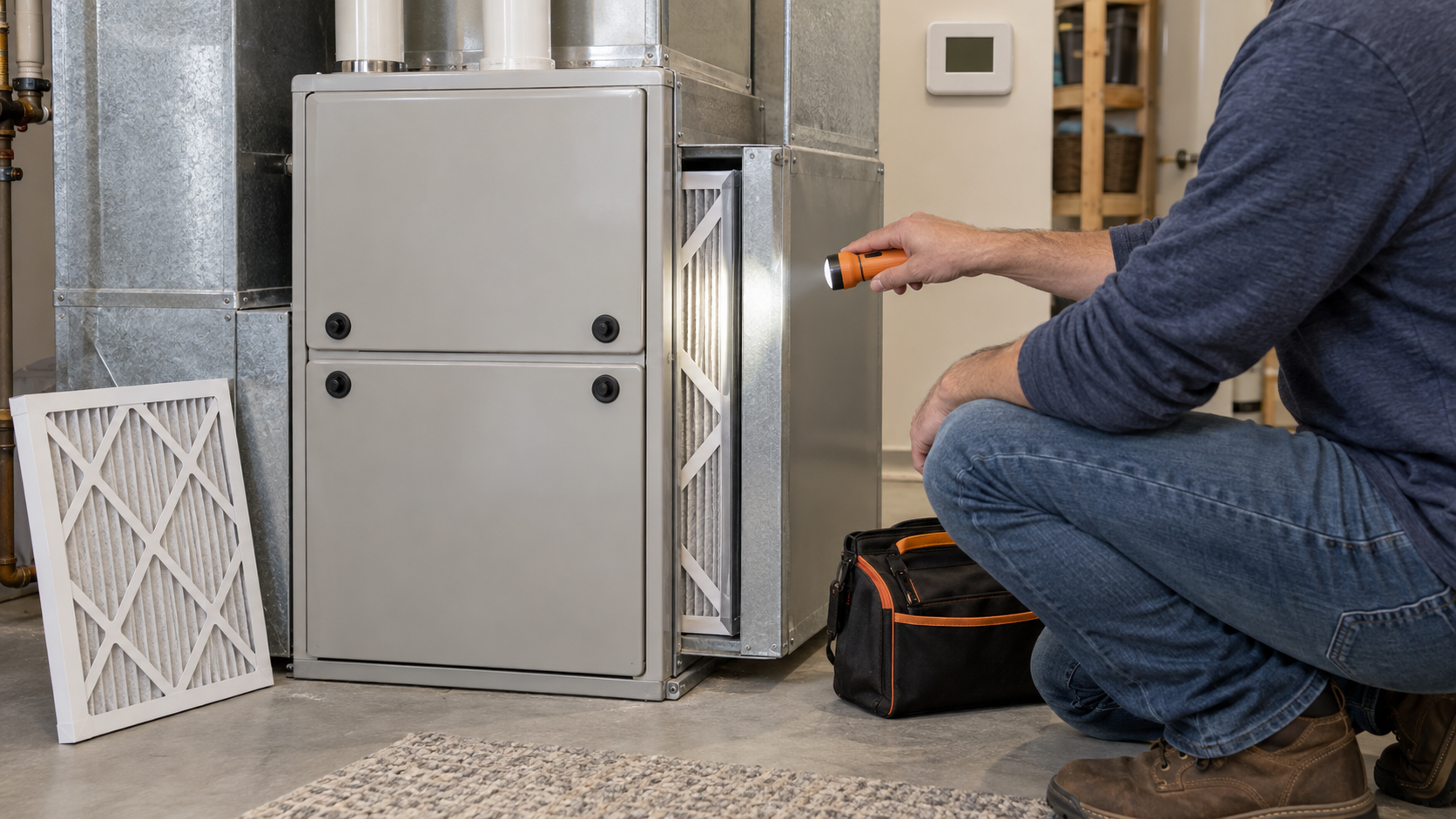
Turn furnace electrical power off. Remove only the user-accessible filter or filter-cabinet door shown in the manual. Replace a clogged filter with the exact dimensions and a rating the equipment allows, with the airflow arrow pointing toward the furnace. Do not run the system without a filter.
Restore the designed airflow path
Open supply registers and make sure return grilles are not blocked by furniture, rugs, boxes, or dust mats. Do not close many vents to redirect heat. Restricted airflow can contribute to overheating and safety shutdowns.
Secure user panels and observe from outside
Reinstall the filter door or other user-removable panel completely, because some furnaces will not run when a panel switch is open. Restore power and allow the normal control delay. Observe sound and airflow without removing a burner or electrical panel.
Record the fault indication and call
If the furnace provides a sight window, record the flashing pattern without opening the cabinet and compare it only with the exact manual. Give the model, symptoms, thermostat state, filter result, breaker behavior, and code to a qualified HVAC technician; do not reset or replace the internal component named by a code.
Silence, blower-only operation, and short cycling are different clues
- No thermostat display: start with thermostat power and its manual.
- Thermostat calls for heat but nothing runs: confirm normal furnace power and a fully seated user panel.
- Blower runs but air is not heated: stop before ignition, fuel, burner, or heat-exchanger work.
- Furnace starts and stops quickly: check filter and open vents, then call if cycling continues.
- Breaker trips again: leave it off and use an electrician or HVAC technician.
Filter size and airflow direction matter more than a generic upgrade
A dirty filter can restrict airflow and contribute to overheating or shutdown. The replacement must fit the cabinet without gaps or crushing and must face the direction shown by the airflow arrow, normally toward the blower and furnace.
Do not automatically install the highest filter rating sold at the store. Use the filter type and resistance allowed by the furnace or system instructions; an overly restrictive filter can reduce airflow even when new.
Combustion and safety controls belong to a qualified technician
Ignitors, flame sensors, burners, gas valves, oil nozzles, limit switches, capacitors, blower motors, control boards, heat exchangers, venting, and fuel delivery require training and instruments. A fault code can guide a technician; it is not permission to bypass a control or reach into the cabinet.
CPSC recommends professional inspection and service of fuel-burning heating systems and working CO alarms on every level and outside sleeping areas. Fall is the right time for maintenance because a startup failure can reveal a safety or venting problem, not just an inconvenience.
Common questions
Why will my furnace not turn on after summer?
Common user-checkable causes include thermostat mode or batteries, the furnace switch, a tripped breaker, an unsecured user panel, or a clogged filter. Ignition, fuel, venting, control, motor, or safety-device faults need qualified service.
How many times can I reset the furnace breaker?
Check and reset the correctly labeled breaker once. If it trips again, leave it off and call a qualified professional; repeated resets can hide an electrical fault and increase risk.
Can I clean the flame sensor or ignitor myself?
No for this safe-check workflow. Those parts are inside the combustion or electrical system and can be damaged or create unsafe operation. Record the symptom or external fault code and call an HVAC technician.
Prefer to hire a professional?
Find a local appliance repair company
Browse business profiles with published services, coverage, and direct contact information in the FixMate directory.
Sources and further reading
This article is original FixMate editorial content informed by the references below. Always follow manufacturer instructions and local code.