Quick answer
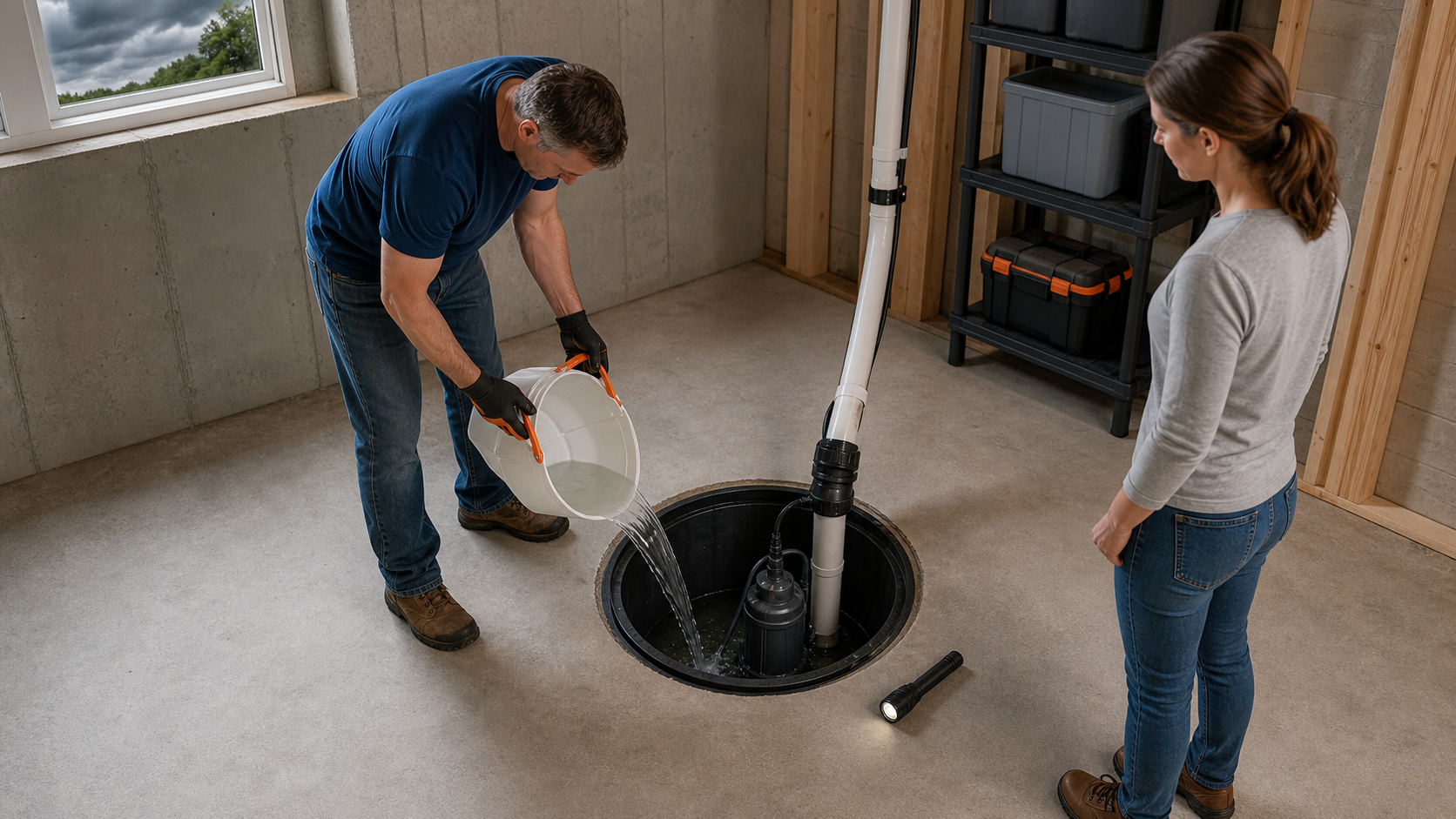
Test only while the basement floor, plug, receptacle, cord, and sump area are dry. With the pump unplugged, visually check that the float can rise without touching the basin wall and that loose debris is not covering an accessible intake screen. Reconnect power with dry hands, then pour clean water into the pit from a stable position until the float rises; the pump should start, lower the water, and stop. Confirm that water exits at the outdoor discharge point. If the pump hums without lowering water, trips a breaker, leaks, smells hot, has a damaged cord, or the water is already rising toward wiring or outlets, stop and call a qualified plumber or electrician.
Safety before you start
Never step into standing basement water or touch a pump, cord, plug, receptacle, breaker, or appliance when the floor or your hands are wet. Floodwater can be electrically energized and contaminated. Leave the area and call emergency services or the utility for an immediate electrical hazard. Do not open a sealed pump motor, bypass a float, defeat a GFCI, or use an indoor extension cord as a permanent supply.
What you need
- Flashlight or headlamp
- Clean bucket or pitcher of water
- Dry nonslip shoes
- Phone for timing the test and recording symptoms
- Owner’s manual for the exact pump and backup system
- A second adult to watch the outdoor discharge point
Step-by-step
Stop if any water is near electricity
Survey the route from a dry doorway before approaching. If water covers the floor, reaches a receptacle, or surrounds plugged-in equipment, do not enter or touch anything. Leave and call for emergency electrical and water-removal help.
Inspect the dry power path
When everything is dry, look for a loose plug, damaged insulation, scorching, or an extension cord. If a dry GFCI is tripped, reset it once. A second trip, heat, buzzing, or visible damage requires an electrician; do not keep resetting the device.
Unplug before checking the pit
With dry hands, disconnect the pump before looking closely into the basin. Use a flashlight to check for debris over an accessible intake and verify that the float is not wedged against the liner, pump, pipe, or cord. Do not reach near an impeller or disassemble the pump.
Restore power and raise the water level
Stand on a dry, stable surface, reconnect the pump, and keep your hands out of the pit. Pour clean water into the basin slowly until the float rises. Stop adding water once the pump starts. A second adult can watch the outdoor endpoint while you observe from indoors.
Watch one complete cycle
The pump should lower the water and switch off without grinding, repeated rapid cycling, a hot smell, or movement of the discharge pipe. Note whether water immediately pours back into the pit after shutdown; substantial return flow can point to a check-valve or discharge problem for a plumber.
Check the outdoor discharge from the surface
Look for strong flow at the visible outlet and confirm the water is directed away from the foundation as local rules allow. Do not dig, cut, heat, or dismantle a buried, frozen, or blocked line during a storm; arrange professional clearing.
Why an August test is timely even in a quieter forecast year
NOAA’s 2026 Atlantic outlook favors a below-normal season, but still calls for 8 to 14 named storms and says most activity is likely during August, September, and October. A seasonal basin-wide outlook cannot predict whether one neighborhood will receive flooding rain.
FEMA recommends a sump pump with battery-operated backup as part of household flood-risk reduction. A backup matters because the same storm that adds groundwater can also interrupt the electricity that powers a primary pump.
What common sump-pump symptoms suggest
- No sound and no movement: confirm only the dry plug, dry GFCI, breaker, and unobstructed float before calling for service.
- Humming with no water drop: stop the test; an obstruction, air lock, impeller problem, or blocked discharge needs model-specific service.
- Starts and stops every few seconds: stop adding water and have the float, basin size, check valve, and discharge reviewed.
- Runs continuously after the water falls: disconnect only from a dry location and call a plumber; do not tie down or bypass the switch.
- Water returns after shutdown: the check valve or discharge path may be allowing backflow.
Maintenance that stays on the safe side of DIY
Pump manufacturers recommend keeping the basin and accessible intake clear of mud, silt, and loose debris and checking that the float has room to operate. Perform inspection with power disconnected and follow the exact manual because float and switch designs differ.
Keep the basin covered where the installation is designed for a lid, secure cords away from the float, and test the backup system using its manufacturer procedure. Do not open a motor housing, alter wiring, remove a sealed switch, or change discharge plumbing without understanding local plumbing and electrical requirements.
When rising water ends the DIY window
Call a plumber when the pump cannot keep up, the discharge is blocked, the float or check valve is damaged, or the unit needs removal. Call an electrician for repeated trips, heat, damaged cords, wet receptacles, or questionable grounding. If water approaches electrical equipment, leave the basement and treat it as an emergency.
Do not wait for water to reach the main panel, furnace, water heater, or stored chemicals. Move people and pets to safety, follow local flood instructions, and never remain below grade when authorities advise evacuation.
Common questions
Can I test a sump pump by pouring water into the pit?
Yes, if the entire area and electrical path are dry and the exact pump manual allows a normal water-level test. Pour slowly from a stable position, keep hands out of the pit while powered, and stop when the pump starts.
Should I manually lift the float switch?
Some manufacturers describe float testing, but designs vary. Raising the water level is often the better whole-system test. Never touch the float while the pump is energized unless the exact manual explicitly requires a safe procedure.
Can I reset a tripped GFCI for the sump pump?
Only when the outlet, floor, plug, and your hands are completely dry. Reset once. If it trips again, leave it off and call an electrician rather than bypassing the protection.
Prefer to hire a professional?
Find a local plumbing company
Browse business profiles with published services, coverage, and direct contact information in the FixMate directory.
Sources and further reading
This article is original FixMate editorial content informed by the references below. Always follow manufacturer instructions and local code.