Quick answer
A worn internal seal cannot usually be repaired permanently without opening the faucet and replacing the failed part. The reliable no-tool way to stop the water now is to close the hot and cold shutoff valves under the sink. Then contain any remaining drops, identify the leak location, and buy only the exact part the faucet needs.
Safety before you start
Do not force a stuck or badly corroded shutoff valve. If it will not turn by hand, if it starts leaking around its stem, or if water is entering a cabinet or wall, stop and contact a plumber. Know the location of your home’s main water shutoff before experimenting with old plumbing.
What you need
- No tools are required for the immediate shutoff and diagnosis
- A bowl, cup, or baking tray
- A towel or washcloth
- Your phone camera for recording the faucet and model details
Step-by-step
Dry everything first
Wipe the faucet, countertop, sink rim, supply lines, and cabinet floor. A dry surface makes the first new drop much easier to trace.
Watch where the first drop appears
A drip from the spout points to an internal valve seal. Water around the handle suggests a packing seal or O-ring. Water at the base may come from spout O-rings or a failed deck seal. Moisture below the sink can come from a supply line, drain, or faucet connection.
Close the under-sink shutoff valves
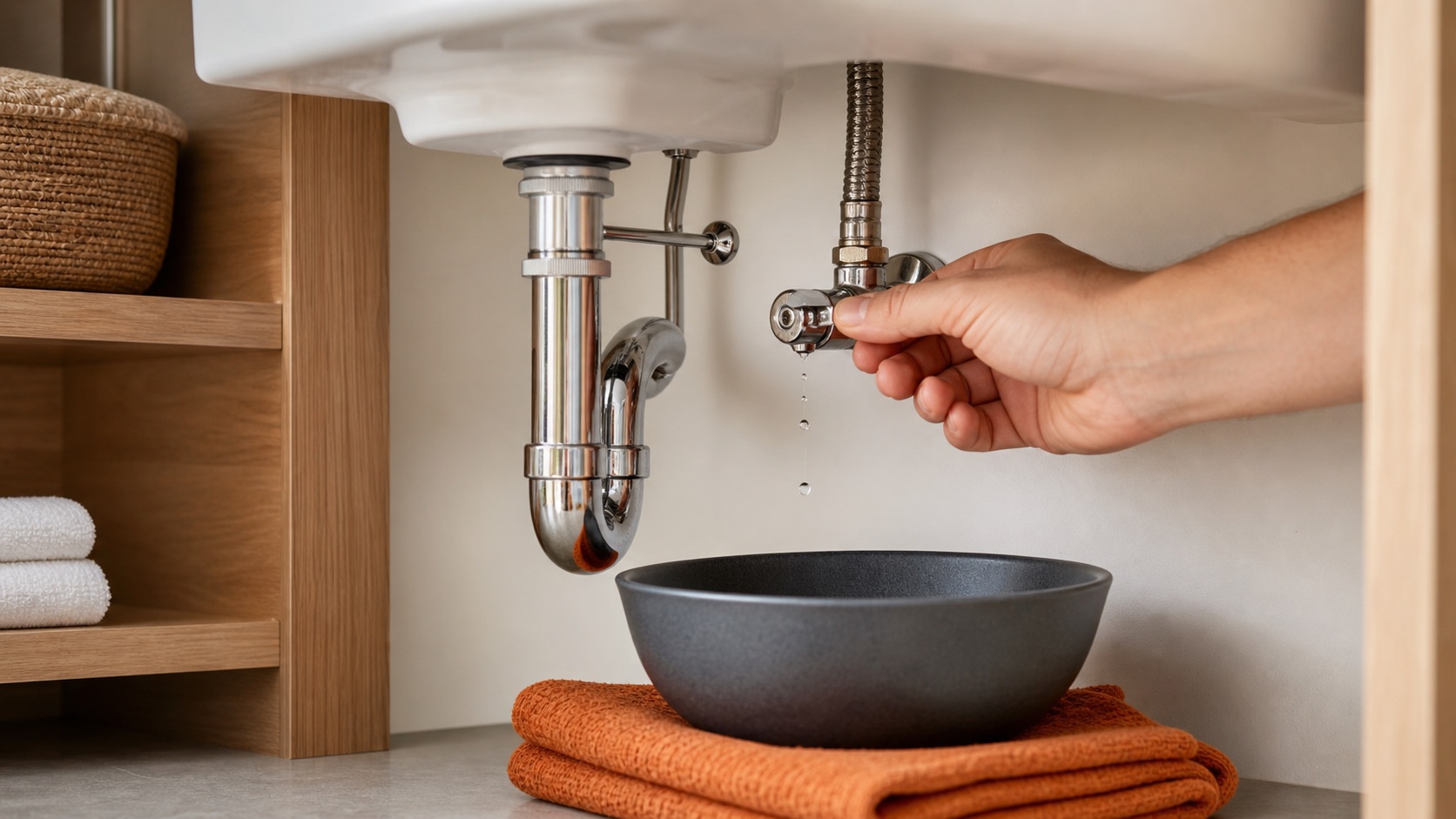
Turn the hot and cold valves clockwise by hand until they stop gently. Open the faucet to release trapped pressure. If the leak stops, leave the valves closed until you are ready for a permanent repair.
Contain and quiet residual drips
Place a bowl under an under-sink leak. For a spout that drips briefly after shutoff, lay a folded washcloth in the basin to soften the sound and prevent splashing. Keep fabric clear of an overflowing or slow drain.
Record the exact faucet
Photograph the whole faucet, any logo or model number, the handle layout, and the leak location. This information helps you find the correct low-cost washer, O-ring, or cartridge instead of buying several guesses.
What no-cost actions can—and cannot—do
Closing the local supply valves can stop water waste completely while you plan the repair. Drying and observing the faucet can also prevent an unnecessary purchase by separating a spout leak from a drain, supply-line, or countertop leak.
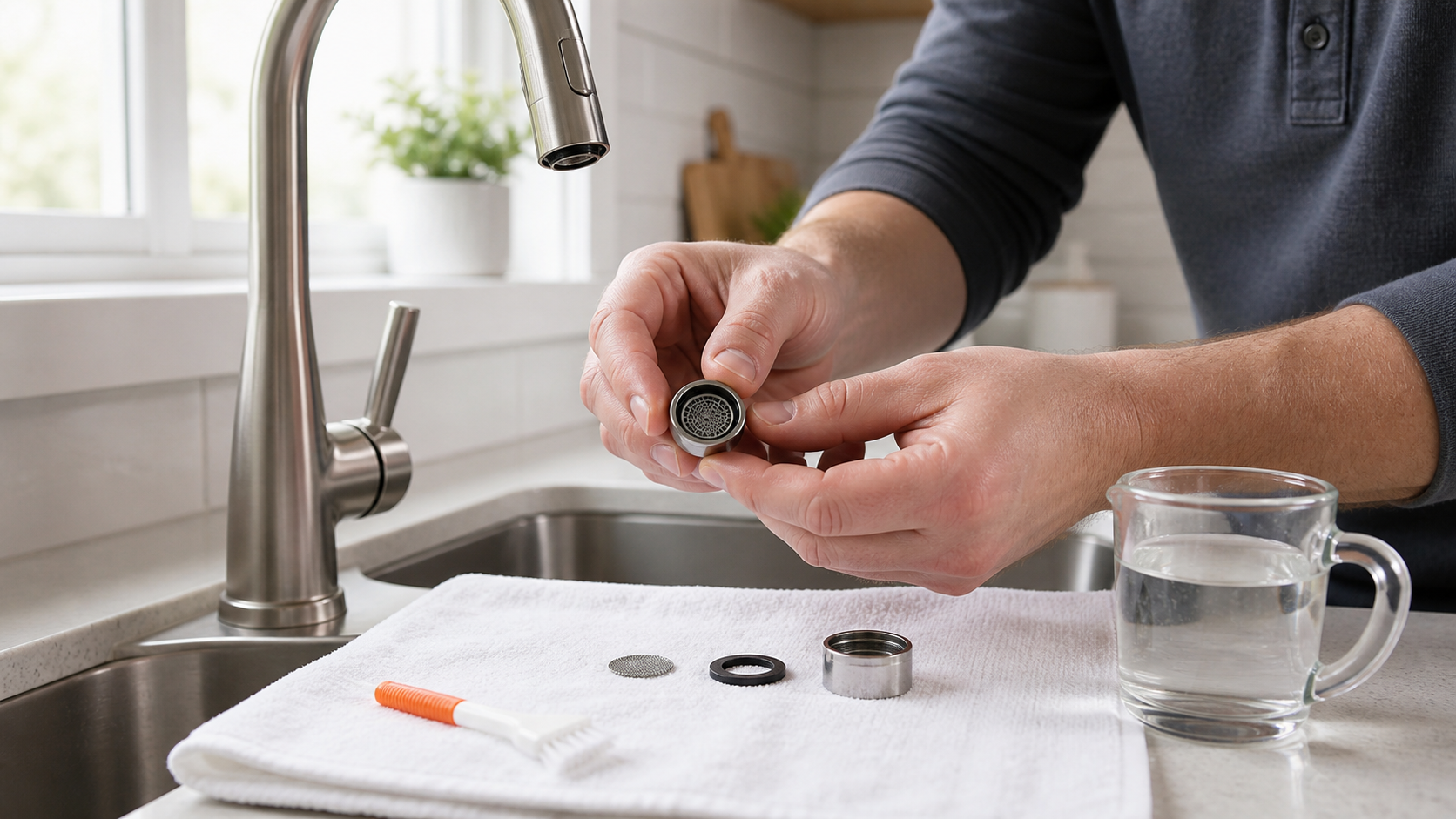
Turning the handle harder is not a repair. It may briefly compress a failing washer, but it can also damage the stem or handle. Removing an aerator may improve weak or uneven flow, but it does not fix a faucet that drips while turned off because the failed seal is upstream inside the valve.
Use the leak location to narrow the part
- Spout drips while off: internal washer, cartridge, ball seals, or ceramic-disc seals.
- Handle leaks only while water runs: packing washer or stem O-ring.
- Spout base leaks when rotated: spout O-rings.
- Cabinet gets wet only when faucet runs: inspect supply and faucet connections.
- Cabinet gets wet when the basin drains: inspect the drain flange, P-trap, and drain joints.
Skip shortcuts that can make the leak worse
- Do not force an old shutoff valve with pliers if it will not move by hand.
- Do not use glue, caulk, tape, wax, or putty on a dripping spout.
- Do not crank the faucet handle tighter after it reaches its normal stop.
- Do not leave a bowl unattended if the leak could outpace its capacity.
- Do not ignore moisture in a cabinet, wall, or floor; hidden water damage costs more than a small faucet part.
Plan the least expensive permanent repair
Once you know the leak type, search the faucet manufacturer’s parts diagram or bring clear photos and the old part to a hardware store. Compression-faucet washers and O-rings are often inexpensive. Cartridges cost more, but matching the exact model once is usually cheaper than buying a universal assortment that may not fit.
If you rent, document the leak and notify the property manager rather than disassembling the faucet. If the shutoff valves fail, the faucet is heavily corroded, or water is leaking outside the sink, a plumber is the lower-risk choice.
Common questions
Will tightening the faucet handle stop the drip?
It may reduce a drip briefly on some compression faucets, but extra force can damage the handle or stem. Close the supply valves instead and replace the worn sealing part.
Does removing the aerator stop a leaky faucet?
No. The aerator is at the end of the spout, while a closed-faucet drip is caused by a valve that is not sealing upstream. Removing the aerator may change the flow pattern but does not stop the water waste.
What if there are no shutoff valves under the sink?
Use the home’s main water shutoff only if you can identify and operate it safely. If you cannot, or if any valve is stuck or corroded, call a plumber or your property manager.
Prefer to hire a professional?
Find a local plumbing company
Browse business profiles with published services, coverage, and direct contact information in the FixMate directory.
Sources and further reading
This article is original FixMate editorial content informed by the references below. Always follow manufacturer instructions and local code.