Quick answer
First decide whether you hear a brief periodic chirp or a full repeating alarm pattern. Treat a smoke or carbon-monoxide alarm as real: get everyone outside and call emergency services from safety. For a periodic chirp, locate the exact unit by listening and watching its indicator, photograph the model and date label, and consult that model's manual because chirp counts vary. Replace a user-replaceable battery only with the specified type and test the alarm afterward. A sealed 10-year unit gets replaced as a complete alarm, not opened. Replace any smoke alarm at the age stated by its manufacturer; U.S. Fire Administration guidance says smoke alarms should be replaced every 10 years. If a hardwired alarm still chirps, its date is unknown, it will not pass the test, or the signal indicates malfunction or end of life, replace it or use a qualified electrician rather than disconnecting wiring.
Safety before you start
Never assume a sounding alarm is only a battery warning. If there is smoke, fire, a carbon-monoxide warning, symptoms such as headache or dizziness, or uncertainty about the pattern, evacuate and call 911 or the fire department from outside. Do not remove a battery to silence protection, paint or cover an alarm, open a sealed alarm, install an unlisted battery, or disconnect hardwired conductors. Use a stable step stool on a dry level floor and keep another working alarm protecting the area. Only a qualified electrician should install, disconnect, or diagnose hardwired alarms.
What you need
- Phone camera for the model, manufacture date, and indicator pattern
- Exact smoke or smoke/CO alarm owner manual
- Stable household step stool
- Manufacturer-specified replacement battery, only for replaceable-battery models
- Clean dry soft brush or vacuum attachment if the manual permits cleaning
- Replacement listed alarm compatible with the existing system, if required
Step-by-step
Treat a repeating alarm as an emergency
A short chirp separated by a long quiet interval is different from a repeating smoke or CO alarm cadence. Do not stand under the unit decoding sounds if there may be danger. Evacuate for a full alarm, visible smoke, a fuel-burning odor, CO symptoms, or any uncertainty, then call emergency services from outside.
Find the exact unit making the chirp
Interconnected alarms can make source-finding confusing. During a quiet interval, listen from a safe position and watch for a synchronized status light. Check every level rather than assuming the nearest alarm is responsible. Do not disable other alarms while searching.
Record the model, power type, and date
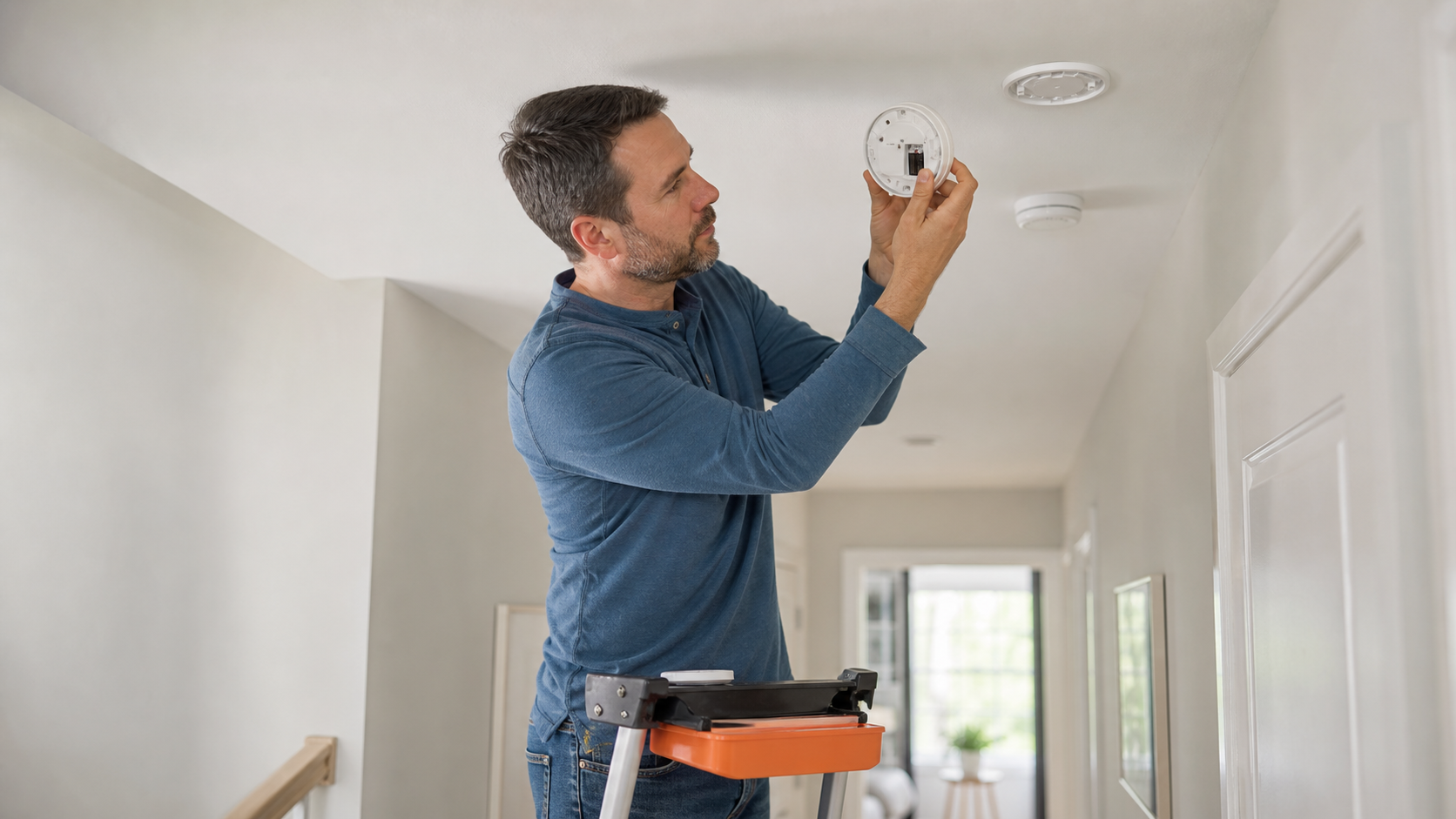
Use a stable step stool and photograph the visible label. Note whether the unit is battery-only, sealed 10-year, or hardwired with backup battery. Find the model-specific manual before interpreting chirp counts, because low-battery, malfunction, and end-of-life patterns are not universal.
Replace only a user-replaceable battery
If the manual identifies the signal as low battery and the compartment is designed to open, install the exact battery type and orientation listed. Close the compartment fully and remount the alarm. Never pry open a sealed 10-year alarm or substitute a rechargeable battery unless the manual explicitly permits it.
Check age before trying repeated resets
U.S. Fire Administration guidance says to replace smoke alarms every 10 years. Follow an earlier replacement date if the unit's label or manual specifies one. An end-of-life signal calls for replacement of the alarm, not another battery or repeated use of the hush button.
Clean only as the manual allows
Dust, insects, and humidity can affect some alarms. With no active emergency and without opening the housing, use only the exterior cleaning method in the manual, commonly a soft brush or vacuum attachment. Never apply water, cleaner, compressed propellant, paint, or pesticide to the alarm.
Test and restore complete protection
Press the test button according to the manual and confirm that every required alarm is mounted and working. If the unit does not test, resumes chirping, reports malfunction, has no readable date, or is incompatible with an interconnected system, replace it or contact the manufacturer, landlord, fire department, or a qualified electrician.
Chirp counts are model-specific; emergency patterns come first
First Alert describes low battery, end of life, dust, humidity, and cooler nighttime temperatures as possible reasons for chirping. That list helps form a diagnosis, but it does not make one brand's cadence a universal code.
Read the label and manual for the exact alarm. A smoke/CO combination unit can communicate more than one hazard, and an interconnected system may sound in several rooms. If the pattern cannot be identified quickly and safely, leave and call the fire department rather than experimenting.
Replaceable battery, sealed battery, and hardwired are different jobs
- A replaceable-battery alarm accepts only the battery types listed by its manufacturer.
- A sealed long-life alarm is replaced as a complete unit when it chirps for end of life or battery failure.
- A hardwired alarm can still have a replaceable backup battery and still reaches end of life.
- Hardwired connectors and interconnect compatibility belong with the exact manual and a qualified electrician.
- Never leave an area unprotected while waiting for a replacement.
Replacement is the repair for age, malfunction, or failed testing
A battery cannot restore an expired sensor or a failed self-test. USFA recommends monthly testing and replacement of the entire smoke alarm every 10 years, while the model label controls if it requires earlier action.
Ask the local fire department about alarm programs if cost or safe access is a barrier. Renters should notify the landlord promptly and follow local requirements, but an active alarm or suspected CO event always requires immediate emergency action first.
Common questions
Why does my smoke alarm chirp mostly at night?
First Alert says cooler nighttime temperatures can reduce a weak battery's voltage enough to trigger a chirp. Low battery is not the only cause, so identify the exact model and confirm its documented signal.
Can I remove the battery until morning?
No. Removing or disconnecting the battery leaves the home without intended protection. Install the specified battery or replace the alarm, and keep working alarms on every required level and sleeping area.
Does a hardwired smoke alarm need replacement after 10 years?
Yes. USFA guidance says hardwired smoke alarms should also be replaced every 10 years, in addition to testing and maintaining their backup batteries. Use a qualified electrician for wiring or compatibility work.
Prefer to hire a professional?
Find a local electrical company
Browse business profiles with published services, coverage, and direct contact information in the FixMate directory.
Sources and further reading
This article is original FixMate editorial content informed by the references below. Always follow manufacturer instructions and local code.