Quick answer
If the bathroom fan runs but steam lingers, first observe whether the grille is packed with dust and whether the exterior vent opens while the fan runs. Then switch the fan circuit off at the service panel, prevent accidental re-energizing, verify power is off, and remove only the grille as the exact model instructions allow. Broan-NuTone recommends washing the removable cover in warm soapy water and carefully vacuuming dust from the housing before reinstalling the dry cover. ENERGY STAR recommends using bathroom ventilation during and for 15 minutes after showers. If airflow remains weak, the cause may be a blocked, disconnected, undersized, or poorly routed duct, a failed damper or motor, or an inadequately sized fan—work that may require an electrician, HVAC technician, or qualified ventilation contractor.
Safety before you start
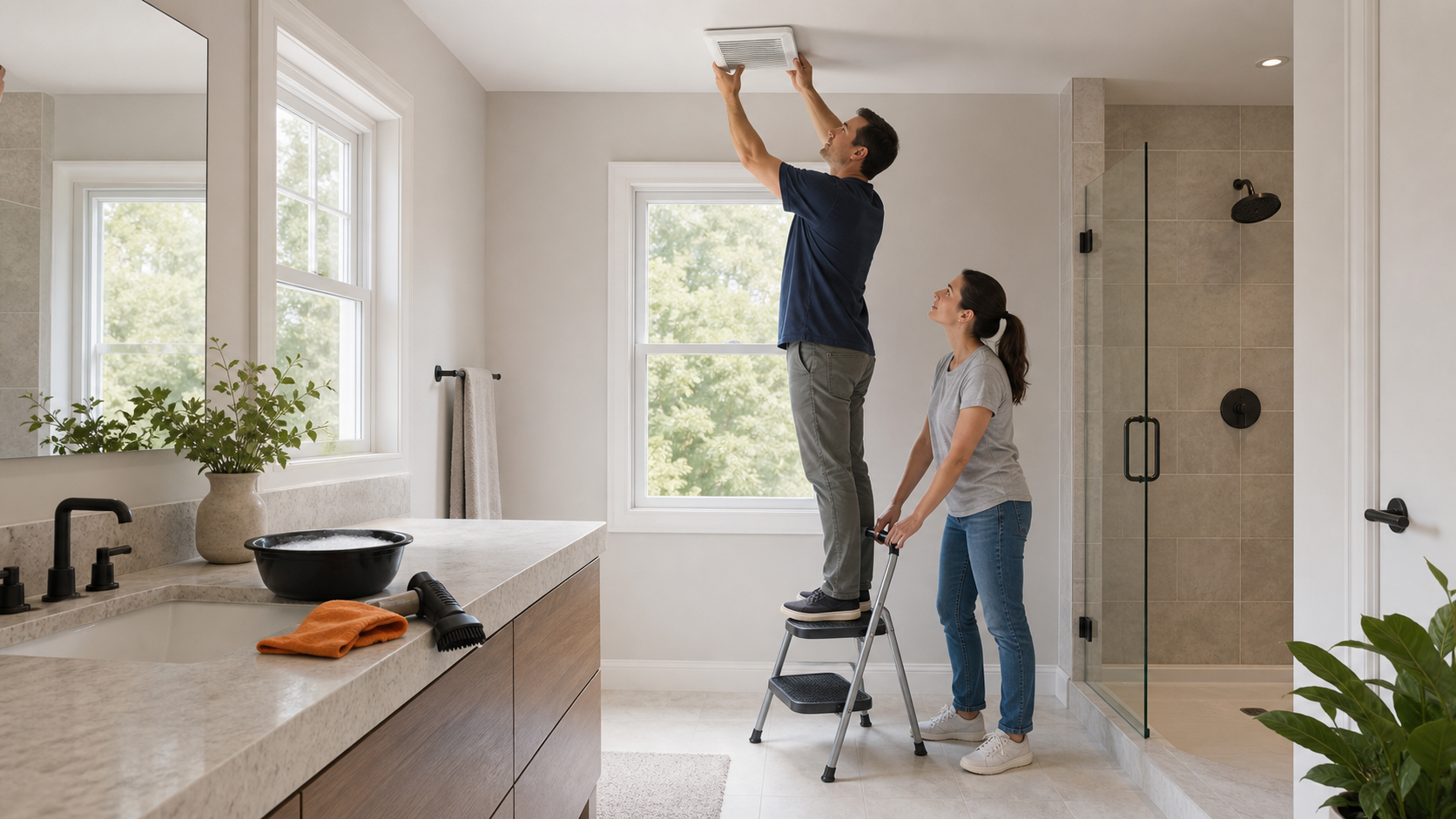
Bathroom fans combine electricity, ceiling access, and moisture. Work only from a dry floor with the room and your hands dry. Turn the circuit off at the service panel—not just the wall switch—and prevent someone from turning it back on. Use a stable step stool or ladder with a spotter, never a tub, toilet, or wet counter. Remove only the model’s intended grille. Do not touch wiring, open junction boxes, reach into a moving blower, cut ceilings, enter an attic, or work on a roof. Stop for heat, smoke, sparking, burning odor, damaged wiring, a loose housing, water inside the unit, or suspected mold contamination.
What you need
- Exact fan model and matching cleaning or service instructions
- Stable step stool or ladder with an adult spotter
- Service-panel lockout device or prominent warning tag
- Flashlight
- Vacuum with soft brush attachment
- Warm water, mild dish soap, and microfiber cloth
- Phone camera and timer
Step-by-step
Record the moisture and airflow symptom
Before cleaning, note whether the fan sounds normal, the mirror stays fogged, moisture remains on walls or ceiling, or the room smells musty. From the ground, look for heavy dust at the grille. Do not use tissue or another loose object where it could be pulled into the fan.
Check the exterior outlet from ground level
With the fan running and weather safe, observe the exterior wall cap from the ground if it is visible. A damper that never opens, a missing cap, a nest, or no detectable exhaust can point to a duct or termination problem. Do not climb onto a roof, insert tools into the vent, or disturb wildlife.
Shut off and secure the circuit
Turn the identified fan circuit off at the service panel and lock it out or attach a clear warning tag. Confirm the fan and any combined light or heater no longer operate. If you cannot identify the circuit confidently, stop and use an electrician rather than relying only on the wall switch.
Remove only the model-approved grille
Use the exact manual. Many simple grilles lower and release from spring clips, but lighted, heated, sensor, speaker, and decorative models can differ. Support the grille so it does not fall. If wires, plugs, brittle plastic, or an unfamiliar assembly appear, stop without pulling farther.
Wash the cover and vacuum accessible dust
Wash a manufacturer-approved removable cover in warm water with mild soap, then dry it completely. With power still secured, use a soft vacuum brush at the accessible housing opening. Do not spray cleaner overhead, wet the motor, bend the blower wheel, remove the motor plate, or push debris deeper into the duct.
Reinstall dry parts and retest
Reattach the fully dry grille exactly as the manual shows, clear the room, restore power, and listen from the floor. Run the fan during a normal shower and time how long visible condensation lingers afterward. ENERGY STAR’s general practice is to continue ventilation for 15 minutes after bathing.
Escalate persistent weak airflow
If cleaning does not improve the symptom, stop at the surface-maintenance boundary. A qualified pro can measure airflow and inspect the concealed duct, damper, termination, motor, sizing, and electrical condition. Widespread staining, soft drywall, active leakage, or significant suspected mold also needs moisture-source and material assessment.
Cleaning restores an opening; it does not redesign the vent
Broan-NuTone notes that dust buildup on the grille or inside the housing can reduce airflow. Cleaning those accessible surfaces is a sensible first step when the fan still runs and there is no electrical or water warning sign.
Persistent fog or dampness after cleaning does not prove the motor failed. Long, crushed, disconnected, or obstructed ducts, a stuck exterior damper, and inadequate fan capacity can all reduce installed performance. Diagnosing those conditions can require access and airflow measurements beyond safe surface maintenance.
Use the room’s moisture pattern as evidence
- Fog that clears faster after cleaning suggests the grille restriction mattered.
- A musty odor or recurring wall condensation means moisture control still needs attention.
- Water dripping from the fan can involve condensation, roof entry, or duct routing; shut power off and call a pro.
- A fan that exhausts into an attic or other enclosed space needs correction by a qualified contractor.
- Staining or damaged drywall should be evaluated before cosmetic repainting hides the pattern.
The safe DIY boundary ends at the grille
Manufacturer instructions commonly require power to be switched off at the service panel before cleaning or servicing and protected from accidental reconnection. That protection matters because a wall switch can be bumped and combination units may have more than one function.
Replacing a motor, changing a fan, repairing wiring, opening a junction box, altering ductwork, or accessing an attic or roof can involve code, fall, electrical, and moisture hazards. Use an appropriate licensed or qualified professional for the work required in your location.
Common questions
Can dust make a bathroom exhaust fan feel weak?
Yes. Broan-NuTone says dust buildup on the grille or inside the housing can reduce airflow. Clean only the accessible surfaces allowed by the exact model instructions with circuit power secured off.
How long should I run a bathroom fan after a shower?
ENERGY STAR’s homeowner guidance recommends running bathroom ventilation during bathing and for 15 minutes afterward to help control moisture.
When is weak bathroom-fan airflow a professional job?
Call a qualified pro when cleaning does not help, the exterior damper does not open, water enters the fan, wiring or the housing is damaged, or concealed duct, motor, sizing, attic, roof, or mold work is needed.
Prefer to hire a professional?
Find a local electrical company
Browse business profiles with published services, coverage, and direct contact information in the FixMate directory.
Sources and further reading
This article is original FixMate editorial content informed by the references below. Always follow manufacturer instructions and local code.