Quick answer
First confirm the thermostat has not been accidentally bumped to a warmer setting. Pull the fridge out and vacuum dust from the condenser coils at the back or bottom. Check that nothing is blocking the air vents between the freezer and fresh-food compartments, and test the door gasket by closing it on a dollar bill—a slight resistance means the seal is intact. If the compressor is silent and the fridge is warm throughout, check the breaker and outlet before assuming a compressor failure.
Safety before you start
Unplug the refrigerator before vacuuming coils or moving the unit. Never force a stuck power cord. If the refrigerator has a built-in icemaker or water line, turn off the water supply before pulling it out. If you smell burning, see scorch marks, or the plug or outlet is hot, disconnect power and contact an appliance technician—do not continue using the outlet.
What you need
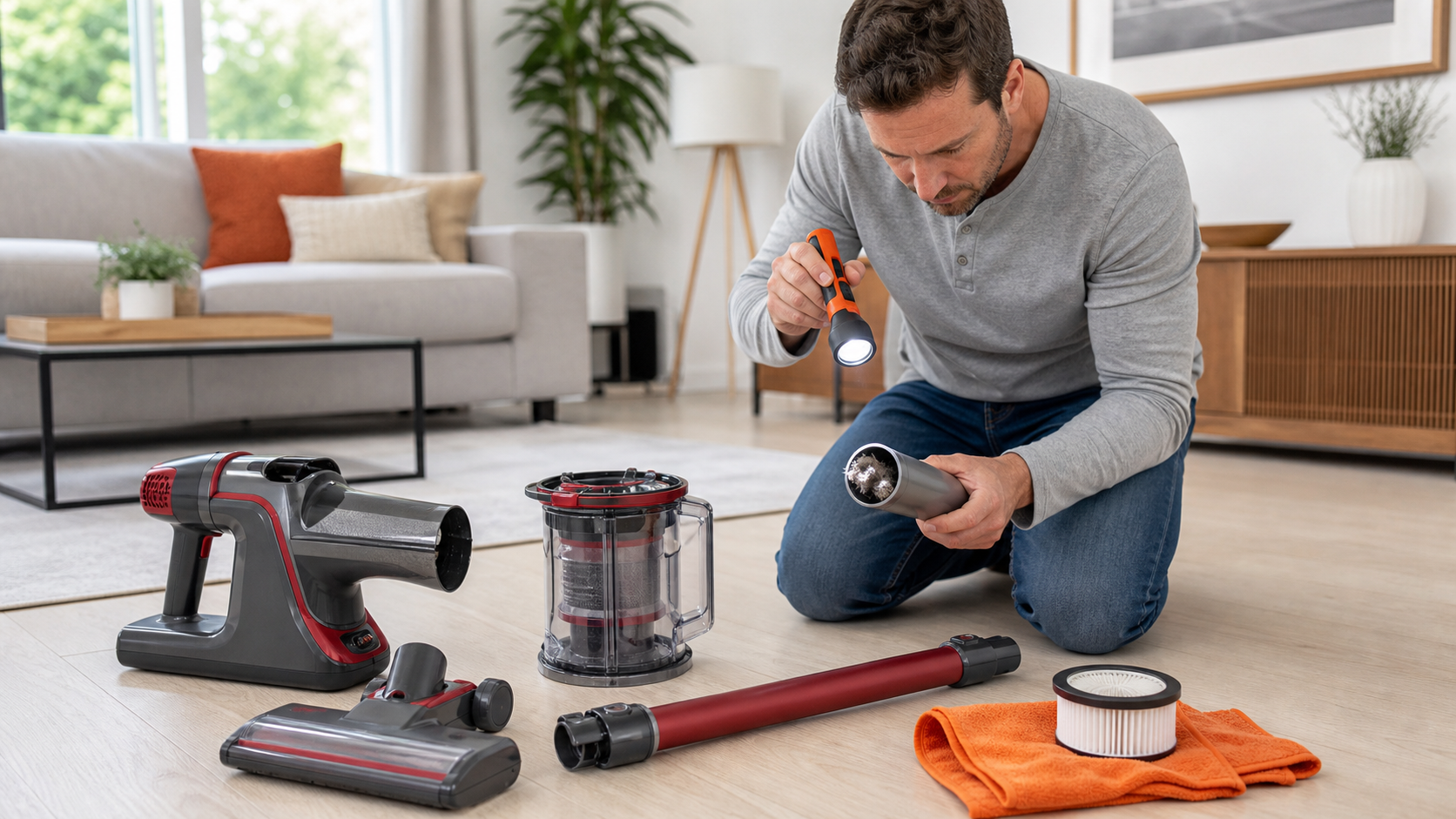
- Vacuum with a crevice or brush attachment
- Flashlight
- Dollar bill or piece of paper for testing the door seal
- Appliance thermometer (optional, for verifying temperature)
- Microfiber cloth and mild soapy water
Step-by-step
Check the thermostat setting
Look at the temperature controls inside the fresh-food compartment. The recommended setting is 37–40°F (3–4°C). A bumped dial or a touch-panel that reset after a power outage is a common and easy fix.
Make sure the fridge is getting power
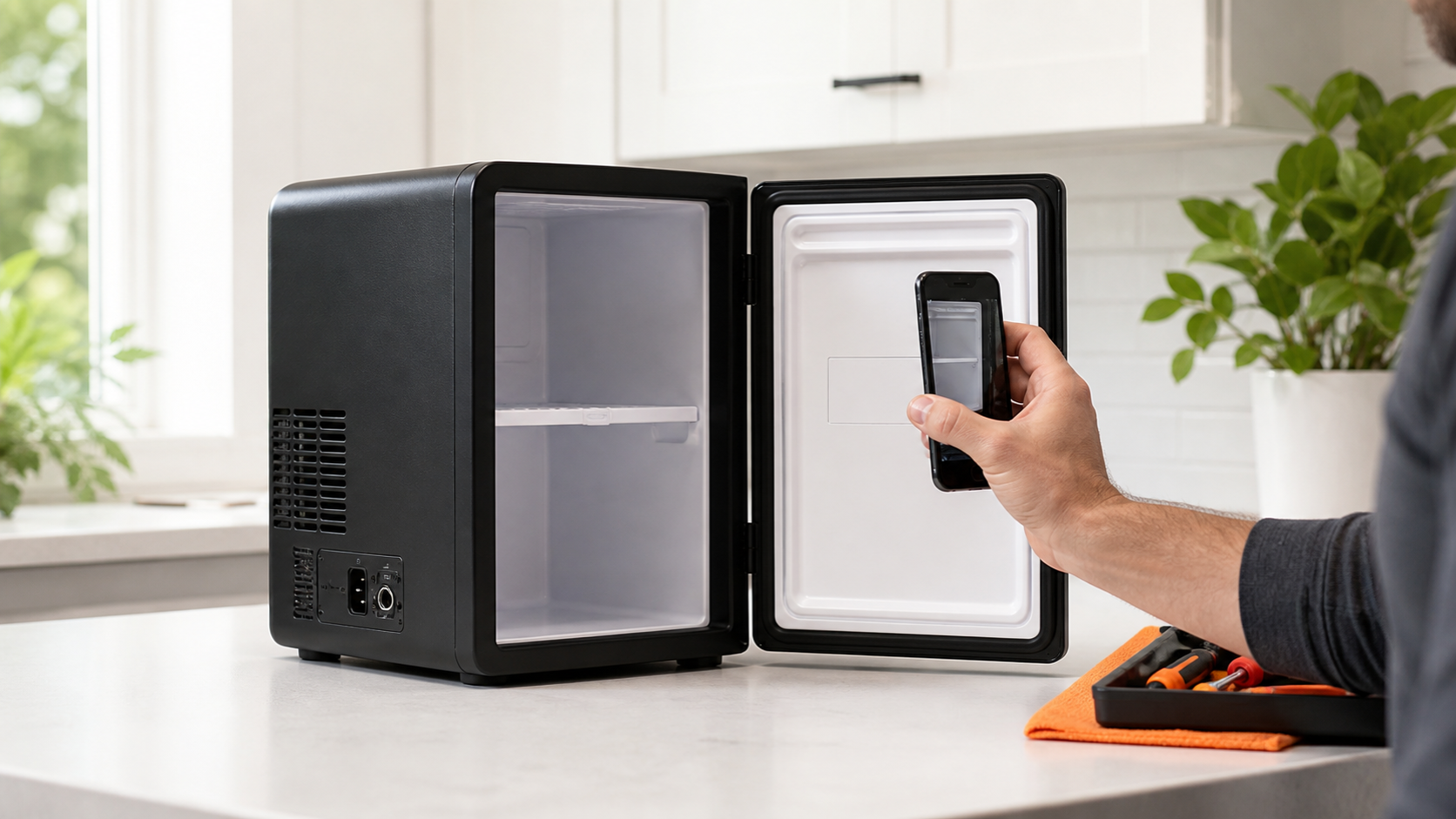
Confirm the interior light turns on when you open the door. If it does not, check the breaker and try another appliance in the same outlet. A tripped GFCI outlet in a garage or basement can cut power to the fridge without affecting other rooms.
Clean the condenser coils
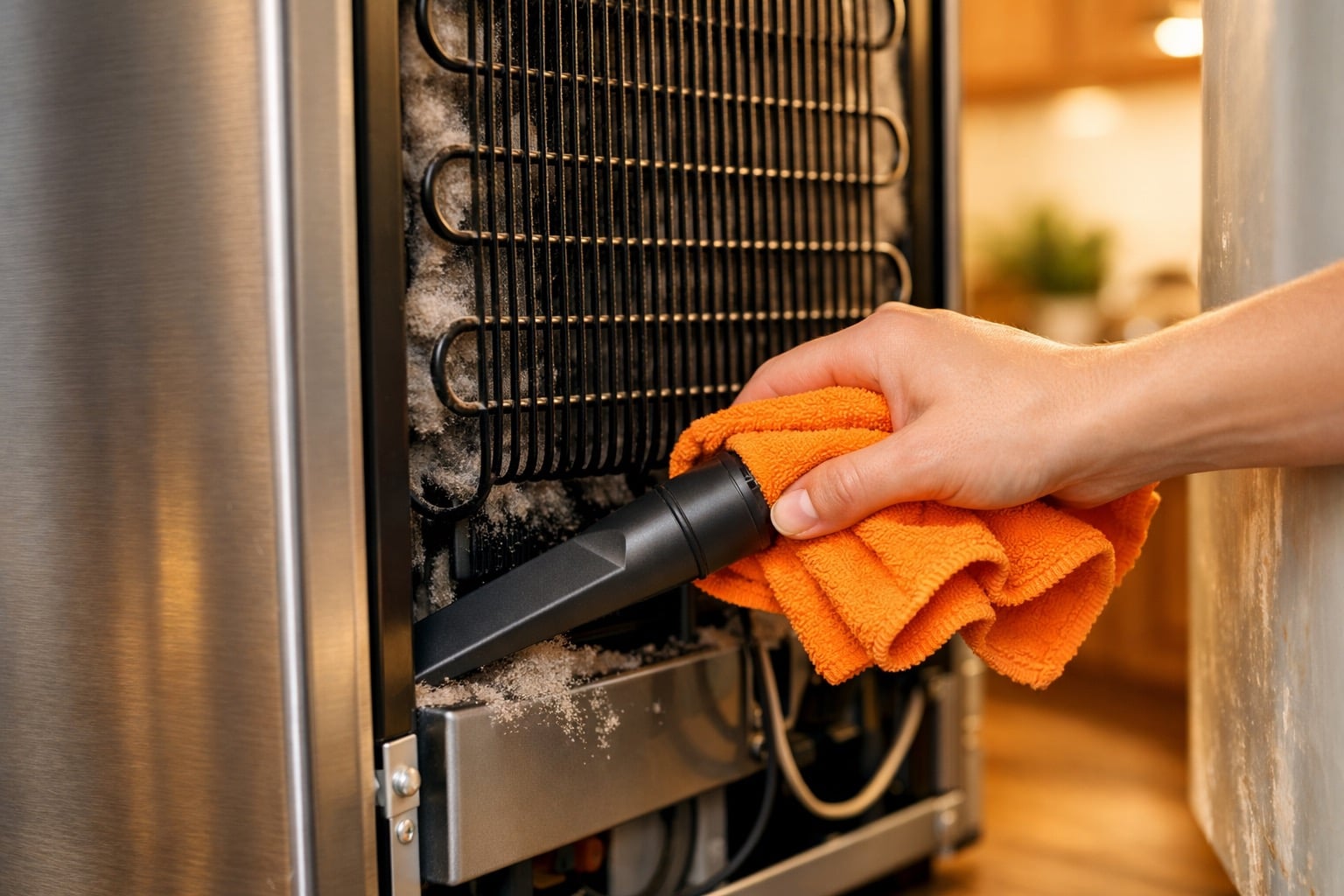
Unplug the fridge, pull it away from the wall, and locate the condenser coils—usually on the back or beneath a kick plate at the front. Vacuum dust and pet hair from the coils gently. Dirty coils make the compressor work harder and are a leading cause of poor cooling in summer.
Clear blocked air vents
Find the vents that connect the freezer and fresh-food compartments. Move tall items, bags, or containers away from the vents so cold air can circulate. An overpacked fridge restricts airflow and creates warm spots.
Test the door seals
Close the refrigerator door on a dollar bill. Slowly pull it out—you should feel slight resistance. Repeat around all four sides. If the bill slides out with no resistance, the gasket may be torn, flattened, or dirty. Clean it with warm soapy water first; replace it if it is cracked or permanently deformed.
Verify clearance around the fridge
Refrigerators need at least an inch of space on the sides and back to release heat. If the fridge is wedged into cabinetry with no airflow, it will struggle to cool, especially in summer. Pull it forward slightly if possible.
Listen for the compressor
With the door closed, listen at the back or side. A healthy compressor produces a steady hum. If you hear clicking but no hum, or no sound at all after the thermostat calls for cooling, the compressor, start relay, or capacitor may have failed and needs professional diagnosis.
Freezer is cold but the fridge is warm
If the freezer holds temperature but the fresh-food compartment is warm, the most likely cause is restricted airflow between the two. Cold air is produced in the freezer and circulated into the fridge by a fan through a damper. A blocked vent, a failed evaporator fan, or a stuck damper breaks that path.
Check for items blocking the vents first. If vents are clear and the fan is not running when the compressor is on, the evaporator fan motor or the damper control may need replacement by an appliance technician.
Why refrigerators struggle in summer
Refrigerators are designed to maintain an interior temperature about 30°F below the surrounding room temperature. When the kitchen reaches 80°F or higher in summer, the compressor has to run longer and hotter to keep the same interior temperature. Dirty coils and poor clearance compound the problem.
A fridge that performs well in winter but warms up in summer almost always benefits from coil cleaning and improved airflow. If the problem persists after cleaning, the condenser fan, start relay, or compressor may be wearing out.
Check for recalls before replacing parts
Before spending money on a service call, check whether your refrigerator has been recalled. In July 2026, Galanz Americas recalled about 121,680 Retro Refrigerators sold at Home Depot and Amazon because internal electrical components can short-circuit and ignite, causing fire and burn hazards. One death and 34 fire reports were associated with the recall.
Check the model number on the label inside or at the back of the fridge, then search CPSC.gov or the manufacturer's recall page. If your unit is recalled, unplug it immediately and follow the manufacturer's remedy instructions—do not attempt DIY repairs on a recalled electrical appliance.
- Find the model number on a label inside the fresh-food compartment or on the back.
- Search CPSC.gov/recalls for your brand and model.
- If recalled, unplug the refrigerator and contact the manufacturer for the remedy.
- Never repair a recalled electrical appliance yourself.
When to call for service
- The compressor is silent and the fridge is warm throughout, even after confirming power.
- You hear clicking at the back but no compressor hum.
- The freezer is frosted over and the fridge is warm—possible defrost system failure.
- Water is leaking from the bottom front of the fridge or pooling inside.
- The fridge trips the breaker repeatedly.
- Your refrigerator is under a recall notice.
Common questions
How long should I wait after moving a refrigerator before plugging it in?
Wait at least 4 hours if the fridge was tilted during a move, and up to 24 hours if it was laid on its side. This lets compressor oil settle back into the pump before it runs.
Can a dirty condenser coil really stop the fridge from cooling?
Yes. Dusty coils insulate the refrigerant tubing, preventing heat from escaping. The compressor runs longer and hotter, and in summer a heavily coated coil can keep the interior 5–10°F warmer than the set point.
What temperature should my refrigerator be set to?
The FDA recommends keeping the refrigerator at or below 40°F (4°C) and the freezer at 0°F (-18°C). Use an appliance thermometer to verify, since built-in dials use numbers rather than degrees.
Prefer to hire a professional?
Find a local appliance repair company
Browse business profiles with published services, coverage, and direct contact information in the FixMate directory.
Sources and further reading
This article is original FixMate editorial content informed by the references below. Always follow manufacturer instructions and local code.