
Quick answer
Keep water away from the plug and outlet, wipe up the puddle, and note whether it begins inside the fresh-food section, at the front edge, or behind the refrigerator. Check for a tipped container, blocked door seal, excess condensation, and a recently changed filter that is not fully seated. Inspect only visible, accessible water connections and the drain pan location described in the owner’s manual. If water appears at a supply connection, close the refrigerator’s water shutoff valve if it is clearly identified and safely reachable. Call appliance service or a plumber for a continuing leak, a damaged line or valve, internal ice buildup, water near live electrical parts, or any refrigerator that must be pulled out or opened up to find the source.
Safety before you start
Water and electricity are a dangerous combination. Do not touch a wet plug, outlet, cord, switch, or power strip. If the electrical area is wet, keep away and have power isolated safely by a qualified person. Unplug the refrigerator only if the plug and your hands are dry and it is reachable without standing in water. Do not pull a heavy refrigerator out alone, remove electrical panels, use heat or sharp tools on ice, or disturb refrigerant tubing. Close only a clearly identified water-service valve; never force a stuck valve.
What you need
- Absorbent towels
- Flashlight
- Phone camera
- Refrigerator owner and installation manuals
- Dry paper towels for pinpointing a visible connection leak
- Food-safe container for any removable drain pan the manual identifies
Step-by-step
Protect the electrical area
Keep people and pets away, then look from a dry position to see whether water has reached the cord, plug, outlet, or power strip. Do not touch any wet electrical component. If it has, stop and arrange safe power isolation before cleanup or inspection.
Dry the floor and mark where water returns
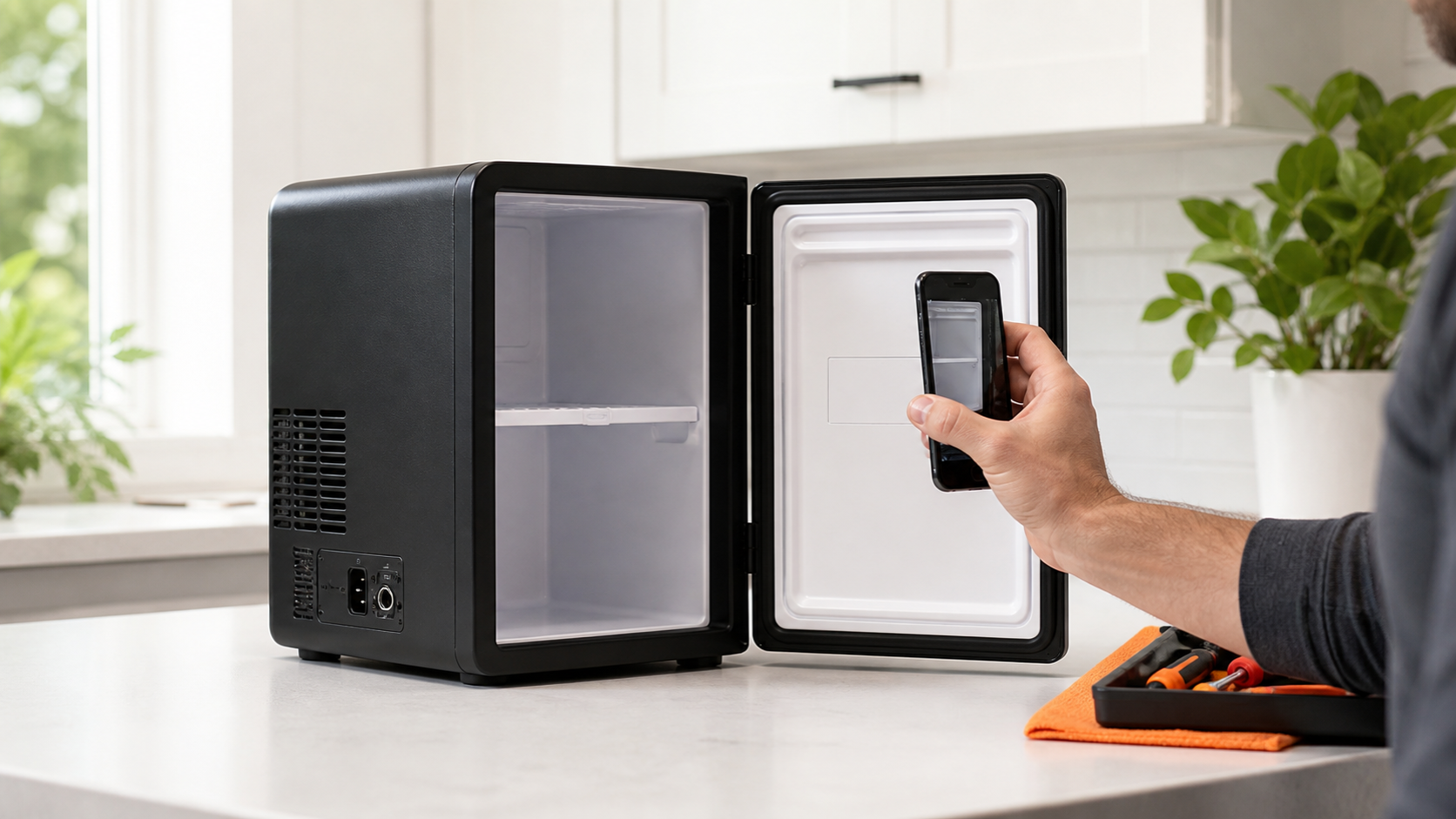
Use towels from the dry side of the puddle. Note the first place new moisture appears: inside the compartment, beneath the front edge, at one rear corner, or near a visible supply valve. A photo and time note can help service distinguish a steady pressurized leak from intermittent condensation or defrost water.
Rule out spills and door-seal problems
Check for an open container, melting ice, food blocking the door, or debris on the gasket. Clean the gasket only as the manual directs and confirm the door closes. Persistent condensation can also follow frequent opening, humid air, or a damaged seal.
Check a recently installed filter
If leaking began after a filter change, compare the filter and housing with the model’s instructions. Confirm the filter is the specified type, its protective cap was removed, and it is fully seated in the correct orientation. Do not force it or use an unverified adapter.
Inspect visible water connections
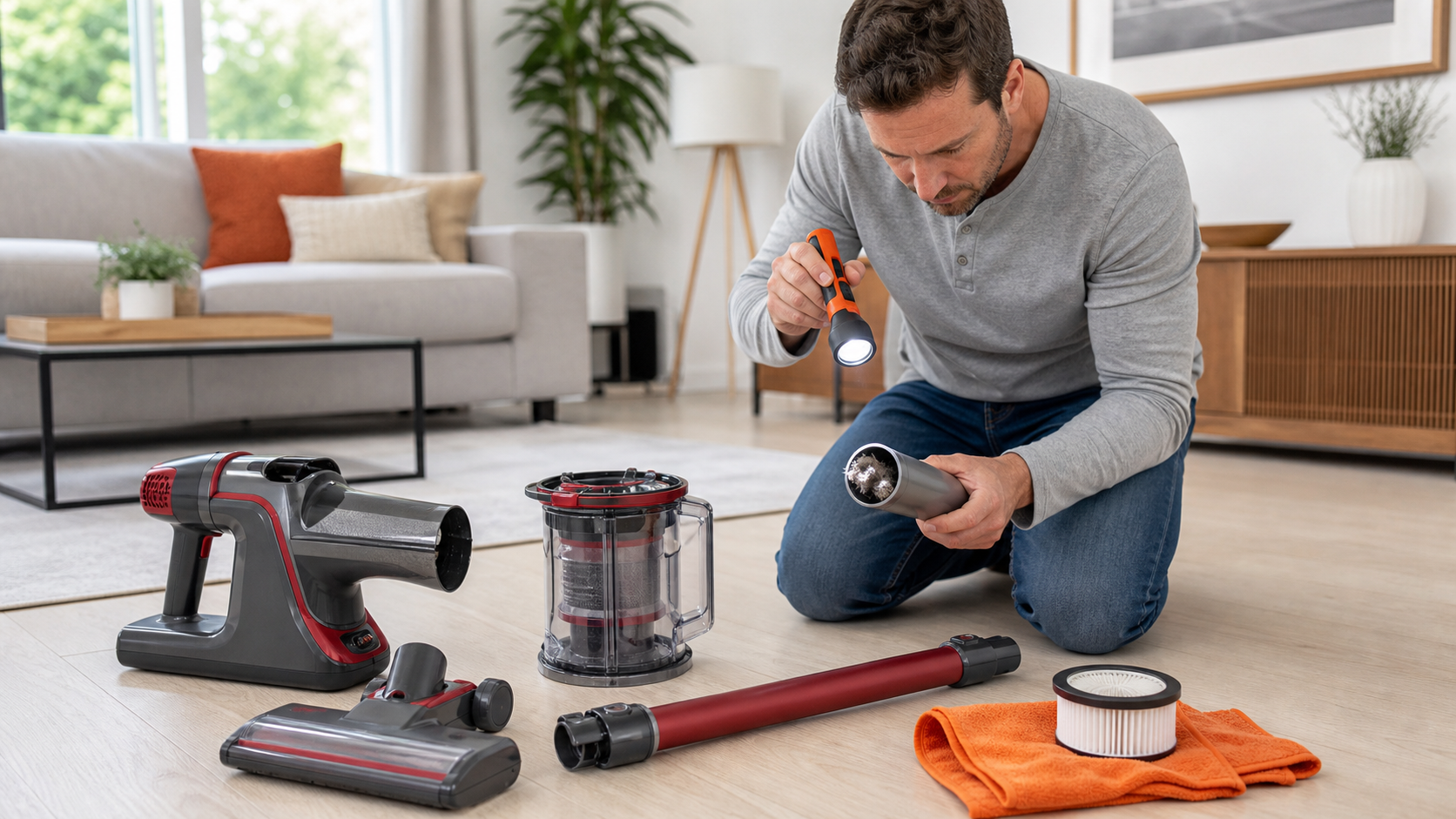
Without moving the refrigerator, use a flashlight to look at any accessible supply tube, shutoff valve, and connection. Blot a visible fitting with a dry paper towel to confirm moisture, but do not tighten plastic fittings blindly. If the line or fitting is leaking, close the known service valve if it turns normally and call a plumber or appliance professional.
Check the manual’s drain-pan location
Some refrigerators have an accessible drain pan; others do not. Follow the owner’s manual to locate it without removing protected panels. A cracked, overflowing, displaced, or inaccessible pan needs service. Do not assume standing water in a pan is abnormal because normal defrost water may be designed to evaporate there.
Treat interior ice or recurring water as a service clue
Water beneath drawers or a sheet of ice on the compartment floor can point to a model-specific defrost-drain issue. GE notes that many models require service for this condition. Do not probe a hidden drain, pour chemicals into it, or use a hair dryer; sharp tools and heat can damage liners, wiring, and refrigerant components.
Monitor once or stop for service
After correcting a simple spill, door obstruction, or manual-confirmed filter seating issue, dry the area and monitor it. Shut off the water supply and arrange help if moisture returns. Call promptly for a fast leak, damaged tube, unsafe valve, wet electrical area, spoiled-food temperature, or source that requires moving the appliance.
Use the water’s location as a clue
- Inside the fresh-food section: look first for spills, door closure, condensation, a filter housing, or model-specific drain symptoms.
- At a rear corner: suspect an accessible supply tube, valve, or connection, but do not move the refrigerator alone to confirm it.
- Centered beneath the cabinet: consult the manual for the drain-pan location and service access.
- At the front after door opening: check containers, the dispenser area, gasket cleanliness, and condensation before assuming an internal failure.
Plumber or appliance technician?
A leak from the home’s shutoff valve, wall connection, or building plumbing belongs with a licensed plumber. A filter housing, internal reservoir, dispenser tube, defrost system, drain pan, or component inside the refrigerator belongs with an appliance technician authorized for the model.
When the source is unclear, photograph the first wet point and tell the service provider whether closing the refrigerator water valve stops the leak. Do not repeatedly reopen a suspected line just to diagnose it.
When to stop immediately
- Water has reached a plug, outlet, cord, control, extension lead, or power strip.
- The shutoff valve is stuck, corroded, leaking, unlabeled, or inaccessible.
- A supply tube is split, kinked, abraded, or spraying rather than slowly seeping.
- Ice buildup, repeated interior pooling, or an inaccessible drain requires panel removal.
- The refrigerator is unstable, built in, connected to hard plumbing, or too heavy to move safely.
Common questions
Why is there water under my refrigerator but no obvious leak?
The source may be intermittent: a door-seal condensation problem, defrost water, a dispenser event, or a slow supply connection. Dry the area, note the first place water returns, and use the model manual rather than removing panels.
Can a refrigerator water filter leak after replacement?
Yes. A wrong, damaged, or incompletely seated filter can leak. Follow the exact model instructions and use the specified filter. Stop if the housing is cracked or the filter will not seat without force.
Should I clear a refrigerator defrost drain myself?
Only if the manufacturer provides a model-specific owner procedure that requires no protected-panel removal. Many designs need service. Never use sharp tools, chemicals, or uncontrolled heat inside the refrigerator.
Prefer to hire a professional?
Find a local appliance repair company
Browse business profiles with published services, coverage, and direct contact information in the FixMate directory.
Sources and further reading
This article is original FixMate editorial content informed by the references below. Always follow manufacturer instructions and local code.