Quick answer
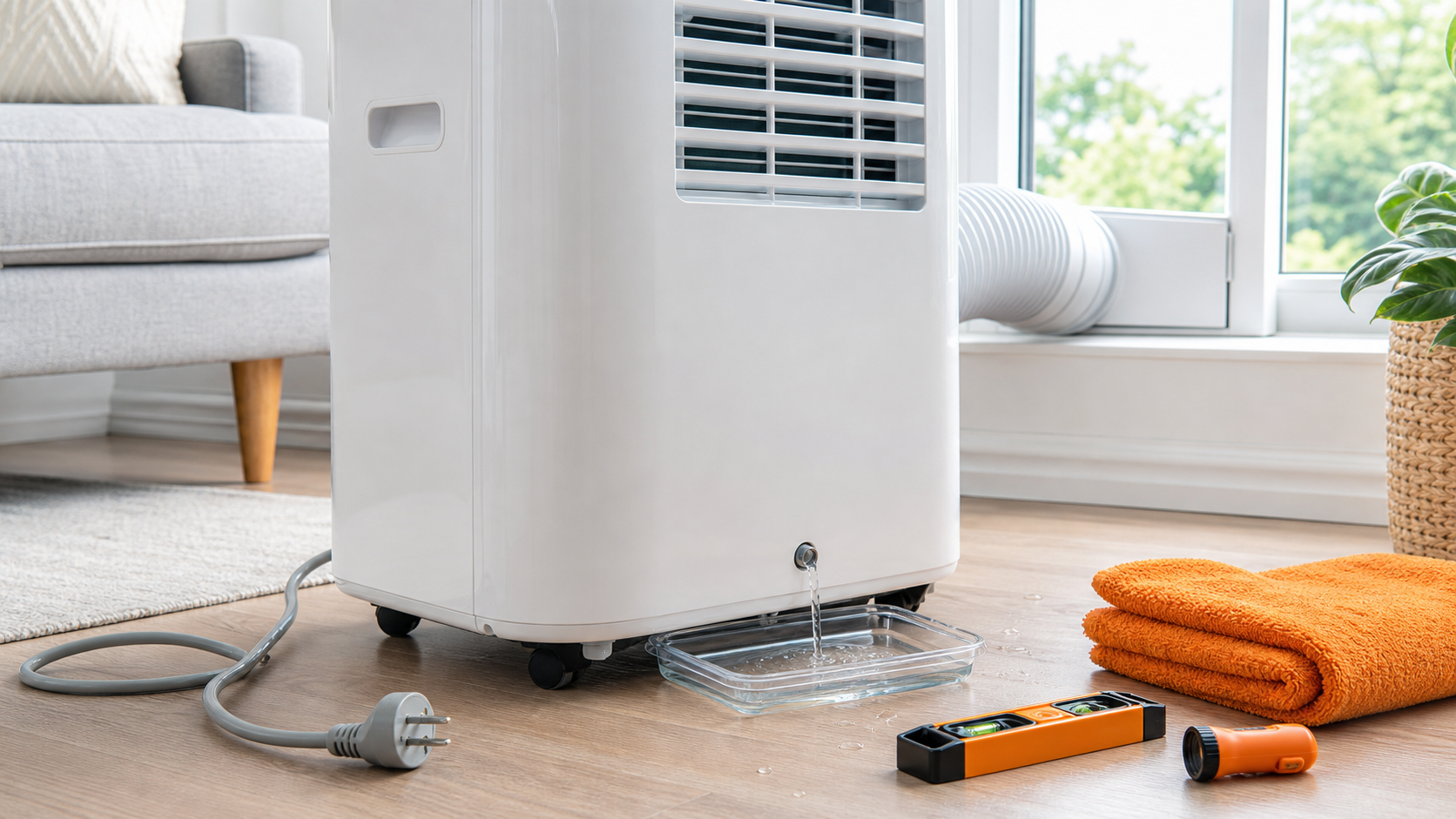
Turn the portable AC off, unplug it, dry the floor, and place a shallow pan beneath the lower drain port. Drain the tank using the exact method in the owner’s manual, then reinstall the rubber plug and cap securely. Confirm the unit is upright and level, the filter and air inlets are clean, and any continuous-drain hose runs downhill without kinks. On LG window and portable units, CH04 or FL can indicate that condensate is not draining or the tank is full; if the code returns frequently on dry days or water leaks from inside the cabinet, stop using the unit and request service.
Safety before you start
Water and electricity are a dangerous combination. Unplug the AC before touching a drain cap, bucket, hose, filter, or wet floor. Do not tip a full unit, remove the outer cabinet, insert tools into a drain opening, or reconnect power until the plug, cord, outlet, and floor are completely dry. Use an electrician if the outlet or plug became wet.
What you need
- Owner’s manual for the exact model
- Shallow pan or bowl sized for the drain port
- Orange towel or absorbent cloth
- Small bubble level
- Flashlight
- Soft brush or vacuum attachment for the washable filter, if the manual permits
- Manufacturer-specified drain hose for continuous drainage, if supported
Step-by-step
Power off and unplug before touching water
Use the control to turn the unit off, then unplug it with dry hands while standing on a dry surface. If water reached the plug or outlet, do not touch either; switch off the circuit only if you can do so safely and call an electrician.
Dry the floor and identify the leak location
Wipe the cabinet and floor dry. Water from the lower rear drain area suggests a loose cap, full tank, or drain issue. Moisture at the air outlet may be normal condensation in very humid air, while water emerging from cabinet seams needs service.
Drain the internal tank by the manual
Place a pan under the lower drain port before removing the cap and rubber plug. Some units hold more than expected. Allow the flow to stop, reinstall every plug firmly, and wipe the area dry before moving the pan.
Make sure the unit is upright and level
Set the AC on a firm, flat floor and check side-to-side and front-to-back level. A tilted condensate pan can overflow. Never use soft shims, folded towels, or an unstable stand beneath a portable unit.
Check airflow without opening the cabinet
Clean the user-removable filter according to the manual and clear furniture, curtains, and dust from the intake and outlet. Restricted airflow can make coils colder, increase condensation, and reduce cooling.
Inspect the external drain and exhaust setup
If continuous drainage is enabled, the hose must be the approved size, run downhill, and remain free of kinks or submerged ends. Confirm the window exhaust kit is secure and rain cannot travel back through the opening.
Test only after everything is dry
Restore power and monitor the unit. If CH04 or FL returns after correct draining, the tank fills unusually fast on a dry day, or water appears from cabinet seams, turn it off and arrange manufacturer service.
Normal condensation, a full tank, or a true leak?
- Light mist at the outlet in very humid air can be temporary condensation where cold supply air meets warm room air.
- Water at the lower drain port usually points to a full tank, loose plug, missing cap, or continuous-drain setup problem.
- A full-tank light or LG CH04/FL code can mean condensate needs to be drained; wording varies by model.
- Water from cabinet seams, a repeated code in dry conditions, or a soaked power connection is not a routine drain event.
Why continuous-drain hoses back up
Most portable units use gravity for a continuous drain. Any uphill section, kink, crushed hose, sludge buildup, or submerged hose end can stop flow and send water back toward the internal pan.
Do not assume a generic hose fits. Confirm the port size, whether the model supports continuous drainage in cooling mode, and whether an internal pump is required. Follow the owner’s manual rather than forcing mismatched threads onto a plastic drain fitting.
Shortcuts that can damage the AC
- Do not drill a new drain hole or insert wire through an existing one.
- Do not tip or lay down a full portable AC to empty it.
- Do not run the unit without the drain plug unless the manual specifies a connected hose.
- Do not seal cabinet seams with caulk or tape; hidden overflow can reach electrical parts.
- Do not open the refrigerant system or outer cabinet. Refrigerant and electrical repairs belong with a qualified technician.
When to stop and call for service
Stop using the unit if the plug or outlet was wet, the breaker or GFCI trips, water comes from the control panel or cabinet seams, the drain port is cracked, the unit will not stay level, or an error returns after the manual’s drain procedure. A technician should also inspect repeated icing, grinding sounds, or poor cooling with a clean filter and unrestricted airflow.
Common questions
What does LG CH04 or FL mean on a portable air conditioner?
LG says CH04 can indicate a condensate drainage problem and may appear as FL on some window or portable models. Drain the unit exactly as its manual directs; request service if the warning repeatedly returns.
Should a portable AC need draining every day?
Frequency depends on humidity, temperature, mode, and model design. Frequent filling during very humid weather can be normal, but a sudden change or repeated full-tank warning in dry conditions deserves inspection.
Can I keep using the AC with a pan under it?
No. A pan protects the floor during diagnosis; it does not correct a loose plug, backed-up drain, cracked fitting, or internal leak. Find and correct the approved cause before continued use.
Prefer to hire a professional?
Find a local appliance repair company
Browse business profiles with published services, coverage, and direct contact information in the FixMate directory.
Sources and further reading
This article is original FixMate editorial content informed by the references below. Always follow manufacturer instructions and local code.