Quick answer
Empty the dishwasher, remove and rinse the filter according to the owner’s manual, clear visible food and glass from the sump area, wipe the door gasket and lower door edge, and check spray-arm holes. Reassemble everything and run the machine’s cleaning cycle or hottest empty cycle with a manufacturer-approved dishwasher cleaner. Persistent sewage, burning, or standing-water odors need diagnosis rather than fragrance.
Safety before you start
Turn the dishwasher off before reaching into the sump or removing parts, and wear gloves because broken glass may be hidden near the filter. Never mix dishwasher cleaner, bleach, vinegar, ammonia, or other products. Use one product only as directed by the dishwasher and cleaner manufacturers. Do not use chlorine bleach on stainless-steel interiors unless the manufacturer explicitly allows it.
What you need
- Dishwashing gloves
- Soft nylon brush or old toothbrush
- Microfiber cloth
- Small bowl for removable parts
- Manufacturer-approved dishwasher cleaner
- Owner’s manual for filter and spray-arm instructions
Step-by-step
Empty the dishwasher and check for standing water
Remove racks if the manual permits and inspect the bottom. A small amount of clean water in the sump can be normal, but a pool of dirty water points to a drain or filter problem that should be solved before running another cycle.
Remove and wash the filter
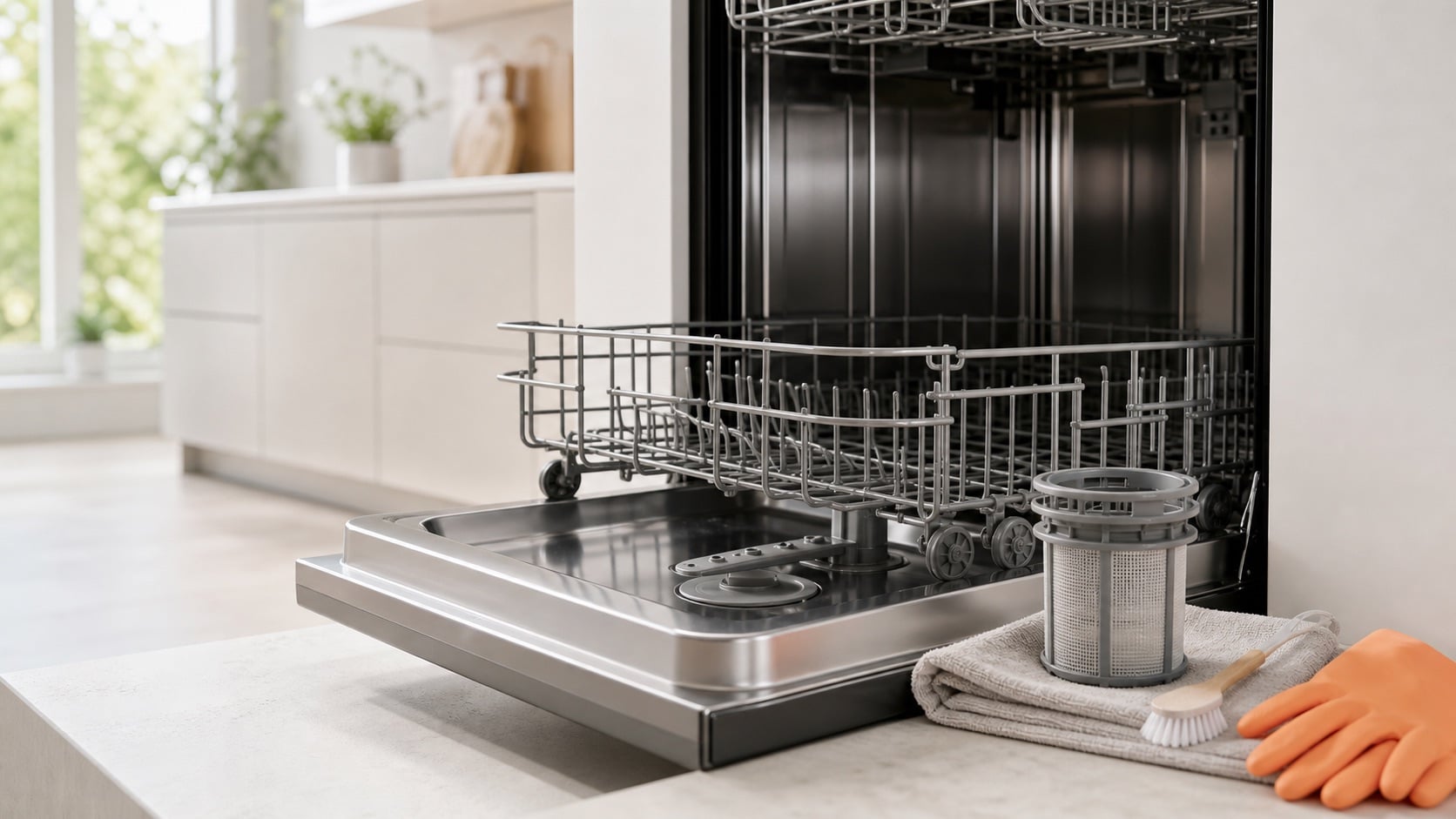
Follow the manual because filters twist, lift, or lock differently. Rinse under warm water and use a soft brush for greasy debris. Avoid wire brushes that can damage the mesh.
Clean the sump and drain area
With power off, remove visible food, labels, bones, paper, and glass using gloved hands or suitable tongs. Do not force tools into the pump or dismantle the drain system unless the manual provides a user procedure.
Inspect the spray arms
Check that each arm rotates freely and that food or mineral debris is not blocking the holes. Remove the arms only if the owner’s manual explains how, then rinse and clear openings with a non-damaging tool.
Wipe the gasket and hidden edges
Clean the rubber door seal, detergent-cup area, hinges, and the lower lip of the door with warm water and a mild cleaner approved by the manufacturer. Dry folds where moisture and food collect.
Run an approved cleaning cycle
Reinstall every part securely. Use the dishwasher’s maintenance cycle or hottest empty cycle with one approved dishwasher-cleaning product, following its placement and temperature instructions exactly.
Dry and ventilate
After the cycle, wipe remaining moisture and leave the door slightly open when practical and safe. Airflow helps the tub and gasket dry between loads.
What different odors can indicate
- Sour or rotten-food smell: dirty filter, sump debris, or food trapped in a gasket or spray arm.
- Musty smell: moisture lingering on the gasket or in a dishwasher that stays closed between infrequent loads.
- Sewage odor: drain-hose routing, air-gap, disposal, or plumbing trap problem.
- Burning or electrical smell: stop the cycle, disconnect power if safe, and arrange appliance service.
- Dirty water and odor together: blocked filter, drain path, pump, disposal connection, or household drain issue.
When the drain connection is the cause
If odor returns immediately after a thorough cleaning, check the visible sink-side air gap and garbage disposal for buildup, and confirm the dishwasher drain hose follows the high-loop or air-gap arrangement required by the appliance instructions and local code.
Do not pull the dishwasher out or disconnect a drain hose unless you can shut off power and water and reinstall it correctly. A kinked, clogged, or incorrectly routed hose is a good reason to use an appliance technician or plumber.
Prevent dishwasher odor
- Scrape large food scraps and remove labels before loading.
- Clean the filter on the schedule in the owner’s manual.
- Run a rinse cycle if dirty dishes will sit for several days.
- Use the correct detergent amount and water-temperature setting.
- Clean the gasket and lower door edge during routine kitchen cleaning.
- Run a manufacturer-approved maintenance cycle about monthly or as directed.
When to call for service
Arrange service if the dishwasher will not drain, leaks, repeatedly leaves dirty water, makes grinding noises, smells burned, trips a breaker, or develops a sewage odor that returns after the sink drain, air gap, filter, and approved hose routing have been checked.
Common questions
Can I use vinegar and baking soda together in my dishwasher?
Use only cleaning methods approved by the dishwasher manufacturer. Combining products can neutralize them, create excessive foaming, damage components, or become dangerous if another cleaner is present. Never mix vinegar with chlorine bleach.
How often should I clean the dishwasher filter?
Follow the owner’s manual because frequency depends on the filter design and how dishes are prepared. Inspect it regularly and clean it whenever food or greasy buildup is visible.
Why does my dishwasher smell like sewage?
Possible causes include stagnant drain water, a blocked air gap or disposal connection, or an incorrectly routed drain hose. If cleaning the filter and visible drain area does not solve it, have the drain setup inspected.
Prefer to hire a professional?
Find a local appliance repair company
Browse business profiles with published services, coverage, and direct contact information in the FixMate directory.
Sources and further reading
This article is original FixMate editorial content informed by the references below. Always follow manufacturer instructions and local code.