Quick answer
Clean the lint screen, reduce an oversized load, and make sure clothes leave the washer damp rather than dripping. Inspect the metal vent hose for crushing or sharp bends and confirm the outdoor hood opens with strong airflow while the dryer runs. If drying improves with a smaller load but airflow remains weak, stop using the dryer until the entire vent is cleaned or repaired. A dryer that tumbles without heat needs model-specific service.
Safety before you start
Restricted dryer airflow can cause overheating and fire. Stop using the dryer for a burning smell, scorching, smoke, unusual heat, damaged wiring, a gas odor, or a vent that does not exhaust outdoors. Unplug an electric dryer before moving it or cleaning behind it. Do not disconnect gas piping; use a qualified technician.
What you need
- Vacuum with crevice attachment
- Soft nylon brush for a washable lint screen
- Flashlight
- Manufacturer-approved dryer vent brush kit for an accessible duct
- Work gloves
- Owner’s and installation manuals
Step-by-step
Clean the lint screen
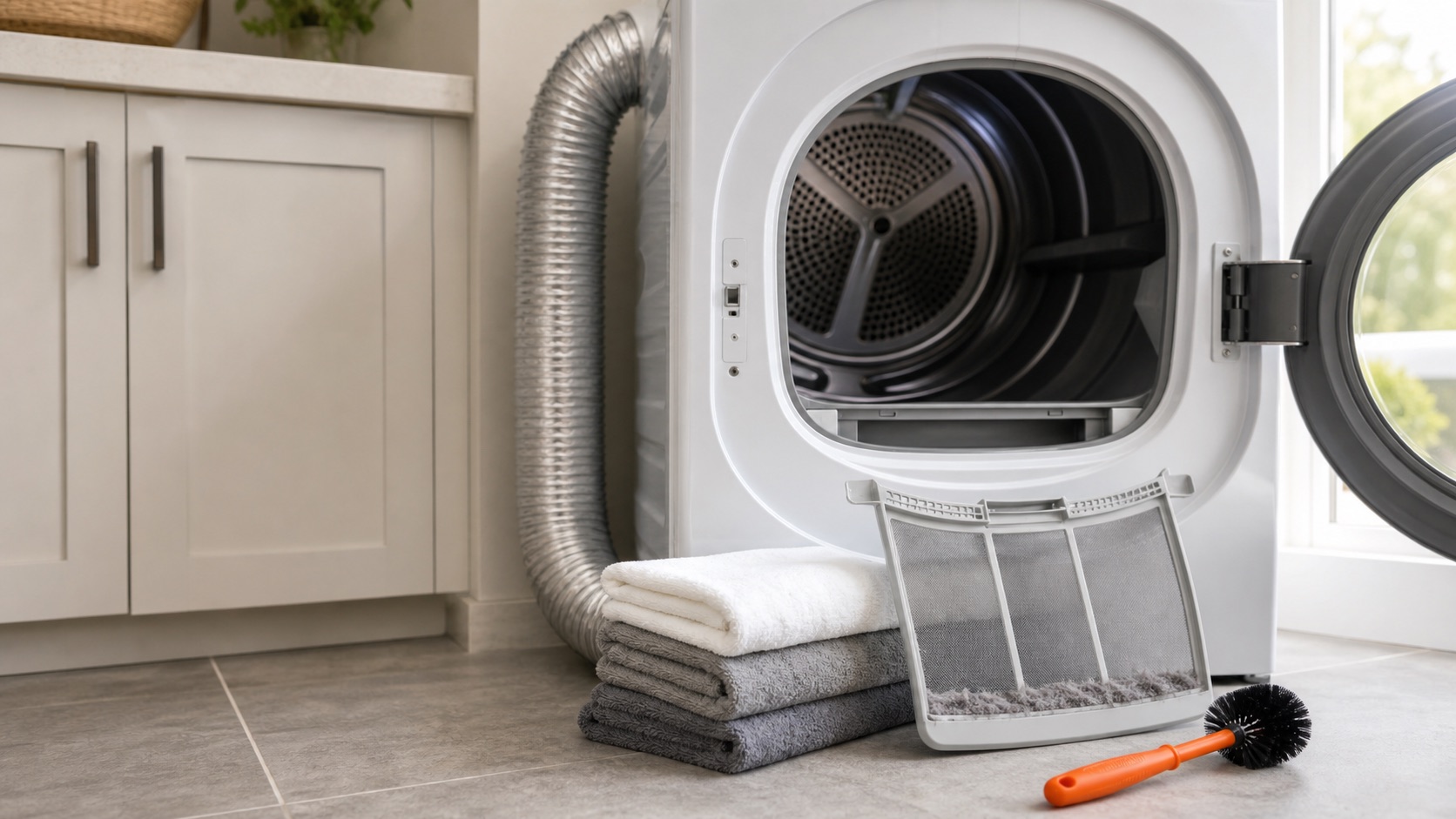
Remove lint before every load. If water beads on the screen instead of passing through, wash both sides gently with warm water, liquid detergent, and a nylon brush, then let it dry completely before reinstalling.
Try a smaller, balanced load
A packed drum prevents items from tumbling through warm air. Separate heavy towels from lightweight clothing, untangle sheets, and use a cycle appropriate for the fabric.
Check how wet clothes are after washing
Clothes should be damp, not dripping. An unbalanced load, low spin speed, clogged washer drain, or washer problem can send too much water into the dryer and make a normal dryer seem slow.
Inspect the vent behind the dryer
Unplug the dryer before moving it. Look for a crushed, kinked, excessively long, disconnected, or nonmetal vent connector. Restore gentle bends without puncturing it and follow the installation manual’s material and length limits.
Check the outdoor exhaust hood
With the dryer running on a normal heated cycle, check from outside that the flap opens and airflow is strong. Do not reach into a moving fan or open vent. Weak flow, lint buildup, or a stuck cover points to a restricted duct.
Clean the accessible vent path
Turn the dryer off and disconnect power. Clean the connector and accessible duct with a vent brush and vacuum, keeping sections intact. Use a professional for long, concealed, rooftop, damaged, or inaccessible ducts.
Retest heat and drying time
Reconnect the dryer exactly as installed and run a small load. If the drum turns but never warms, the breaker, gas supply, igniter, thermal protection, sensor, or heating system may require qualified service.
Is it a heat problem or an airflow problem?
- Dryer gets hot but clothes stay damp: airflow restriction, oversized load, or poor washer spin is likely.
- Dryer tumbles but stays cool: power supply, controls, thermal protection, heating element, igniter, or gas system may need service.
- Dryer stops early with damp clothes: moisture sensors may be coated or the load may not contact them evenly.
- Laundry room becomes hot or humid: vent may be disconnected, leaking, or restricted.
- Drying time has gradually increased: lint buildup in the duct is a leading suspect.
Warning signs of a clogged dryer vent
- Loads take more than one normal cycle.
- Clothes or the dryer cabinet feel unusually hot.
- The outdoor flap barely opens or airflow is weak.
- Lint accumulates behind the dryer or around the exterior vent.
- The dryer shuts down before the load is dry.
- A hot, dusty, or burning smell appears during operation.
Dryer airflow maintenance
Clean the lint filter before and after each cycle, keep the area around and behind the dryer free of lint, and inspect the metal connector periodically for crushing or damage. The exterior cover should open freely and should not use a screen that traps lint.
Have the full exhaust path cleaned at least as often as the dryer and vent manufacturers recommend, and sooner when drying time increases. Long ducts and roofs are safer handled by a qualified vent-cleaning or appliance professional.
When to stop and call for service
- You smell gas, burning insulation, or scorched lint.
- The dryer or outlet is unusually hot, sparking, or tripping a breaker.
- The dryer has no heat after basic load, setting, and airflow checks.
- The duct is concealed, disconnected in a wall, damaged, or exits through an inaccessible roof.
- The drum does not turn, makes grinding sounds, or stops unexpectedly.
- Internal panels, gas components, heating elements, or electrical testing would be required.
Common questions
Why is my dryer hot but my clothes are still wet?
Heat without drying usually means moist air cannot leave efficiently. Clean the lint screen, reduce the load, inspect the vent hose, and check airflow at the outdoor hood.
How often should I clean the dryer vent?
Follow the appliance and vent-system instructions and clean sooner whenever drying time rises or airflow weakens. The lint screen should be cleaned before and after every cycle.
Can I run the dryer with the vent disconnected to test it?
Do not vent a dryer into the home. Dryer exhaust carries moisture and lint, and gas dryers can produce combustion gases. Diagnose and reconnect the vent according to the installation instructions.
Prefer to hire a professional?
Find a local appliance repair company
Browse business profiles with published services, coverage, and direct contact information in the FixMate directory.
Sources and further reading
This article is original FixMate editorial content informed by the references below. Always follow manufacturer instructions and local code.