Quick answer
When a dishwasher leaves more water than the manual describes as normal, cancel or drain the cycle once and listen for the pump. If water remains, switch off the breaker or unplug the appliance before reaching into the tub. Bail the water, remove and clean only the filter parts the exact model manual identifies as user-serviceable, clean an accessible sink-top air gap, confirm the sink and disposal drain freely, and inspect the visible under-sink hose for a kink or poor route. A newly installed disposal may still have its dishwasher-inlet knockout plug. Stop for service if the machine leaks, shows a water-in-base warning, the pump is silent or harsh, the filter area contains inaccessible glass, or the safe checks do not restore drainage.
Safety before you start
A dishwasher combines line voltage, hot water, sharp debris, and a powered drain pump. Disconnect electrical power before removing standing water, the filter, or any model-approved pump cover. Wear cut-resistant gloves only for handling removable parts; never sweep the sump with a bare hand. Do not use chemical drain opener, loosen hidden live wiring, pull a hardwired dishwasher from the cabinet, bypass a leak switch, or run the appliance while water is on the floor. Shut the water supply and call for service if leakage continues.
What you need
- Owner’s manual for the exact dishwasher model
- Cup, sponge, or turkey baster for standing water
- Shallow pan and absorbent towels
- Soft nylon brush and warm water for a removable filter
- Flashlight
- Cut-resistant gloves for removable sharp debris
- Screwdriver only if the owner’s manual specifies it for a user-serviceable cover
Step-by-step
Stop for an active leak or electrical warning
Do not start another cycle if water is on the floor, the breaker trips, the cord or junction area is wet, or the dishwasher shows a leak-protection warning. Turn off power and the water supply if you can do so safely, protect people from the area, and arrange service.
Run the documented cancel or drain once
Close the door and use the exact model’s cancel or drain command. Listen from outside: a normal pump sound with little flow suggests a restriction, while silence or harsh grinding may need service. Do not repeat the command if the machine strains, leaks, or throws the same error.
Disconnect power and bail the tub
Switch off the dishwasher breaker or unplug an accessible cord. Remove the lower rack, scoop water into a bucket, and use a sponge for the remainder. Keep towels at the door edge, but do not let water reach the toe-kick, cord, receptacle, or junction box.
Remove and clean the user-serviceable filter
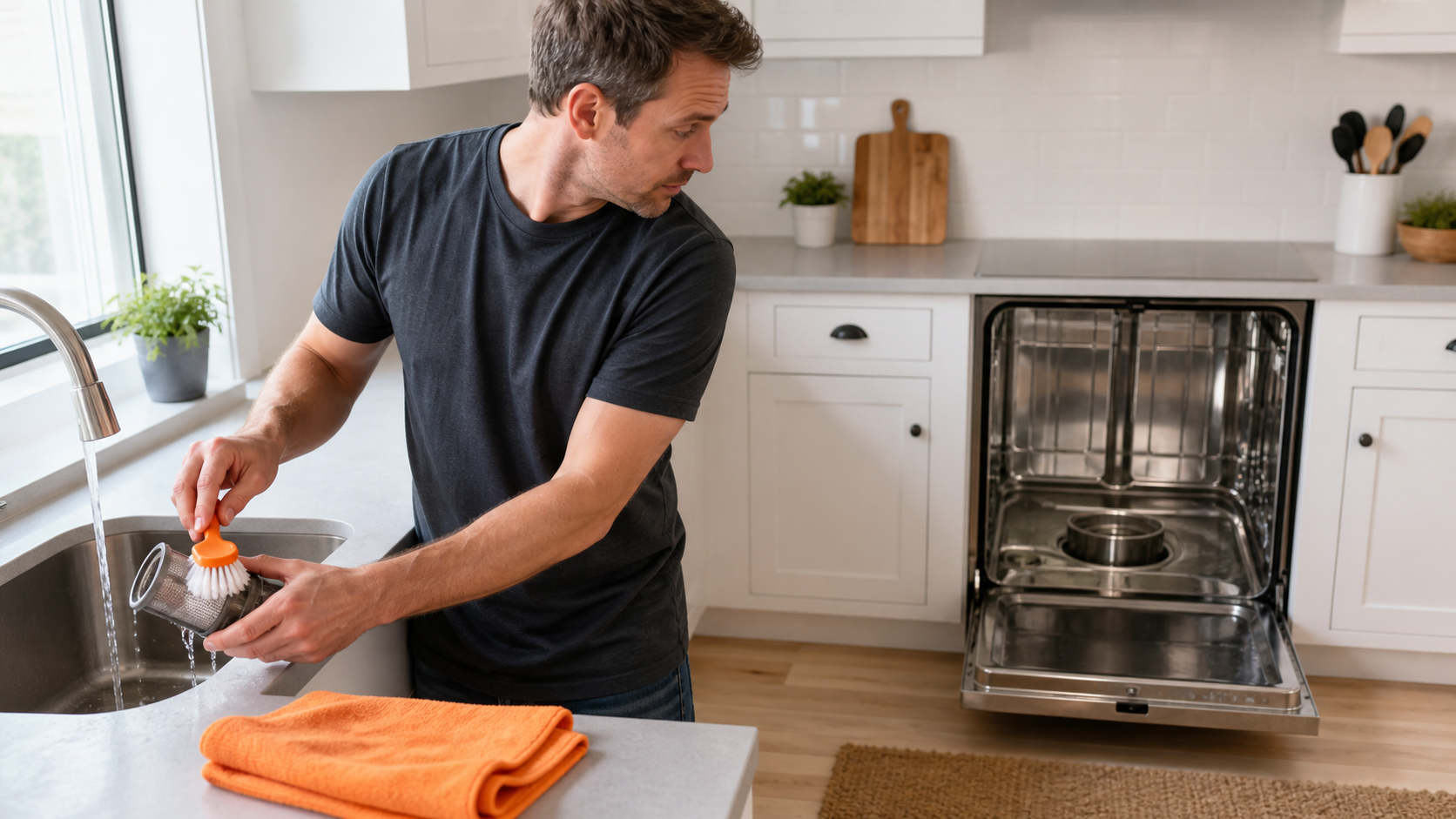
Follow the model manual for the filter location, direction of rotation, and parts. Rinse the filter under warm water and use a soft brush for food residue. Do not use a wire brush or run the dishwasher until every filter component is locked back into its correct position.
Check the sink and air gap
Confirm the kitchen sink drains normally. If there is a small air-gap cylinder on the sink deck, remove only its cap and clean accessible debris as the appliance or air-gap instructions allow. Water discharging from the air gap during drain usually points to a restriction downstream toward the sink or disposal.
Inspect the visible drain-hose route
Under the sink, look for a hose that is kinked, crushed, sagging, or pulled from its high loop or air-gap connection. Do not drag the dishwasher out or disconnect a hose unless the manual permits the task, power is off, the sink area is dry, and you can control the residual water.
Consider recent disposal or plumbing work
If the problem began immediately after a new garbage disposal or sink installation, verify that the installer removed the disposal’s dishwasher-inlet knockout plug and restored the required hose routing. The check is especially important when the dishwasher drained normally before the plumbing work. Call the installer if access or correction is unclear.
Reassemble and test one short cycle
Lock the filter and every user-serviceable cover exactly as the manual shows, remove tools and towels, dry the area, and restore power. Run the shortest rinse or drain test while watching the sink connection and floor. Stop immediately for leakage, unusual sound, or another drain error.
What the water pattern can tell you
- A small amount confined to the filter well may be normal on some models; use the manual, not a universal depth rule.
- Water across the tub floor after a cycle points to incomplete draining or backflow.
- Water at the door edge or on the floor is a stop-use leak, not a routine filter-cleaning symptom.
- Water returning after the machine drains can indicate a low hose route, blocked air gap, sink backup, or disposal connection problem.
- A normal pump sound with no outflow suggests a restriction; silence, grinding, or a recurring electrical error needs model-specific service diagnosis.
Why new installations fail to drain
A dishwasher that stops draining immediately after a disposal, sink, or dishwasher installation often has a setup problem rather than a worn-out pump. Manufacturer guidance highlights kinked hoses, an incorrect high loop or air-gap route, and a disposal knockout plug that was never removed.
Correct routing is governed by the dishwasher manual and local plumbing code. Do not copy a neighboring home’s arrangement or lower the hose just to make water move; an improper route can allow contaminated sink water to flow back into the machine.
The pump cover is model-specific
Some Bosch models document a user-removable pump cover beneath the filter, with instructions to remove standing water and accessible debris carefully. Other dishwashers do not authorize that access for owners. A generic video is not permission to open the pump area on a different model.
If the manual does permit pump-cover access, disconnect power, expect sharp glass, and follow the exact removal and locking sequence. If the cover resists, the debris is inaccessible, or an impeller is damaged, stop and use authorized service.
When to call an appliance technician or plumber
- Appliance service: no pump sound, harsh grinding, repeated drain codes, an inaccessible obstruction, damaged filter or cover, a leak from the machine, or no improvement after approved checks.
- Plumber: the sink or disposal also backs up, the branch drain is clogged, the air gap repeatedly overflows, or the under-sink drain connection needs rework.
- Electrician: the breaker trips, the receptacle or cord is damaged, the junction area is wet, or the dishwasher loses power independently of the drain problem.
- Installer: drainage failed immediately after a new dishwasher, disposal, countertop, sink, or cabinet installation.
Common questions
Is a little water in the bottom of a dishwasher normal?
Some models retain a small amount in or near the filter well. Water spread across the tub floor, near the door, or returning after a completed drain needs investigation. Use the exact owner’s manual for the normal level.
Can I pour drain cleaner into a dishwasher?
No. Caustic drain chemicals can damage components, create hazardous splashes, and leave residue in an appliance used for dishes. Use model-approved filter and hose checks or call a technician or plumber.
Why did my dishwasher stop draining after a new garbage disposal?
A common installation cause is the disposal’s dishwasher-inlet knockout plug remaining in place. The hose may also be kinked or routed incorrectly. Verify the installation instructions or call the installer rather than forcing the dishwasher to run repeatedly.
Prefer to hire a professional?
Find a local appliance repair company
Browse business profiles with published services, coverage, and direct contact information in the FixMate directory.
Sources and further reading
This article is original FixMate editorial content informed by the references below. Always follow manufacturer instructions and local code.