Quick answer
Start with the pattern: soil on one rack can mean a blocked spray path, while poor results everywhere can involve loading, the selected cycle, detergent, a dirty removable filter, or inadequate water delivery. After the cycle ends, let hot surfaces cool and switch power off before removing any owner-serviceable part. Confirm dishes do not block the detergent cup or spray arms, choose a cycle appropriate for the soil, and clean only the filter and spray components the exact manual identifies. Stop for standing water, leaks, broken glass you cannot reach safely, repeated error codes, a dispenser that will not open, or any repair requiring a toe-kick or internal panel.
Safety before you start
Dishwasher water, dishes, and heating components may remain hot after a cycle. Wait for the tub and contents to cool, wear cut-resistant gloves if broken glass is possible, and switch off the breaker or unplug only from a dry, reachable outlet before removing a filter or spray arm. Never reach into a running dishwasher, defeat the door latch, remove the toe-kick, test live wiring, or add drain cleaner, hand dish soap, bleach, or mixed chemicals. Shut off use and call for service if water leaks, electrical parts are wet, the breaker trips, or a burning smell appears.
What you need
- Dishwasher use-and-care manual and model number
- Flashlight
- Cut-resistant gloves if glass may be present
- Soft nylon brush or cloth approved by the manual
- Towels for small drips during filter removal
- Fresh automatic-dishwasher detergent recommended for the model
- Phone camera for load pattern, filter orientation, and error display
Step-by-step
Photograph the cleaning pattern
Before unloading, note whether food remains on the top rack, bottom rack, silverware, or every item. A single untouched zone suggests blocked spray or loading; a uniform film may involve detergent, water hardness, or cycle selection. Standing water is a separate drain symptom and should stop this checklist.
Let the machine cool and isolate power
Open the door carefully after the cycle and wait for steam, dishes, and metal parts to cool. Switch off power as the manual directs before putting hands near the filter or spray arms. Do not rely on the open door alone as electrical isolation.
Check loading and spray-arm clearance
Look for a cutting board, pan handle, utensil, or tall item blocking an arm or detergent dispenser. GE says spray arms should rotate freely; turn only an accessible arm gently by hand with power off. Reload dishes so dirty surfaces face the spray and pieces do not nest or overlap.
Confirm the cycle and options
Compare the selected cycle with the soil level and the manual. A light, quick, or top-rack-only option is not equivalent to a normal or heavy cycle. Do not add extra heat or sanitize settings to items that their care instructions exclude.
Clean the removable filter by the manual
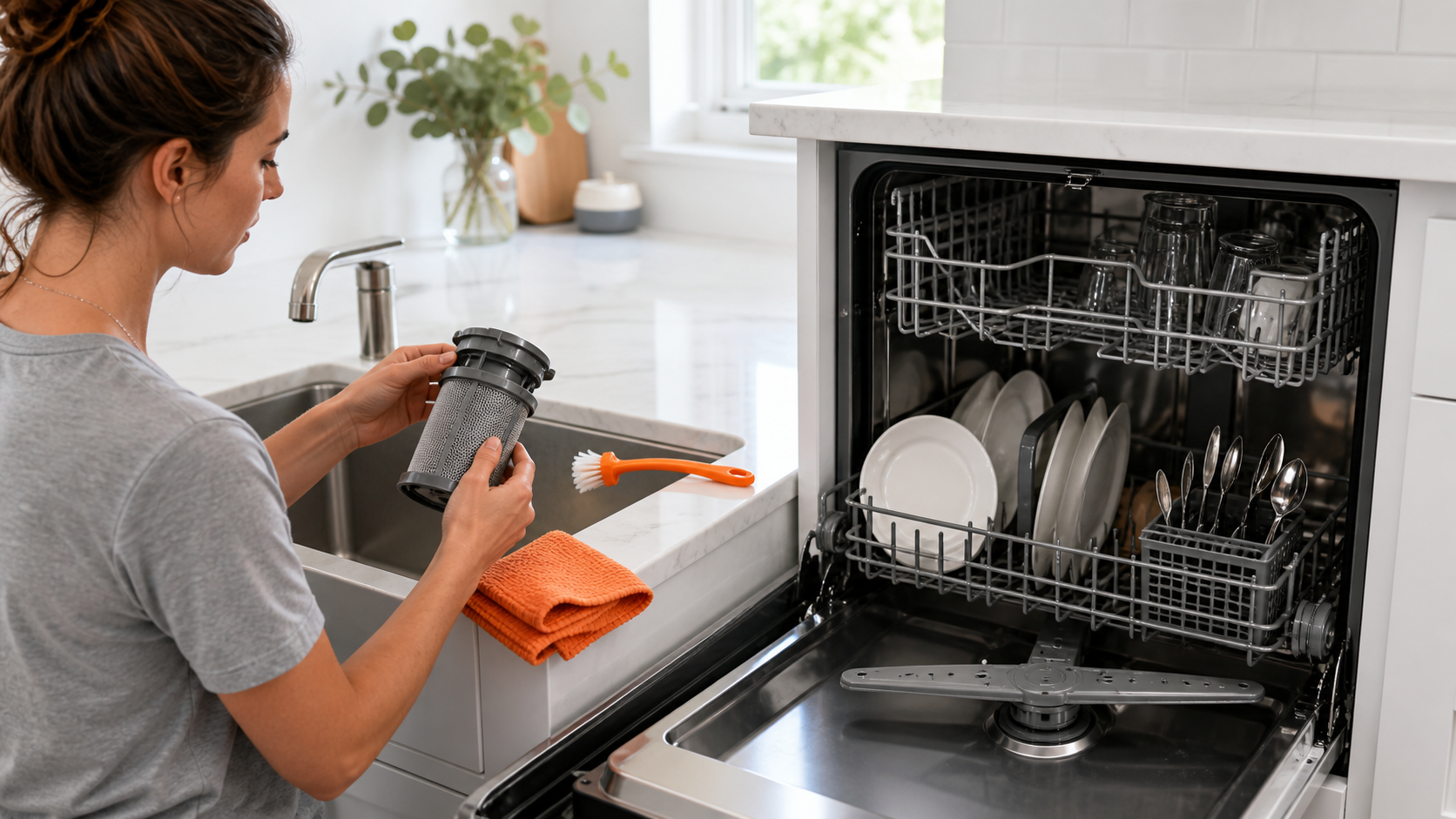
Some dishwashers have a user-removable filter and others use a different system. Photograph its position, unlock it only as the manual shows, check carefully for glass, rinse away debris, and use a soft brush if permitted. Reinstall and lock it fully; never run the machine with the filter omitted.
Inspect only owner-serviceable spray openings
Check visible holes for food or mineral residue. Clean or remove an arm only if the model instructions provide that procedure, using the specified soft tool without enlarging the openings. A cracked arm, loose hub, or arm that binds after loading is corrected needs the correct model part or service.
Check detergent and dispenser access
Use fresh automatic-dishwasher detergent in the amount and form the manual recommends. Make sure a dish does not block the dispenser door. Do not substitute hand dish liquid or combine cleaners, and do not assume more detergent fixes hard water or low water delivery.
Run one controlled comparison load
Restore power, load a small representative set correctly, select the manual-recommended cycle, and stay nearby. Compare results by rack. Stop for leaks, unusual grinding or tapping after loading is corrected, standing water, a failed dispenser, or no improvement; those clues justify appliance service.
What the dirty-dish pattern can tell you
- One rack stays dirty: check whether that rack’s spray path is blocked and whether the selected option intentionally washes only another zone.
- One corner stays dirty: look for a tall utensil, pan, or board interrupting arm rotation or shielding dishes.
- Food particles return to many dishes: inspect the owner-serviceable filter and the bottom of the tub after power is off and the machine is cool.
- A white film covers many items: confirm detergent amount, rinse-aid guidance, and local water hardness rather than scraping the dishwasher interior.
A dirty filter is not the same as a drain failure
A removable filter can trap food that later interferes with wash performance, and GE and Whirlpool both direct owners to check model-specific filter care. Cleaning it may improve results when the machine otherwise fills and drains normally.
Water left above the filter area, a sink or air-gap backup, a pump noise, or a repeated drain code needs a drain-focused diagnosis. Do not force a wash-performance checklist through standing water or pour chemical drain opener into the dishwasher.
When to stop and arrange service
- Water leaks from the door, hose area, cabinet, or onto electrical components.
- The breaker trips, the cord or outlet is hot, or the machine smells electrical or burned.
- The filter cannot be removed or locked exactly as the manual shows, or broken glass is inaccessible.
- A spray arm, hub, rack feed tube, dispenser, latch, or seal is cracked, loose, or damaged.
- Correct loading, the specified cycle, a clean filter, and clear spray paths do not improve the result.
Common questions
Why is only the top rack of my dishwasher dirty?
A load may be blocking a spray arm or water path, the filter may be restricted, or an option may be washing only another rack. Check the model manual and arm clearance before assuming a pump has failed.
Can I run a dishwasher without its filter?
No. If the model has a removable filter, reinstall and lock it exactly as directed before use. Running without it can recirculate debris or damage components.
Should I use more detergent when dishes stay dirty?
Not automatically. Too much detergent can leave residue, and the correct amount depends on the product, water hardness, load, and machine instructions. Correct loading, cycle choice, filter care, and spray clearance first.
Prefer to hire a professional?
Find a local appliance repair company
Browse business profiles with published services, coverage, and direct contact information in the FixMate directory.
Sources and further reading
This article is original FixMate editorial content informed by the references below. Always follow manufacturer instructions and local code.