Quick answer
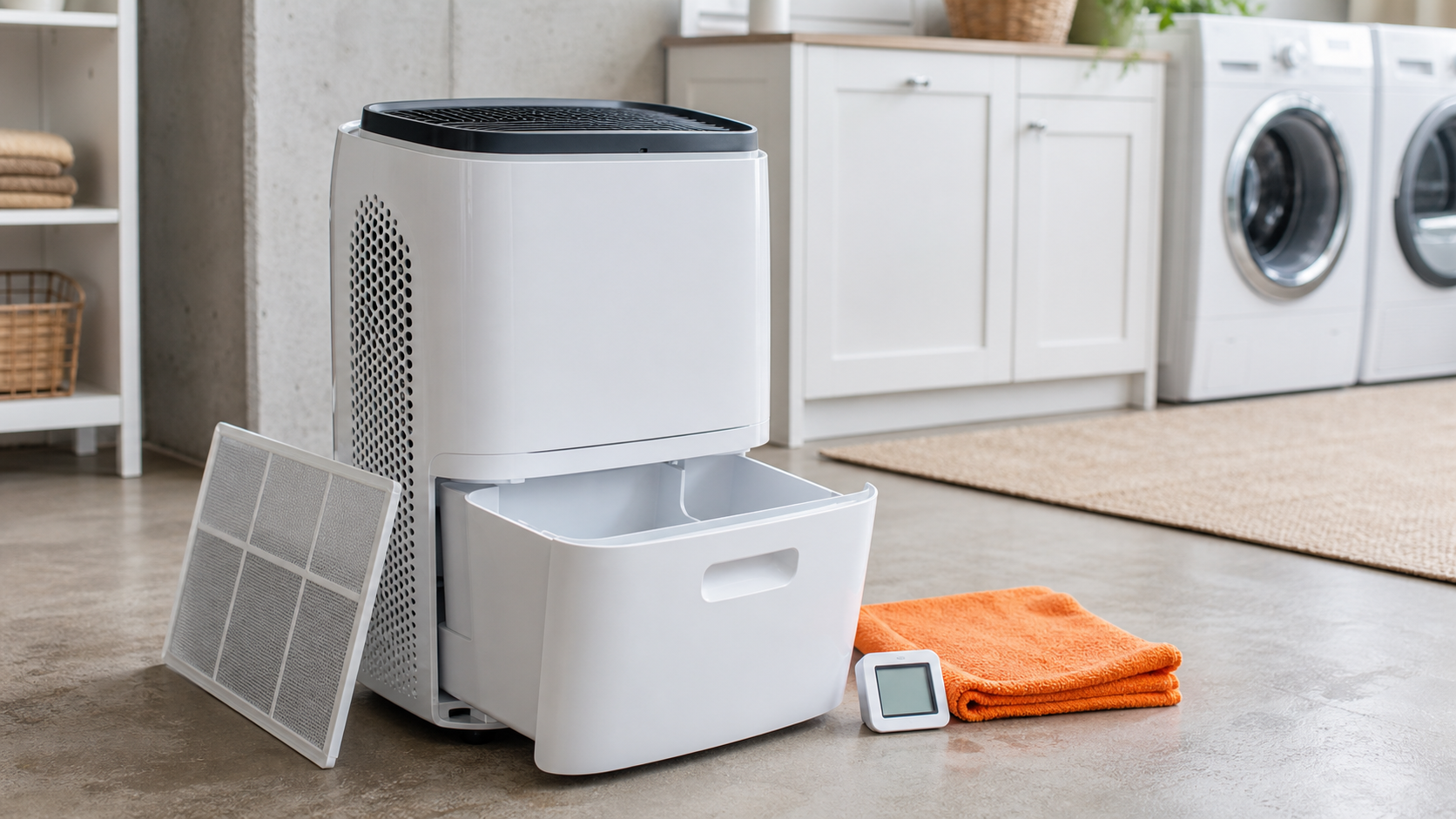
First check the brand and model against CPSC dehumidifier recalls; recalled units should be unplugged and handled through the stated remedy, not tested or repaired. If the unit is not recalled, use a separate hygrometer to measure the room. Set the dehumidifier below the measured relative humidity, reseat the empty bucket, clean the user-removable filter, clear the air inlets, and check for frost. For continuous drainage, make sure the hose runs downhill without kinks. If the fan runs but the compressor never starts, the room remains above 50% RH, or the unit repeatedly ices, use manufacturer service or replace the unit.
Safety before you start
Dehumidifiers combine water, line voltage, a compressor, and refrigerant. Unplug the unit before removing the bucket, filter, or drain hose. Do not open the cabinet, bypass the bucket switch, chip ice from the coil, or work on refrigerant or internal wiring. Stop immediately for heat, smoke, a burning smell, melted plastic, sparking, a wet plug, or a tripping breaker.
What you need
- CPSC dehumidifier recall lookup
- Owner’s manual and model-number photo
- Separate digital hygrometer
- Orange microfiber cloth
- Soft brush or vacuum attachment for the user-removable filter
- Flashlight
- Correct drain hose, if the model supports gravity drainage
Step-by-step
Check recall status before troubleshooting
Find the model and date-code label without opening the cabinet. Compare it with CPSC recall records. Dehumidifier recalls have covered multiple familiar brand names made by shared manufacturers, so the logo alone is not enough.
Measure the room with a separate hygrometer
Place a hygrometer near—but not directly in—the unit’s discharge air. If measured humidity is already below the set point, an empty bucket may be normal because the compressor has no reason to run.
Set a realistic target
ENERGY STAR generally describes 30% to 50% relative humidity as an appropriate building range. For testing, set the control several percentage points below the independent reading and wait according to the manual; do not force continuous mode indefinitely in a dry room.
Empty and firmly reseat the bucket
Unplug the unit, remove the bucket, and confirm it is empty, clean, and not cracked. Reinstall it squarely. A misaligned bucket or float can leave the safety switch open and prevent the compressor from operating.
Restore clear airflow
Clean the user-removable filter by the manual and leave the specified clearance around every grille. A dirty filter or a unit pushed against a wall can reduce water removal and cause frost.
Look for frost without touching the coil
If visible ice appears behind a grille, turn the unit off and let it thaw naturally. Low room temperature or restricted airflow can cause icing. Never chip ice or use a hair dryer; request service if frost returns under the manual’s operating conditions.
Check the gravity drain path
If a hose is connected, confirm it is the approved diameter, slopes continuously downward, and has no kink, clog, or submerged end. A blocked hose may redirect water to the bucket or stop the unit when the bucket fills.
Reset once, then decide on service
If the manufacturer permits a reset, unplug the dehumidifier for the stated interval, reconnect it, and restore the settings. If measured humidity stays high and no water appears after a normal run, the compressor, sealed system, sensor, or control may need professional diagnosis.
When an empty bucket is normal
A humidistat turns the compressor on only when measured humidity rises above the target. If the room is cool or already dry, the fan may cycle while little or no water reaches the bucket. A separate hygrometer helps distinguish normal cycling from a bad sensor or cooling problem.
Water collection also varies with temperature. Warm air can hold more moisture, so the same relative-humidity reading does not always produce the same number of pints per day.
Why every older dehumidifier deserves a recall check
CPSC has repeatedly warned about dehumidifiers that can overheat and catch fire, including units sold under many brand names. Some affected products look ordinary and may still be in basements, garages, rentals, or secondhand circulation years later.
Use the model number and date code, not appearance alone. If the unit matches a recall, unplug it and follow the CPSC or manufacturer remedy. Do not run it for a few minutes to see whether it gets hot.
What the symptom pattern suggests
- Fan off and full-bucket light on: empty and correctly reseat the bucket; inspect the user-accessible float.
- Fan runs, room is below the set point: normal cycling may explain the empty bucket.
- Fan runs, room is humid, filter is dirty: restore airflow and retest after the filter is fully dry.
- Ice forms repeatedly: check temperature and airflow, then request service if icing returns.
- Water enters the bucket but not the hose: correct the hose slope, size, and blockage by the manual.
- Fan runs but compressor never starts in a humid room: the control or sealed system may require service.
When service or replacement makes more sense
Stop DIY diagnosis when the cabinet is hot, the cord is damaged, the breaker trips, the compressor repeatedly clicks, the coil ices after airflow is corrected, or the room remains humid with no water collection. Internal electrical and refrigerant work is not a safe homeowner repair.
For an older out-of-warranty portable unit, sealed-system service may cost more than replacement. Compare the manufacturer’s support options, recall status, age, capacity, and ENERGY STAR efficiency before paying for a repair.
Common questions
Why is my dehumidifier running but the bucket stays empty?
The room may already be below the set humidity, the bucket switch may not be engaged, airflow may be blocked, the coil may be icing, or the compressor may not be operating. Start with an independent humidity reading.
What humidity should I set in a basement?
ENERGY STAR generally identifies 30% to 50% RH as an appropriate range for buildings. A target around 45% to 50% is common, but climate, temperature, and moisture sources matter.
Can I bypass the bucket switch?
No. The switch prevents operation when the bucket is missing or full. Bypassing it can cause water damage and expose electrical parts to moisture.
Prefer to hire a professional?
Find a local appliance repair company
Browse business profiles with published services, coverage, and direct contact information in the FixMate directory.
Sources and further reading
This article is original FixMate editorial content informed by the references below. Always follow manufacturer instructions and local code.