Quick answer
CPSC recall 26-692 covers COMMOWNER 3 GPM electric pressure washers with model HD14P-Z printed on the rear label; some were listed for sale as HX18. The orange, green, or blue units have black parts and were sold on Amazon in April 2026 for about $150. CPSC says the machines lack an integral ground-fault circuit interrupter and have a short cord that may encourage extension-cord use, creating shock and electrocution hazards. Stop using the washer immediately, unplug it only if the unit and area are dry and safe, photograph the rear label, and contact AZ Home Concept at the address in the official CPSC notice for a full refund. Do not test the washer, add an aftermarket GFCI, replace the cord, or attempt an electrical repair. Follow the recall representative's destruction and disposal directions only after your product is confirmed and while it remains unplugged.
Safety before you start
Water and line voltage make this a life-safety recall, not a repair project. Do not touch a wet washer, plug, cord, outlet, or extension-cord connection. Keep people away, cut power at a safe upstream breaker only if necessary, and call 911 for shock, smoke, or fire. Never open the housing, bypass or add a safety device, splice or replace the cord, use an adapter, or run the washer from an extension cord to see whether it works. CPSC's remedy includes product destruction, but perform that step only after the importer confirms eligibility and supplies exact instructions; the cord must be unplugged and verified de-energized first. A qualified electrician should assess any wet, damaged, hot, tripping, or suspect outlet.
What you need
- Phone camera for the rear model label and purchase record
- Flashlight for a visual check in a dry area
- Official CPSC recall notice 26-692
- Amazon order history or receipt, if available
- Case-specific instructions from AZ Home Concept
Step-by-step
Stop use and keep the machine dry
Do not connect water or power for identification. If the pressure washer is already unplugged, leave it that way. If it is connected and everything is dry and undamaged, switch it off and unplug with dry hands; otherwise keep clear and have a qualified person make the area safe.
Find the rear model label
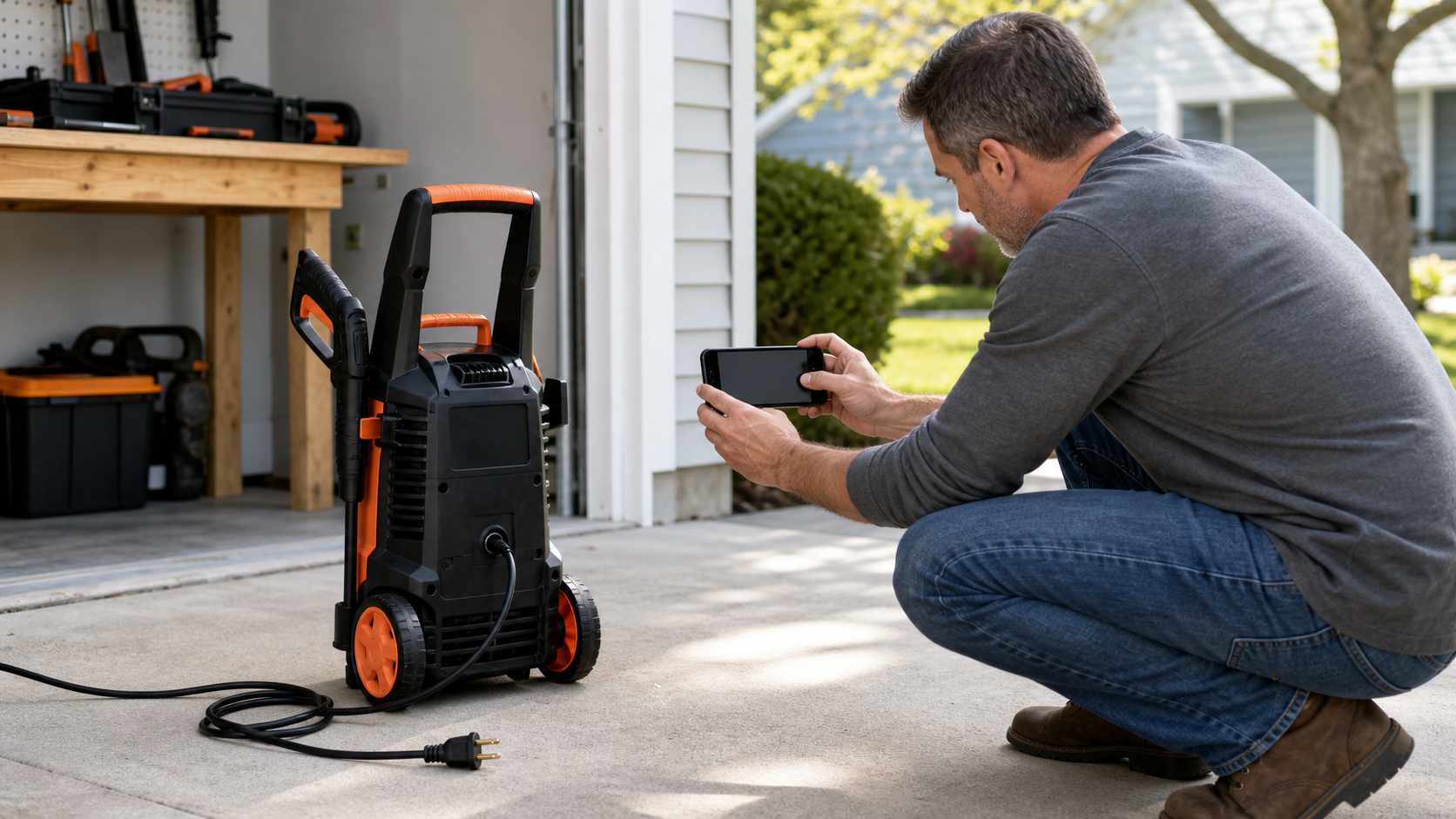
Without removing a cover, look at the label on the back of the machine and photograph it. The recalled unit has model HD14P-Z on that label. A marketplace title or receipt may instead say HX18, so do not rule out the recall from the order name alone.
Compare the physical description
CPSC describes a 3 GPM electric washer in orange, green, or blue with black parts, approximately 11 inches deep, 9 inches wide, and 25 inches high. It came with a 500 ml tank, foam cannon, four quick-connect nozzles, and a 33-foot hose. Appearance supports the check, but the rear label and official confirmation decide it.
Check the purchase window
The recalled washers were sold online through Amazon in April 2026 for about $150. Save a screenshot of the order and seller information if available. A missing receipt should not prompt a test run; contact the importer with the label photo instead.
Contact the recall representative
Use the consumer-contact email published in the CPSC notice: pressurewasherrecall@outlook.com. Request confirmation and a full refund case. Keep the machine unplugged while waiting, and rely on the CPSC page rather than links in unsolicited messages.
Follow the confirmed remedy exactly
CPSC says verified consumers will be asked to destroy the washer by cutting its unplugged power cord, send a photo, and then dispose of the product. Wait for case-specific instructions before doing this. Never cut a connected cord, open the washer, or improvise a repair or disposal method.
Escalate any electrical damage
Do not touch or move a unit with a wet connection, exposed conductor, melted plug, burned housing, smoke, sparking, or repeated breaker or GFCI trips. Keep others away and use emergency services or a qualified electrician as the condition requires.
The label matters more than the listing name
- Brand: COMMOWNER.
- Rear-label model: HD14P-Z.
- Possible marketplace listing model: HX18.
- Sale channel and timing: Amazon, April 2026.
- CPSC recall number: 26-692; approximately 1,694 units.
An outlet GFCI is not a recall repair
CPSC says the recalled washer lacks an integral GFCI and that its short cord may encourage extension-cord use. Because a pressure washer combines electricity, water, a grounded operator, and outdoor connections, a fault can have severe consequences.
A GFCI-protected outdoor receptacle is good general protection, but it does not alter the recalled machine or cancel CPSC's stop-use instruction. An adapter, portable device, longer cord, or homemade modification is not the approved remedy.
This recall provides a refund, not a field repair
The official remedy is a full refund after confirmation and documented destruction. That distinction matters: the consumer is not being asked to diagnose an electrical defect, install a component, or judge whether the washer is safe enough to keep.
Keep the CPSC page, your case correspondence, the rear-label photo, and proof of purchase until the refund is complete. Report any incident or difficulty obtaining the remedy through the channels on CPSC's recall page.
Common questions
Is every COMMOWNER pressure washer recalled?
No. This notice identifies model HD14P-Z, which may have been sold under the listing model HX18. Use the rear label and the official recall process rather than color alone.
Can I use it from a GFCI outlet while I wait?
No. CPSC says consumers should stop using the recalled pressure washers immediately. An outlet GFCI or portable adapter does not replace the approved recall remedy.
Should I cut the cord before contacting the importer?
No. First obtain confirmation and exact instructions. If directed to document destruction, verify the washer is unplugged and de-energized before following the official process; never cut a connected cord.
Sources and further reading
This article is original FixMate editorial content informed by the references below. Always follow manufacturer instructions and local code.