Quick answer
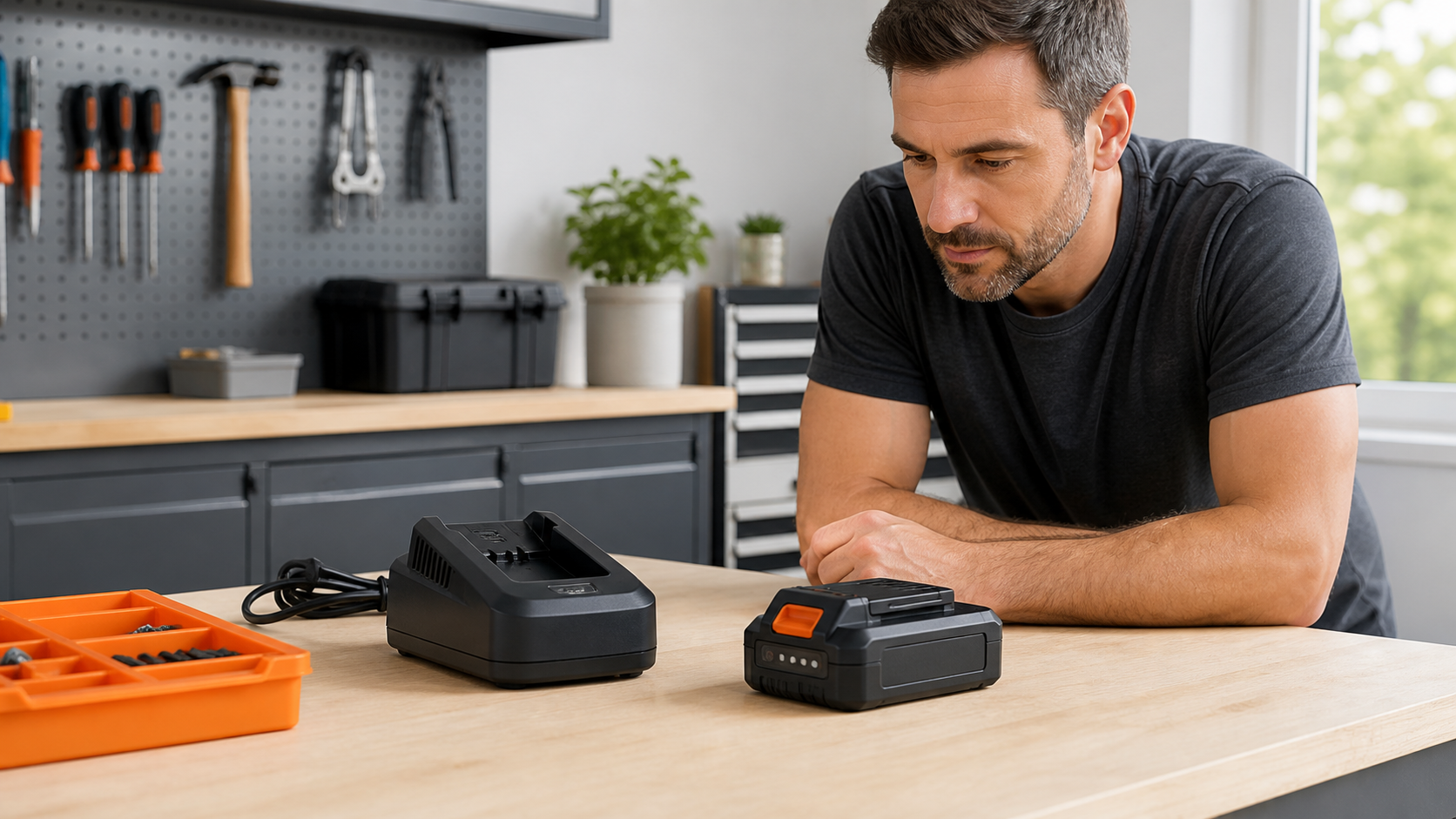
Use this guide only if the charger label says EGO CH2100 or CH2100-FC and the battery label matches the compatible pack list in the charger manual. Unplug the charger and inspect the pack, cord, contacts, and housing without opening anything. A red indication can mean the pack is too hot or too cold; EGO's manual says charging begins when the battery returns to 37°F–135°F (3°C–57°C). Let a hot post-mowing pack cool naturally in a dry, shaded, ventilated place—never use water, a freezer, or forced chilling. Reseat the pack once. If the manual's red-light fault remains, test only with another known-good compatible EGO pack if one is already available. If that pack charges, the original pack needs EGO support; if neither charges, power-cycle the empty charger as the manual directs and contact EGO if the fault persists. Do not open, jump, rebuild, or bypass a pack or charger.
Safety before you start
Charge only indoors in a dry, ventilated area on a stable noncombustible surface and use a sound wall outlet. Do not charge a battery that is swollen, cracked, punctured, wet, leaking, unusually hot, hissing, smoking, or emitting a sharp or sweet chemical odor. Do not touch damaged terminals, open either housing, bridge contacts, use an adapter, defeat temperature protection, or cool a pack with water, ice, or a freezer. Move away from smoke or fire and call 911. Contact EGO for damaged equipment and your local household hazardous-waste program for end-of-life handling; EPA says lithium-ion batteries do not belong in household trash or curbside recycling.
What you need
- EGO CH2100 or CH2100-FC charger manual
- Exact battery-pack manual and compatibility list
- Flashlight
- Dry soft cloth
- Known-good compatible EGO battery, only if already available
- Phone camera for label, indicator, and damage documentation
Step-by-step
Match both labels to the manuals
Confirm the charger label says CH2100 or CH2100-FC and record the battery model. EGO's manual lists compatible packs; voltage alone is not proof of compatibility. Stop and use the correct manual if either model differs.
Unplug and inspect without opening
Disconnect the charger from the wall and remove the battery. Look for cracks, swelling, wetness, melted plastic, corrosion, damaged contacts, or a cut cord. Wipe only loose dry dust with a soft cloth. Any damage, unusual heat, odor, sound, or residue ends DIY testing.
Let temperature protection do its job
After mowing or trimming, place an undamaged hot pack by itself in a dry, shaded, ventilated area away from combustibles. EGO says CH2100 charging starts when the pack is between 37°F and 135°F (3°C and 57°C). Let it normalize naturally; do not accelerate cooling or heating.
Check the outlet and reseat once
With dry hands, verify the outlet works using a low-risk household device or use another known-good indoor outlet. Plug in the empty charger, then slide the cool, undamaged compatible pack fully into place as the manual shows. Do not rock it, hold it down, or alter the contacts.
Isolate pack versus charger safely
If the red fault remains and you already own another known-good pack listed as compatible, try it once. If the second pack charges, contact EGO about the original battery. If the same fault appears with both, remove the packs and continue with the charger check. Never borrow an unverified pack or cross-test by voltage alone.
Power-cycle the empty charger
With no battery installed, unplug the charger and wait until its indicator goes out. Reconnect it and test one cool, known-good compatible pack. If the fault returns, stop. An internal charger or battery fault is not a user repair.
Use EGO support or proper recycling
Give EGO the model, serial information, light behavior, temperature context, and photos. Follow warranty or service directions. For an end-of-life undamaged pack, isolate terminals with nonconductive tape or bag it separately as local guidance allows and take it to a dedicated battery recycler or household hazardous-waste site—not household trash or curbside recycling.
A red indication can be a temperature pause
The CH2100/CH2100-FC manual describes hot- or cold-battery behavior and says the charger begins charging once the pack returns to 37°F–135°F (3°C–57°C). That makes a natural cool-down the first useful check after heavy summer yard work.
The battery manual also uses its own indicator patterns for pack temperature and status. Read the exact pack manual rather than translating one model's lights to another battery.
One compatible comparison can separate the fault
- The original pack fails but a known-good listed pack charges: contact EGO about the original pack.
- Two listed, undamaged packs show the same charger fault: power-cycle the empty charger once, then seek service.
- Either pack or charger is damaged, wet, hot, swollen, or odorous: do not test it.
- No verified comparison pack is available: skip the swap and contact EGO.
- Never open a battery or charger to confirm the diagnosis.
A failed lithium-ion pack is special waste
EPA says lithium-ion batteries can start fires when crushed in trash or municipal recycling equipment. It directs households to dedicated battery collection or household hazardous-waste points and recommends isolating terminals with nonconductive tape or placing each battery in a separate bag.
A damaged pack needs manufacturer-specific handling advice before transport. Do not tape, bag, carry, or ship a hot, smoking, leaking, or unstable battery; move away and contact emergency services for an active event.
Common questions
Can I put a hot EGO battery in the refrigerator or freezer?
No. Let an undamaged pack return to temperature naturally in a dry, shaded, ventilated place. Water, condensation, and rapid forced cooling can create additional hazards.
Does a red CH2100 light prove the battery is bad?
No. The EGO manual includes a temperature-related red indication. Cool or warm an undamaged pack naturally into the documented charging range, reseat it once, and use only the manual's compatible-pack isolation test.
Can an EGO 56V battery go in curbside recycling?
No. EPA says lithium-ion batteries should go to a dedicated battery recycler or household hazardous-waste collection point, not household trash or municipal recycling. Ask EGO how to handle a damaged pack.
Sources and further reading
This article is original FixMate editorial content informed by the references below. Always follow manufacturer instructions and local code.