Quick answer
Turn off the air conditioning system at the thermostat and breaker. Find the PVC condensate drain line exiting the indoor air handler and its access port nearby. Use a wet/dry vacuum to suck the clog out from the outdoor end, or pour a cup of distilled white vinegar into the indoor access port and wait 30 minutes before flushing with water. If water backs up again or the line cannot be cleared, contact an HVAC technician before running the system.
Safety before you start
Turn off power to the HVAC system at the thermostat and the breaker before opening any access port or touching the drain pan. Never reach into the indoor unit with power on. Do not use chemical drain cleaners not approved for PVC—many household drain cleaners can soften or crack the condensate line. If water has reached electrical components, the attic ceiling, or drywall, stop and call a professional.
What you need
- Wet/dry shop vacuum
- Distilled white vinegar
- Flashlight
- Small bucket or towel
- Duct tape or a rag for sealing the vacuum hose against the pipe
- Funnel (optional, for the access port)
Step-by-step
Turn off the AC system
Switch the thermostat to OFF, then turn off the breaker or disconnect that powers the indoor air handler. This stops condensation from being produced while you work and protects you from contact with energized components near water.
Locate the drain line and access port
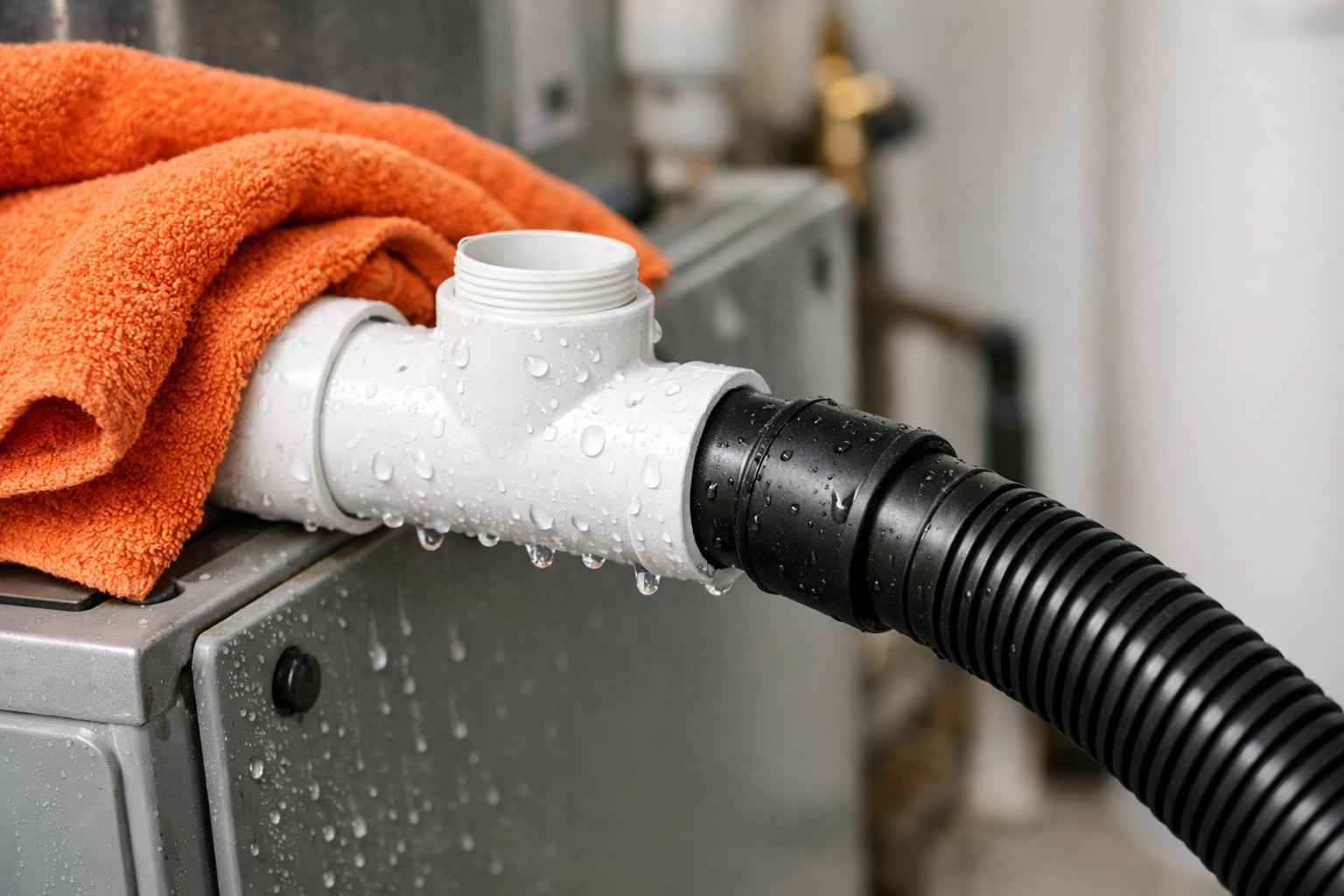
Find the PVC pipe that exits the side of your house near the outdoor condenser or foundation—that is the drain line termination. Indoors, look for a T-shaped fitting with a removable cap on the PVC pipe near the indoor air handler or furnace. That cap is the access port for flushing.
Vacuum the clog from the outdoor end
Place the wet/dry vacuum hose over the outdoor drain line exit. Seal the gap with duct tape or a rag so suction is not lost. Run the vacuum for 2–3 minutes to pull out algae, dirt, and debris. You will often see a dark clump of sludge enter the vacuum.
Flush the line from the indoor access port
Remove the cap from the indoor access port. Pour a cup of distilled white vinegar into the opening to break down remaining biofilm. Wait 30 minutes, then flush with a gallon of warm water. The water should flow freely out the outdoor termination.
Check and clean the drain pan
Inspect the drain pan under the indoor coil. Wipe out standing water, slime, or debris with a towel. Confirm the pan slopes toward the drain opening so water flows out rather than pooling.
Restore power and test
Replace the access port cap, turn the breaker back on, and start the AC. Go outside and watch the drain line termination—after about 15 minutes of running, you should see a steady trickle of condensate exiting the pipe.
Signs your AC drain line is clogged
- Water pooling around the indoor air handler or furnace.
- Water dripping from the ceiling or wall near the indoor unit.
- The AC shuts off on its own—a safety float switch may have tripped.
- Musty smell near the indoor unit or a visible slime in the drain pan.
- The system runs but humidity in the home feels higher than usual.
Why condensate lines clog
As warm indoor air passes over the cold evaporator coil, moisture condenses into water droplets that drip into the drain pan and flow out through the PVC line. Dust, pet hair, and airborne particles mix with that water, creating a warm, dark, nutrient-rich environment where algae and mold can grow.
Over weeks and months, that biological growth forms a slimy biofilm that narrows the pipe until water backs up. Homes in humid climates and systems that run constantly in summer are especially prone because they produce more condensate.
Prevent future clogs
- Pour a cup of distilled white vinegar into the access port every 1–3 months during cooling season.
- Replace air filters regularly so less dust reaches the coil and drain pan.
- Have an HVAC technician clean the coil and inspect the drain during annual maintenance.
- Consider installing a drain pan float switch that shuts off the AC before water overflows.
- Keep the area around the indoor unit clear so you can spot leaks early.
When to call an HVAC technician
- Water has reached drywall, insulation, electrical components, or the attic floor.
- The line is inaccessible, buried in a wall, or runs to a rooftop.
- You have cleared the line but water backs up again within days.
- The drain pan is cracked or the connection between the pan and the drain line is leaking.
- The system has a safety float switch that keeps tripping after clearing.
Common questions
Can I use bleach instead of vinegar in the drain line?
Vinegar is safer for PVC and does not produce harmful fumes. Bleach can degrade some plastics over time and should only be used if the HVAC manufacturer or technician specifically recommends it.
How often should I clean my AC drain line?
Most homes benefit from a vinegar flush every 1–3 months during cooling season. Homes in humid climates or with heavy AC use may need monthly attention.
Why does my AC drain line keep clogging?
Frequent clogs usually point to dirty air filters, a coated evaporator coil, or a drain line without proper slope. Annual HVAC maintenance and regular filter changes reduce recurrence.
Prefer to hire a professional?
Find a local appliance repair company
Browse business profiles with published services, coverage, and direct contact information in the FixMate directory.
Sources and further reading
This article is original FixMate editorial content informed by the references below. Always follow manufacturer instructions and local code.