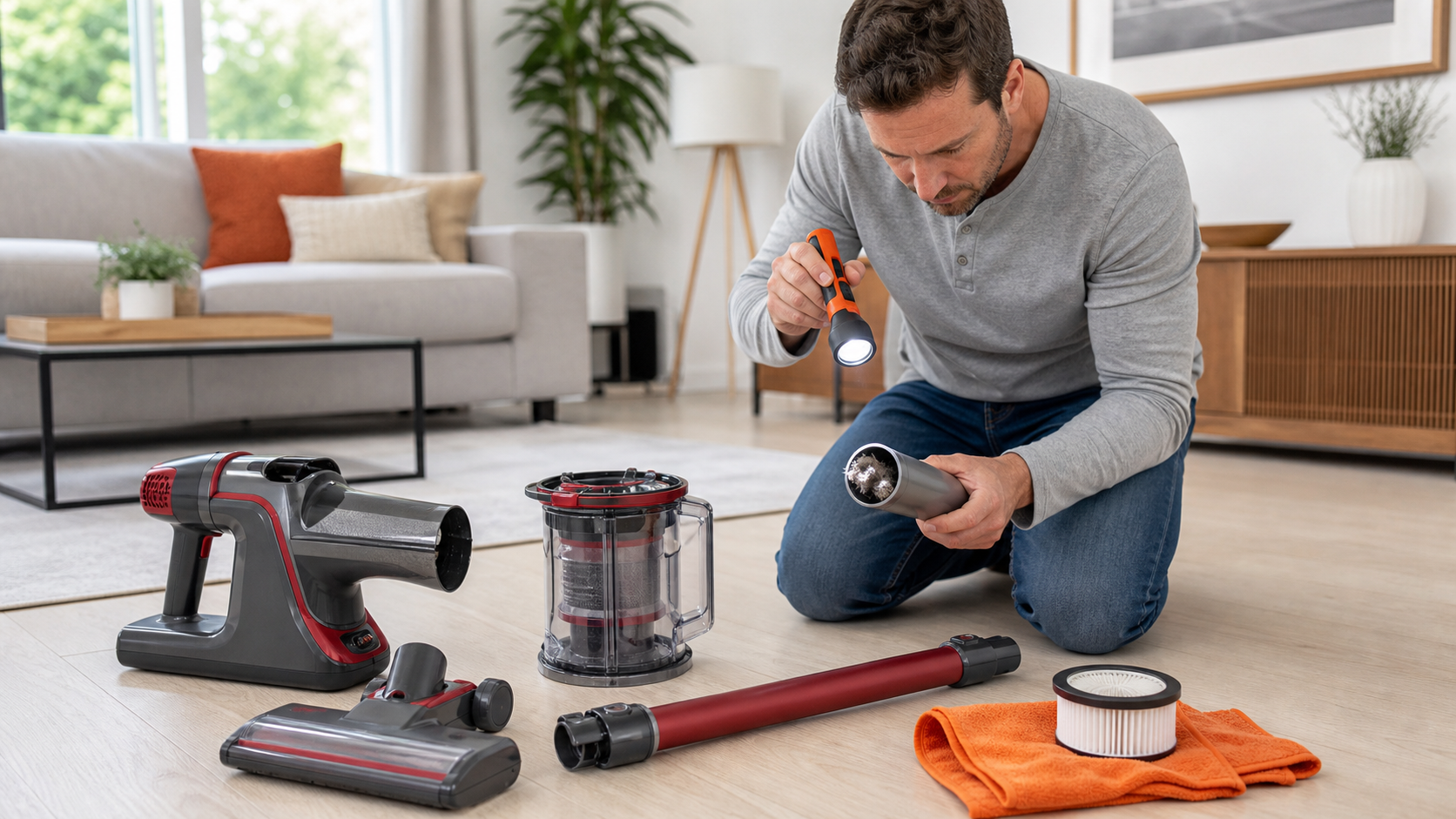
Quick answer
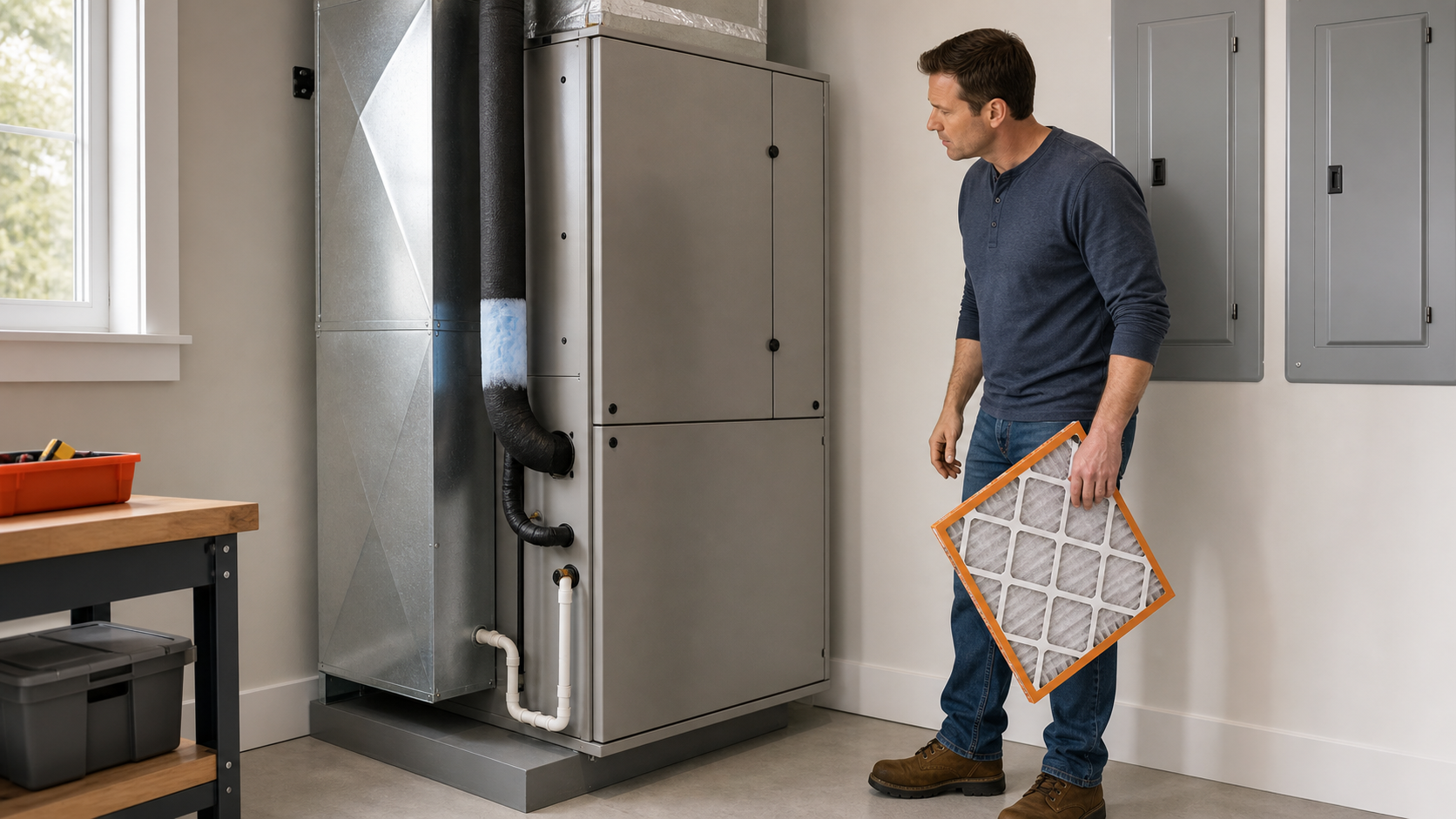
If central AC is blowing warm air and you see frost or ice on the insulated copper line, air-handler cabinet, or outdoor tubing, set the thermostat from COOL to OFF and leave the cooling system off. Do not chip, heat, or scrape the ice. With the system off, check the return-air filter for heavy dirt, confirm supply and return registers are open, and remove loose leaves or grass from around the outdoor unit without opening it. Carrier recommends professional service for a frozen evaporator coil because dirty coils, blower faults, and low refrigerant or leaks cannot be safely diagnosed from outside the cabinet.
Safety before you start
Central HVAC equipment contains high voltage, moving fans, stored electrical charge, sharp fins, and refrigerant that requires trained handling. Keep all panels closed. Do not probe wiring, reset a repeatedly tripping breaker, touch a capacitor, open refrigerant fittings, add refrigerant, use a torch or heat gun, pour hot water on ice, or run the system while frozen. Keep water away from electrical equipment and call an HVAC professional for ice, leaking water near wiring, burning odor, buzzing, a stopped blower or outdoor fan, repeated trips, or cooling that does not return after a simple filter or vent correction.
What you need
- Owner’s manual for the thermostat and HVAC equipment
- Flashlight for exterior observation only
- Correct-size replacement filter with the specified airflow direction
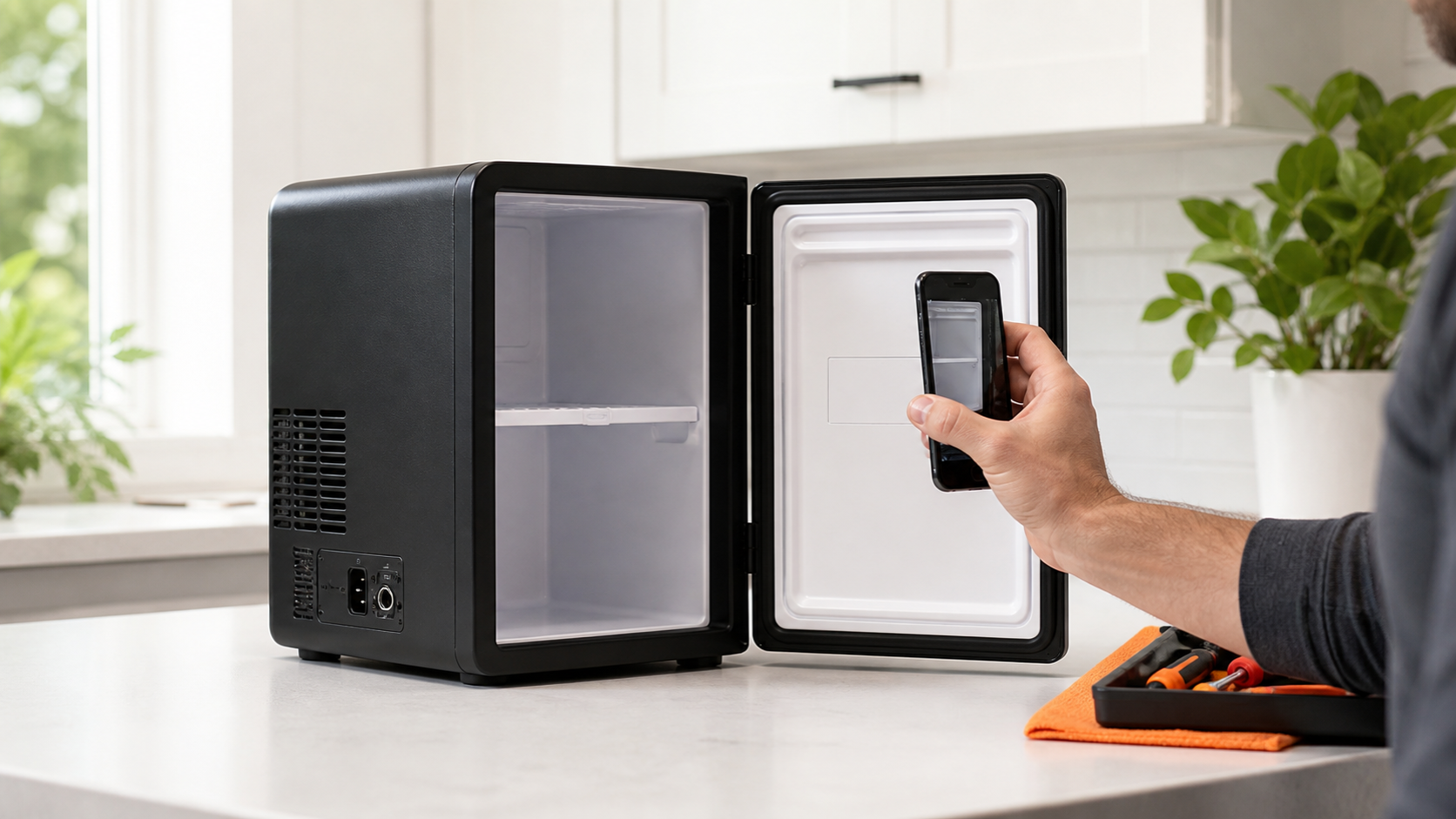
- Phone camera for frost, water, thermostat, and model-label photos
- Work gloves for loose yard debris around the outdoor cabinet
- Licensed or qualified HVAC professional for coil, blower, electrical, or refrigerant diagnosis
Step-by-step
Turn cooling off at the thermostat
If air is warm or airflow is weak, set the thermostat from COOL to OFF. Do not keep lowering the setpoint; continued operation with a frozen coil can cause damage. Leave electrical disconnects and cabinet switches alone unless the owner’s manual specifically identifies an accessible user control.
Look for ice without opening anything
From outside the closed equipment, check the insulated copper line near the indoor unit, the air-handler or coil cabinet, and visible outdoor tubing for frost or ice. Also note water below the indoor unit. Do not remove a service panel or reach into the unit.
Record the symptom pattern
Photograph visible ice, water, thermostat settings, and any display code. Note whether airflow weakened gradually, the outdoor unit ran, the indoor blower sounded normal, or a breaker tripped. This helps a technician separate airflow, control, electrical, and refrigerant causes.
Inspect the user-serviceable filter
With cooling off, remove only the filter using the equipment or return-grille instructions. Replace a heavily loaded disposable filter with the exact size and specified type, aligning the airflow arrow. Clean a reusable filter only as its manufacturer directs and reinstall it completely dry.
Open blocked supply and return registers
Move furniture, rugs, curtains, and boxes away from return grilles and confirm normal supply registers are open. Do not open sealed balancing dampers, enter ductwork, or assume closing rooms saves energy; restricted airflow can contribute to freezing.
Clear only loose debris around the outdoor unit
With the system off, remove loose leaves, grass, or lightweight debris from the ground around the cabinet. Keep hands and tools out of the grille. Do not remove panels, straighten fins, spray electrical components, or reach toward a fan.
Let ice thaw naturally
Keep cooling off and protect the area from meltwater without blocking drains or placing towels against electrical equipment. Do not chip the coil or accelerate thawing with heat. A thawed coil has not been repaired; freezing can return if the cause remains.
Use one cautious restart only when no ice was present
If you found no ice, no water near electrical parts, no trip or abnormal noise, and corrected only a dirty filter or blocked register, follow the owner’s manual for one brief cooling test. Stop if cooling does not return promptly. If any ice was confirmed, leave cooling off and arrange HVAC service rather than using a test cycle.
Why a central AC evaporator coil freezes
The indoor evaporator coil needs warm household air moving across it. A severely dirty filter, blocked return, dirty coil, or blower problem can reduce that heat transfer enough for moisture on the coil to freeze. Carrier and Trane also identify low refrigerant or a refrigerant leak as possible causes.
Those causes can look similar from outside the cabinet. Replacing a visibly clogged filter is reasonable owner maintenance; opening the coil cabinet, testing a blower, measuring charge, locating a leak, or adding refrigerant belongs with an HVAC professional.
What the visible symptoms can tell you
- Ice on the insulated line or cabinet: turn cooling off and call for service.
- Weak airflow at every register: check the filter and returns, then stop if it remains weak.
- Normal airflow but warm air: controls, outdoor equipment, refrigerant, or compressor diagnosis may be needed.
- Water below the indoor unit: melting ice or a condensate problem may be present; protect the area and keep water from electrical parts.
- Breaker trips, buzzing, burning odor, or a fan stops: leave the system off and request professional service.
When to stop and call an HVAC professional
- Any frost or ice is visible on refrigerant tubing, the coil cabinet, or outdoor equipment.
- The filter is clean but airflow remains weak or the indoor blower is not running normally.
- Cooling does not return after a simple user-serviceable filter or register correction.
- Water is reaching wiring, controls, the furnace, a ceiling, or a finished floor.
- A breaker trips again, the unit buzzes, a burning odor appears, or a fan fails to turn.
- Diagnosis would require opening a panel, cleaning an internal coil, or touching electrical or refrigerant components.
Common questions
Can I run the AC fan to thaw a frozen coil?
Follow the exact equipment and thermostat manual or your HVAC technician’s direction. The universal safe step is to turn COOL off; do not run cooling while ice is present or assume fan mode is appropriate for every system and water condition.
Can a dirty air filter cause an AC coil to freeze?
Yes. Carrier and Trane list restricted airflow from a dirty or clogged filter as one possible cause. A clean filter does not rule out a dirty coil, blower problem, control issue, or low refrigerant.
Should I add refrigerant if the AC line is frozen?
No. Ice does not prove low refrigerant, and refrigerant diagnosis and charging require trained, properly equipped service. Leave the system off and call an HVAC professional.
Prefer to hire a professional?
Find a local appliance repair company
Browse business profiles with published services, coverage, and direct contact information in the FixMate directory.
Sources and further reading
This article is original FixMate editorial content informed by the references below. Always follow manufacturer instructions and local code.