Quick answer
Stop using every Balbali portable electric kettle marked model HP-300E. CPSC warning 26-679, dated August 6, 2026, says these 12-ounce travel kettles can pressurize and unexpectedly release hot liquid or steam. The agency reports 52 incidents and 20 injuries, including third-degree burns. Unplug the kettle only if the plug is dry and safely reachable, let it cool without touching or opening it, photograph the label and order record, and follow CPSC’s instruction to dispose of it. Do not test, descale, open, repair, sell, donate, or give it away. This is a CPSC product safety warning; the agency says the importer has not agreed to an acceptable recall.
Safety before you start
Do not operate the kettle again to confirm the symptom. If it is hot, hissing, bulging, leaking, or under pressure, keep people away and do not open the lid, move it, cover it, or place it under water. Disconnect power only when the plug and your hands are dry and the plug is safely reachable; otherwise switch off the circuit at a safe location and contact emergency services if conditions are worsening. For a burn, move away from the heat source and seek urgent medical help for a large, deep, facial, hand, foot, genital, electrical, or inhalation injury. American Burn Association guidance says to cool a minor burn with cool running water, not ice, and not to break blisters or apply butter or oil.
What you need
- Phone camera
- Order history or receipt
- Flashlight for reading the back label while the kettle is cool
- Local household-appliance or electronics disposal information
- CPSC incident-report page if a failure or injury occurred
Step-by-step
Stop use without opening the kettle
Do not run another boil cycle. If the kettle is cool and the plug is dry and reachable, unplug by the plug rather than pulling the cord. If it is hot or making pressure-related sounds, clear the area and wait at a safe distance; do not release the lid or spout mechanism.
Check the label only after it is cool
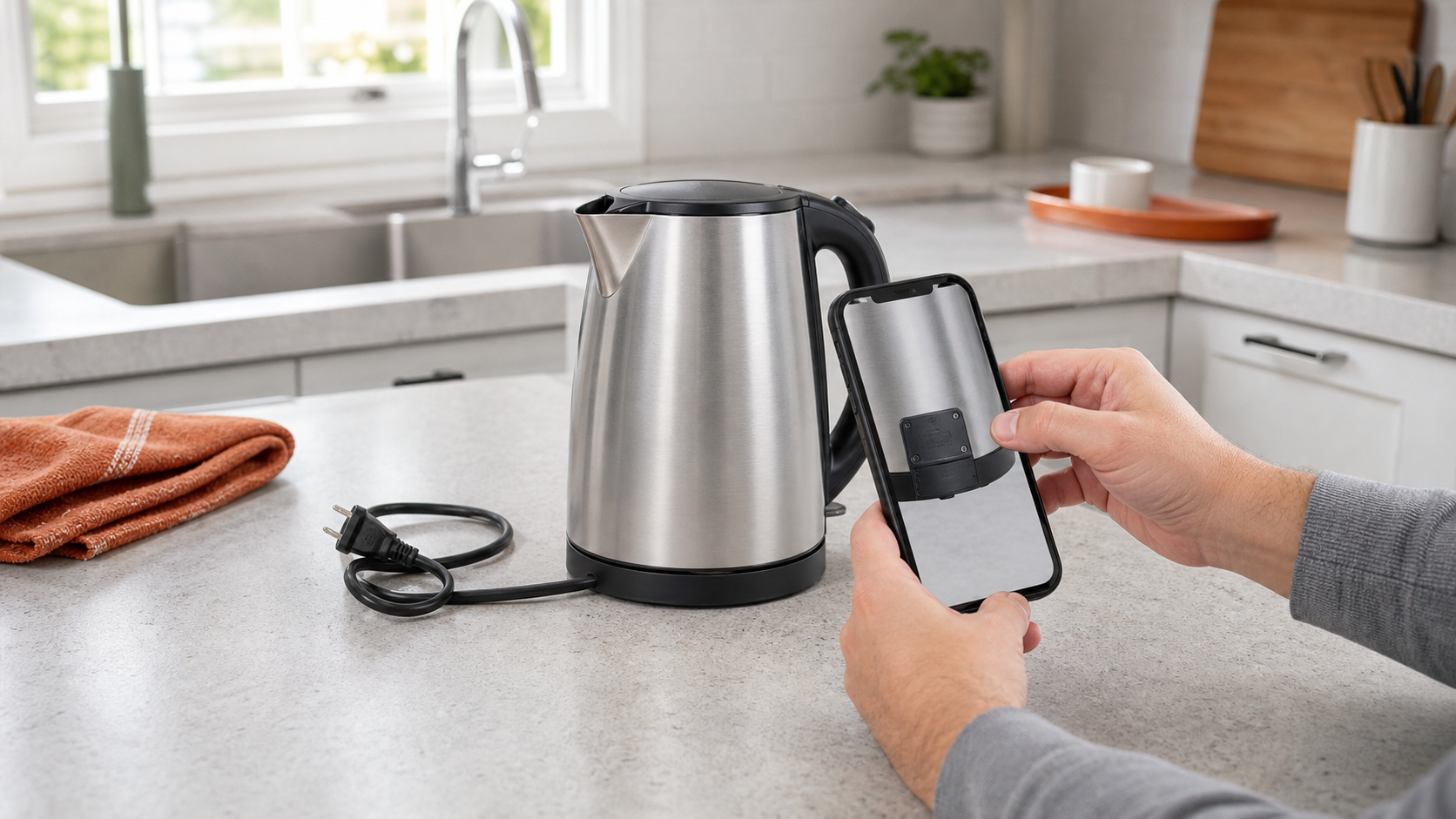
CPSC identifies all Balbali portable electric kettles marked HP-300E. The warning describes a 12-ounce stainless-steel travel kettle sold in green, pink, white, and yellow, with the model number on a label on the back. Color alone is not enough; photograph the label without powering the product.
Save proof of purchase
Capture the order number, retailer, seller, purchase date, and listing screenshot if available. CPSC says the kettles were sold through Balbali.com, Amazon, eBay, and Sears. Saving records supports an incident report and any retailer inquiry, but it is not a reason to delay stopping use.
Do not attempt a repair or pressure test
Do not descale, replace a lid seal, defeat a latch, open the base, or ask an unqualified person to modify the kettle. The reported hazard is unexpected release of hot liquid or steam, so a successful test boil would not establish that the kettle is safe.
Follow CPSC’s disposal direction
CPSC tells consumers to dispose of the kettle and not sell or give it away. Check local rules for an electric appliance with a cord and metal body; do not place a hot or water-filled kettle into a bin. The federal warning does not announce a repair, replacement, or refund remedy.
Report an incident or injury
If the kettle released steam or liquid, leaked, pressurized, or caused an injury, preserve photos and order details and report the event at SaferProducts.gov. Seek medical care based on the injury rather than waiting for a product report or seller response.
Why this is a warning, not an agreed recall
CPSC calls notice 26-679 a product safety warning and states that Balbali, the Chinese importer, has not agreed to an acceptable recall. That distinction matters: consumers should not assume a repair kit, replacement, refund, registration form, or prepaid return exists unless CPSC later updates its page.
The stop-use direction is not conditional on seeing a leak. CPSC says it is aware of 52 reports of unexpected hot-liquid or steam release and 20 injuries, including third-degree burns. The safest diagnostic result is the model label itself; operating behavior is not a safe eligibility test.
How to identify the HP-300E safely
- Look for the Balbali name on the front and HP-300E on the label at the back only after the kettle is cool and unplugged.
- The affected portable kettle is described as a 12-ounce stainless-steel water boiler in green, pink, white, or yellow.
- Use the label and order history together; do not rely on marketplace listing photos or a similar shape.
- If the label is missing or unreadable, keep the kettle out of service and contact CPSC rather than performing a test boil.
If hot water or steam caused a burn
Move away from the source and call emergency services for a severe injury or immediate danger. The American Burn Association recommends cool running water for a minor burn and warns against ice, butter, oils, and breaking blisters. Burns that are large, deep, on sensitive areas, electrical, or associated with breathing trouble need prompt medical care.
This guide cannot assess burn depth. When uncertain, contact a healthcare professional or an accredited burn center, especially for a child, an older adult, or anyone with a serious or worsening injury.
Common questions
Is the Balbali HP-300E officially recalled?
CPSC issued product safety warning 26-679 on August 6, 2026. Its page says the importer has not agreed to an acceptable recall, so describe it as a warning and follow CPSC’s stop-use and disposal directions.
Can I keep using it if mine has never leaked?
No. CPSC’s warning applies to all Balbali portable electric kettles marked HP-300E and tells consumers to stop using them immediately. A normal boil does not prove future use is safe.
Should I sell or donate the kettle instead of throwing it away?
No. CPSC specifically says not to sell or give away these hazardous kettles. Follow local disposal requirements once the product is cool, empty, and disconnected.
Prefer to hire a professional?
Find a local appliance repair company
Browse business profiles with published services, coverage, and direct contact information in the FixMate directory.
Sources and further reading
This article is original FixMate editorial content informed by the references below. Always follow manufacturer instructions and local code.