Quick answer
CPSC recall 26-581 covers five Amana through-the-wall models—PBH113J35AA, PBH093J35AA, PBH073J35AA, PBE123J35AA, and PBE093J35AA—and six window-room models—AH183J35AA, AH123J35AA, AH093J35AA, AE183J35AA, AE123J35AA, and AE093J35AA. The heating element can remain energized during a ground fault even when the unit is turned off. Stop using a listed model, leave it unplugged or have building management isolate it safely, photograph the model-and-serial label, and submit the refund request through Daikin Comfort Technologies. Do not open, test, or repair the unit yourself.
Safety before you start
A power button does not make a recalled unit electrically safe. If the plug and receptacle are dry and accessible without moving a hardwired or built-in unit, unplug it by gripping the plug—not the cord. Do not touch a wet, scorched, melted, sparking, or hardwired unit; shut the area off and call building management, the utility, an electrician, or emergency services as appropriate. Follow the manufacturer’s recall instructions before cutting any cord or disposing of any equipment.
What you need
- Phone or computer for the official Amana recall form
- Flashlight for the base-pan label
- Phone camera for the complete model and serial label
- Owner or building manager contact information
- No repair tools—the remedy is a manufacturer refund
Step-by-step
Stop using the unit
Turn off climate control for the affected room. If the cord and outlet are completely dry, undamaged, and readily accessible, unplug the unit by the plug. For a hardwired, damaged, wet, or inaccessible installation, do not reach behind it; have building management or a qualified electrician isolate power.
Find the identification label without opening the cabinet
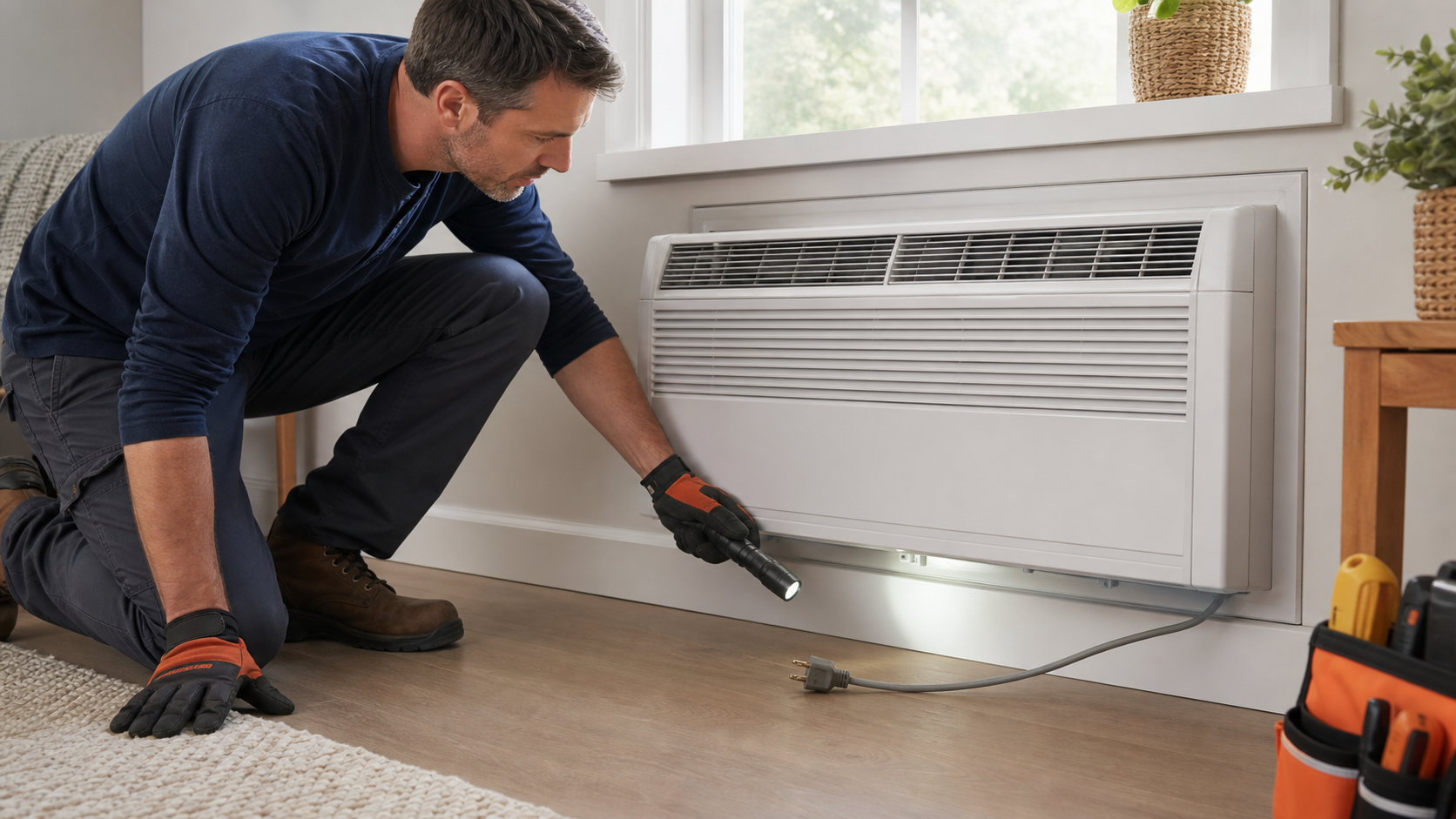
The recall notice places the white model-and-serial sticker on the front edge of the base pan at the front of the unit. Use a flashlight and photograph the full sticker. Do not remove the chassis or a service panel to reach it.
Compare the complete model number
Match every character against the 11-model list in the official notice. Similar Amana names, cabinet shapes, and prefixes are not enough. Keep the serial number because the recall registration asks for the unit’s identifying information.
Use the manufacturer’s recall page
Open the Amana TTW & WRAC Recall page or call DCT at the number in the notice. Choose the correct residential, commercial-property, reseller, or distributor path. Hotels, apartments, and nursing facilities should route the issue through the property owner or facilities manager.
Preserve evidence before following disposal instructions
Keep clear photos of the complete unit and label. The recall process requires contact information and proof steps for the refund. Do not cut the cord until the unit is unplugged, you have registered it, and the manufacturer explicitly instructs you to do so.
Arrange safe removal
Through-the-wall and window units can be heavy and may be secured to a sleeve or opening. Do not pull one out alone or disturb a hardwired connection. Ask the property manager or a qualified HVAC or electrical professional to remove it if the installation is not a simple, safely accessible plug-in unit.
The 11 Amana model numbers in recall 26-581
- Through-the-wall heat pumps: PBH113J35AA, PBH093J35AA, PBH073J35AA
- Through-the-wall air conditioners: PBE123J35AA, PBE093J35AA
- Window-room heat pumps: AH183J35AA, AH123J35AA, AH093J35AA
- Window-room air conditioners: AE183J35AA, AE123J35AA, AE093J35AA
Why turning the unit off is not the remedy
CPSC and DCT say the heating element can remain energized during a ground fault even when the product has been turned off. That creates fire and burn risk and is why the official action is to stop using the product rather than monitor it for symptoms.
DCT reported one instance of plastic melting and no injuries when the recall was announced. That history does not make continued use safe; a recalled owner should follow the stop-use instruction before a visible failure occurs.
What not to inspect or repair yourself
- Do not energize the unit to see whether heat, cooling, or the fan still works.
- Do not remove a grille, chassis, terminal cover, heating element, or service panel.
- Do not probe the outlet or internal wiring with a meter.
- Do not replace the cord, thermostat, fuse, heating element, or control as a substitute for the recall remedy.
- Do not cut a connected cord or handle the unit if there is moisture, melting, smoke, or an electrical odor.
When the property owner or a professional should take over
These units were commonly installed in hotels, apartment buildings, and commercial spaces. A tenant or guest should report the exact room and unit to management and should not remove equipment owned by the property.
Use a licensed electrician or qualified HVAC professional for hardwired units, damaged receptacles, heat damage, or removal that disturbs a wall sleeve or weather seal. Call emergency services for active smoke or fire and leave the area.
Common questions
Are all Amana window and through-the-wall air conditioners recalled?
No. The June 25, 2026 notice lists 11 exact model numbers. Read the full model from the base-pan label and use the official recall page rather than relying on appearance or brand alone.
Can I keep using cooling mode if the hazard involves a heating element?
No. CPSC and DCT instruct consumers to stop using recalled products immediately. Cooling mode is not an exception to that instruction.
Should I cut the power cord now?
Register first and follow DCT’s exact instructions. Never cut a connected cord, and do not handle a hardwired, wet, damaged, or inaccessible unit yourself.
Prefer to hire a professional?
Find a local appliance repair company
Browse business profiles with published services, coverage, and direct contact information in the FixMate directory.
Sources and further reading
This article is original FixMate editorial content informed by the references below. Always follow manufacturer instructions and local code.