Quick answer
For the most durable low-chemical result, soften the crack with water, pull the weed slowly with as much root as possible, remove trapped soil, and seal the clean dry joint with the correct pavement product. Boiling water can knock back young weeds on isolated hardscape, but established perennial roots often resprout and need repeat treatment.
Safety before you start
Wear gloves and eye protection. Boiling water can cause severe burns and will injure every plant it touches, so use a controlled-pour kettle only on hardscape away from desirable roots. Keep children and pets away until the surface is cool. Avoid flame weeders during dry or windy conditions and near mulch, buildings, vehicles, fuel, sealants, or expansion-joint material.
What you need
- Work gloves and eye protection
- Narrow hand weeder or old flat-head screwdriver
- Kneeling pad
- Stiff brush or shop vacuum
- Controlled-pour kettle for the optional boiling-water method
- Compatible masonry crack filler, flexible sealant, or polymeric jointing sand
Step-by-step
Choose the right time
Pull after rain or dampen the crack and wait for the packed soil to soften. Remove weeds before they flower or set seed so the current problem does not become next season’s crop.
Loosen the roots
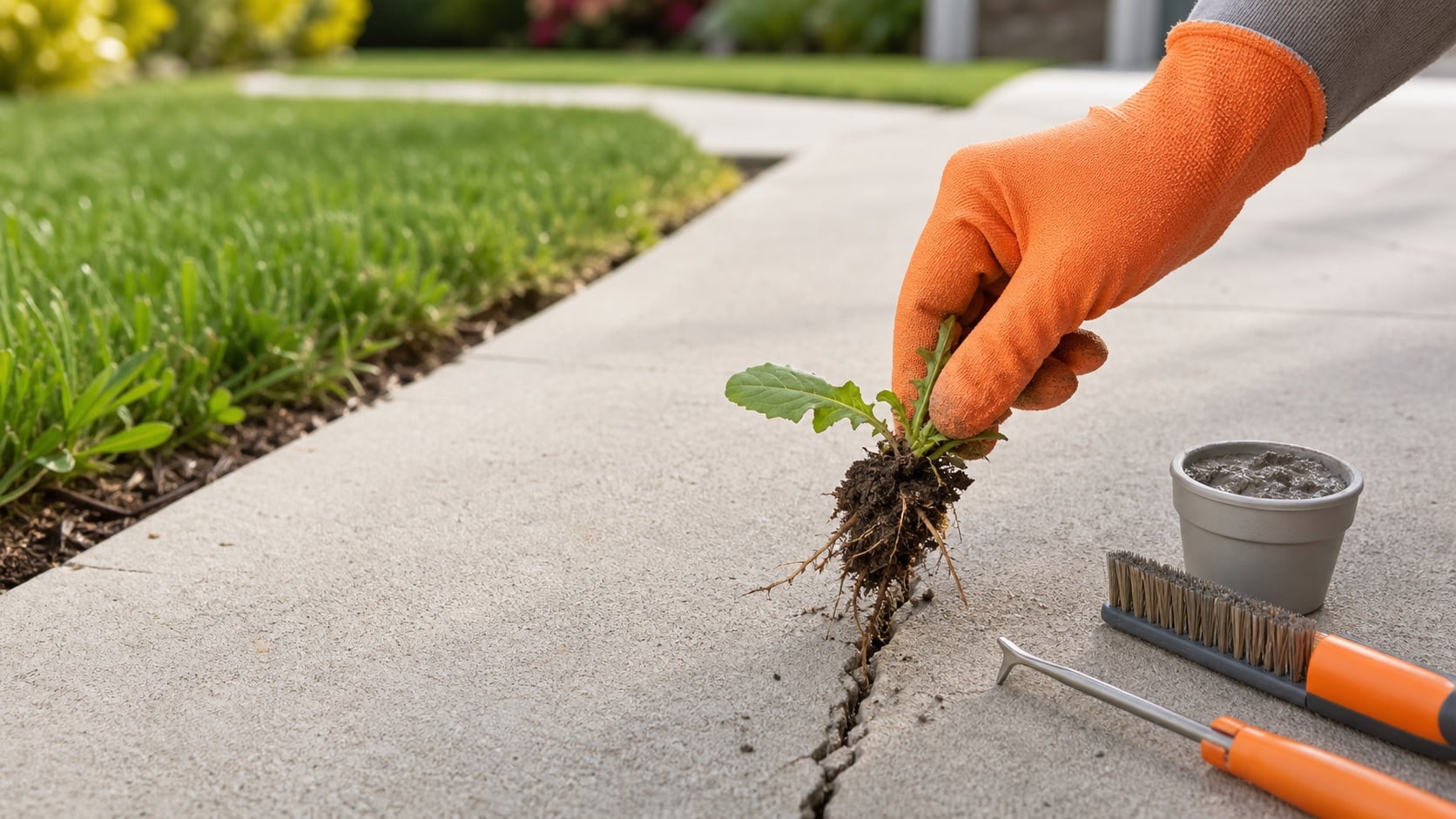
Work a narrow weeding tool alongside the plant rather than prying against fragile pavement edges. Wiggle gently to loosen soil around the root system.
Pull slowly from the base
Grip the weed near the pavement and pull upward with a slow rocking motion. Remove as much root as possible. Bag plants that already carry seeds instead of composting them nearby.
Use boiling water only where appropriate
For small young weeds in an isolated crack, pour plain boiling water from a low height with a controlled spout. Avoid splashing and nearby lawn or ornamentals. Expect to repeat after 7–10 days on established plants.
Remove dead growth and soil
After the plant dies or is pulled, scrape out loose roots and organic matter. Brush or vacuum the joint clean. Seeds need trapped soil and moisture, so this cleanup matters as much as killing the visible top.
Let the joint dry and inspect it
Do not seal over damp soil or an actively moving structural crack. Confirm whether the opening is a small crack, a designed expansion joint, or failed pavement that needs repair.
Seal with the correct product
Use a masonry crack filler or flexible concrete sealant for suitable cracks, asphalt filler for asphalt, or polymeric sand for compatible paver joints. Follow the surface preparation, width, depth, temperature, and cure-time instructions on the label.
Which removal method works best?
- Hand pulling: best chance of removing roots, especially after rain.
- Boiling water: useful on young annual weeds in isolated hardscape; often needs repeating.
- String trimming: quickly removes tops but usually leaves roots and can throw debris.
- Flame weeding: carries fire and surface-damage risks and is inappropriate in many residential settings.
- Herbicide: reserve for difficult weeds and use only a labeled product exactly as directed by local rules.
Why salt and strong vinegar are poor default choices
Salt can move with water into adjacent soil, damage desirable plants, and contribute to deterioration or staining around some hardscape materials. Concentrated horticultural vinegar can burn skin and eyes and is still a pesticide product in many contexts.
Household vinegar may damage green growth without reliably killing established roots. If you choose any pesticide, select one labeled for the exact site and weed, wear the required protection, and follow the label rather than a homemade recipe.
How to slow weed regrowth
- Sweep pavement regularly so soil and seeds do not accumulate in joints.
- Pull new seedlings while they are small and before roots deepen.
- Repair appropriate cracks after removing all vegetation and debris.
- Refresh polymeric sand only in paver systems designed for it.
- Redirect irrigation overspray that keeps pavement joints damp.
- Address widening, heaving, or settling pavement instead of repeatedly sealing a structural problem.
When the pavement needs repair
A weed is sometimes a symptom of a crack that is continuing to move. If concrete has heaved, sunk, separated widely, or created a trip hazard, ask a concrete or paving professional to diagnose drainage, roots, or base failure before filling the opening.
Common questions
Does boiling water kill weeds permanently?
It kills the plant tissue it contacts, but established perennial roots can survive and resprout. Young annual weeds respond best; repeat treatment and root removal may be necessary.
Can I seal a crack immediately after pulling weeds?
First remove roots, soil, and loose material, then let the joint dry and follow the sealant maker’s preparation requirements. Do not fill a designed expansion joint with a rigid crack product.
Will pulling weeds damage the concrete?
Gentle pulling usually will not. Avoid levering hard against thin or crumbling edges with a screwdriver, and repair deteriorated pavement rather than forcing tools into it.
Sources and further reading
This article is original FixMate editorial content informed by the references below. Always follow manufacturer instructions and local code.