Quick answer
Low, absent, or pulsing pressure often starts on the water side. Turn the washer off, disconnect electrical power or stop the engine, close the faucet, squeeze the trigger to release trapped pressure, and engage the trigger lock. Confirm adequate supply flow, remove kinks, clean the inlet screen, and use the correct high-pressure nozzle. Reconnect the water, leave the machine off, and hold the trigger until a steady water stream purges air. Clean a clogged nozzle only with the model’s supplied tool and procedure. Stop for a damaged high-pressure hose, pump leak, repeated GFCI or breaker trip, abnormal noise, smoke, or pressure that remains unstable.
Safety before you start
A pressure-washer jet can inject water through skin and cause severe injury. Never aim it at people, animals, yourself, electrical equipment, or the machine. Before touching a hose, screen, or nozzle, turn the machine off, disconnect its power source, close the water supply, squeeze the trigger to discharge pressure, and lock the trigger. Wear eye protection. Never patch a high-pressure hose, defeat a GFCI or safety lock, inspect a running pump, or place a hand over a nozzle to test flow.
What you need
- Owner’s manual for the exact pressure-washer model
- Safety glasses and closed-toe shoes
- Clean bucket and stopwatch for a model-approved supply-flow check
- Soft brush for the removable inlet screen
- Manufacturer-supplied nozzle-cleaning tool
- Replacement nozzle or hose matched to the exact model and pressure rating
Step-by-step
Shut down and release pressure
Turn an electric unit off and unplug it, or stop a gas engine and let hot parts cool. Close the faucet, point the wand in a safe direction, squeeze the trigger until pressure is gone, and engage the trigger lock. Never loosen a pressurized connection.
Inspect every hose before reuse
Straighten garden-hose kinks and check couplings for leaks or cross-threading. Inspect the high-pressure hose for cuts, bulges, exposed reinforcement, burns, or leaking crimps. Replace a damaged high-pressure hose with the exact rated part; never tape or splice it.
Verify the water supply
Confirm the faucet is fully open and the supply meets the flow and pressure stated in the model manual. If the manual permits a bucket test, measure the garden hose output before connecting the washer. Do not assume a well or long hose can supply the pump adequately.
Flush the garden hose
With the hose disconnected from the washer, run water into a safe drain or outdoor area until the stream is solid and free of visible debris. DeWalt’s DWPW2100 manual specifies a 30-second flush before connection; use your own manual’s timing if it differs.
Clean the inlet screen
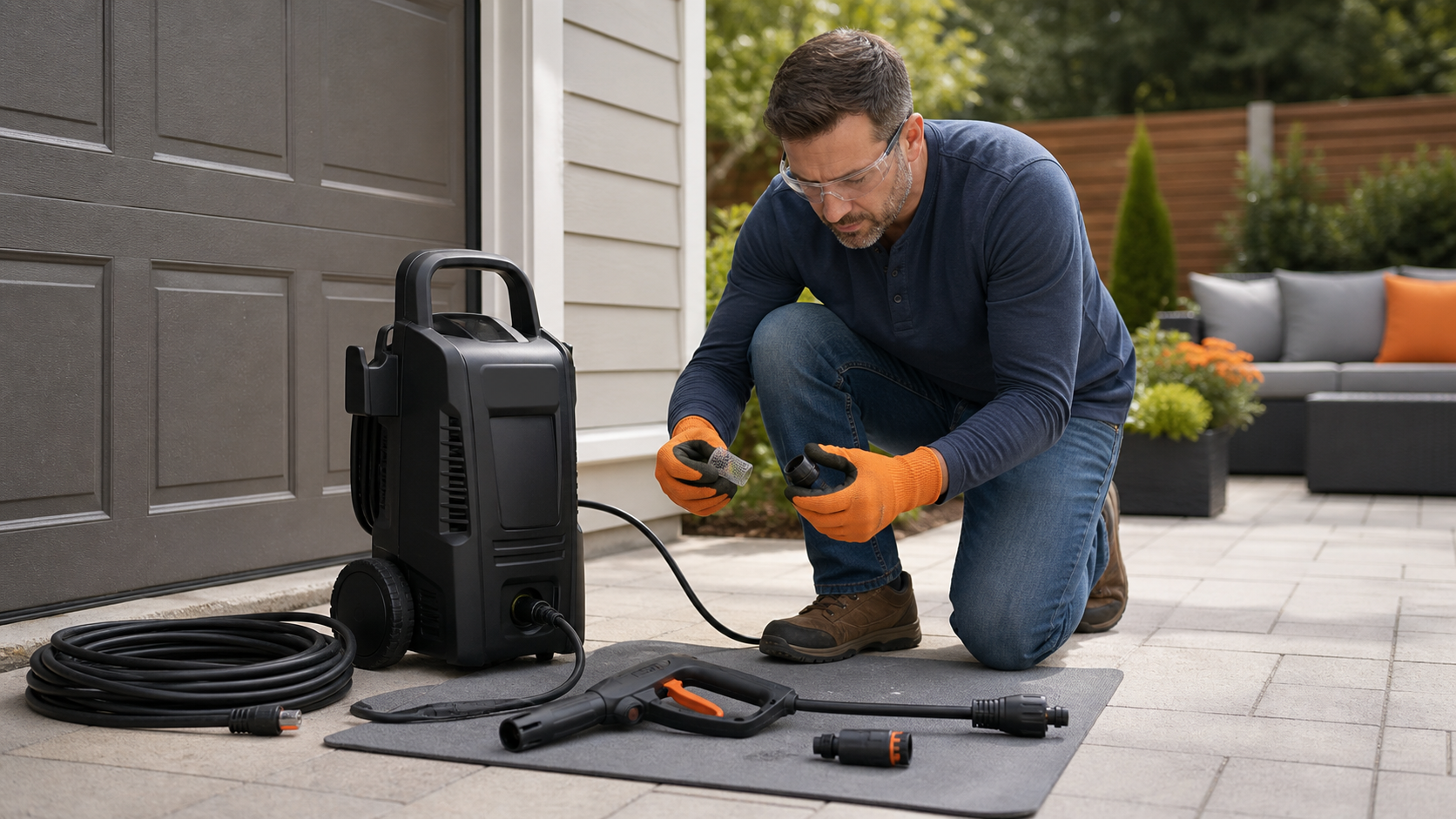
With water and power still off, remove the garden hose and inspect the washer’s inlet filter screen. Rinse away debris and reinstall the screen without tearing or omitting it. Replace a damaged screen with the model-approved part.
Purge trapped air with the machine off
Reconnect the garden hose, open the faucet fully, keep the motor or engine off, release the trigger lock, and hold the trigger until a steady, bubble-free stream exits. Then release and relock the trigger before starting the machine according to its manual.
Match and inspect the nozzle
Confirm that a high-pressure nozzle—not the low-pressure soap nozzle—is fully seated. With the machine off, depressurized, and locked, remove it and inspect for obstruction or damage. A partially clogged nozzle can make pump pressure pulsate.
Clean the nozzle only as directed
Use the supplied cleaning tool in the direction specified by the manufacturer, then rinse the nozzle before reinstalling it. Do not enlarge the opening with a drill bit, wire, or improvised pin. Tug the quick-connect nozzle after installation to confirm it is locked.
Test briefly from a safe position
Test on a durable surface at the widest safe distance recommended by the manual. Stop immediately for hose swelling, leaks, violent surging, smoke, burning odor, abnormal pump noise, or an electrical protection device that trips.
What the pressure pattern can tell you
- Weak and steady: check the selected nozzle, faucet opening, supply flow, hose restrictions, and inlet screen.
- Strong then weak in repeating pulses: purge air and inspect for a partially clogged nozzle, restricted supply, or air entering at a loose connection.
- Normal pressure with no detergent: confirm the model’s low-pressure soap nozzle and detergent setup rather than changing the pump.
- No flow with the machine off and trigger held: solve the water-supply blockage before starting the pump.
Use your manual’s water-supply requirement
Pressure-washer pumps depend on continuous inlet flow. Simpson’s general troubleshooting page gives one supply benchmark for its equipment, while other brands and models specify different requirements. The exact manual—not a universal online number—should govern your test.
A long, narrow, kinked, leaking, or partially blocked garden hose can starve a pump even when the faucet appears strong. On a well system, a qualified professional can verify delivered flow and pressure without risking the pump.
When the repair belongs in a service shop
- Pressure remains low or surges after supply, screen, air-purge, and nozzle checks.
- The pump leaks water or oil, chatters, seizes, or makes a new grinding sound.
- A high-pressure hose, gun, wand, quick-connect, or unloader component is damaged.
- An electric unit has a failed GFCI test, repeated trip, damaged cord, smoke, or burning odor.
- A gas unit has a fuel leak, hot-start issue, or engine problem beyond owner-manual maintenance.
Common questions
Why does my pressure washer pulse only with a high-pressure nozzle?
A partially restricted nozzle can make pump pressure cycle, but trapped air or inadequate inlet water can feel similar. Depressurize the machine, purge air, and clean or replace the nozzle only as the exact manual directs.
Can I run the pressure washer without a nozzle to test it?
Only follow a test explicitly allowed by the model manual. Never put a hand near the wand outlet, and always shut down and release pressure before changing any attachment.
Can a leaking high-pressure hose be repaired with tape?
No. A pinhole can create an injection-injury hazard. Stop using the machine and replace the complete hose with a manufacturer-approved hose of the correct pressure rating and fittings.
Sources and further reading
This article is original FixMate editorial content informed by the references below. Always follow manufacturer instructions and local code.