Quick answer
Turn the pool pump off at its controls and disconnect power at the breaker before opening anything. If the filter or system may be pressurized, open the manual air-relief valve while standing clear and wait until the pressure gauge reads zero. Confirm the pool water is high enough for the skimmer, empty the skimmer and pump baskets, inspect and reseat the pump-lid O-ring, open the needed suction and return valves, and prime only as the exact pump manual directs. Never run a pump dry. Call a licensed pool professional or electrician for a persistent suction leak, clogged impeller, filter-clamp problem, leaking shaft seal, motor fault, damaged wiring, or breaker that trips again.
Safety before you start
Pool circulation equipment combines electricity, water, suction, and potentially hazardous trapped pressure. Shut off and lock out power before opening a pump lid or touching equipment. Stand clear of the filter, open its manual air-relief valve, and wait for the gauge to reach zero before service. Never loosen a filter clamp, valve, union, drain plug, or lid while the system is running or pressurized. Do not run the pump dry, reach into an impeller, or attempt wiring, bonding, motor, seal, or pressure-vessel repairs yourself.
What you need
- Owner’s manuals for the exact pump and filter
- Safety glasses and non-slip footwear
- Pool skimmer net
- Garden hose for model-approved priming
- Clean lint-free cloth
- Manufacturer-approved O-ring lubricant if the manual specifies it
- Replacement lid O-ring matched to the exact pump model if damaged
Step-by-step
Stop the pump before it runs dry
Switch the pump off immediately if the strainer pot stays empty, flow disappears, or the pump sounds different. Running without water can damage seals and the pump. Do not repeatedly cycle it in hopes that prime will return.
Disconnect power and relieve pressure
Turn off the pump’s identified breaker. Following the filter manual, stand clear and open the manual air-relief valve. Wait until water flow stops and the gauge reads zero. If pressure will not fall or the valve or gauge is damaged, stop and call a pool professional.
Check the pool water level
Make sure the water reaches the operating level specified for the skimmer. Water below the skimmer opening can pull air into the suction line. Refill safely and correct an unexplained rapid water loss before restarting circulation.
Empty the skimmer baskets
Remove leaves, seed pods, hair, and other debris from each skimmer basket with the pump off. Confirm any skimmer weir moves freely and is not stuck closed. Reinstall the baskets in their correct orientation.
Clean the pump strainer basket
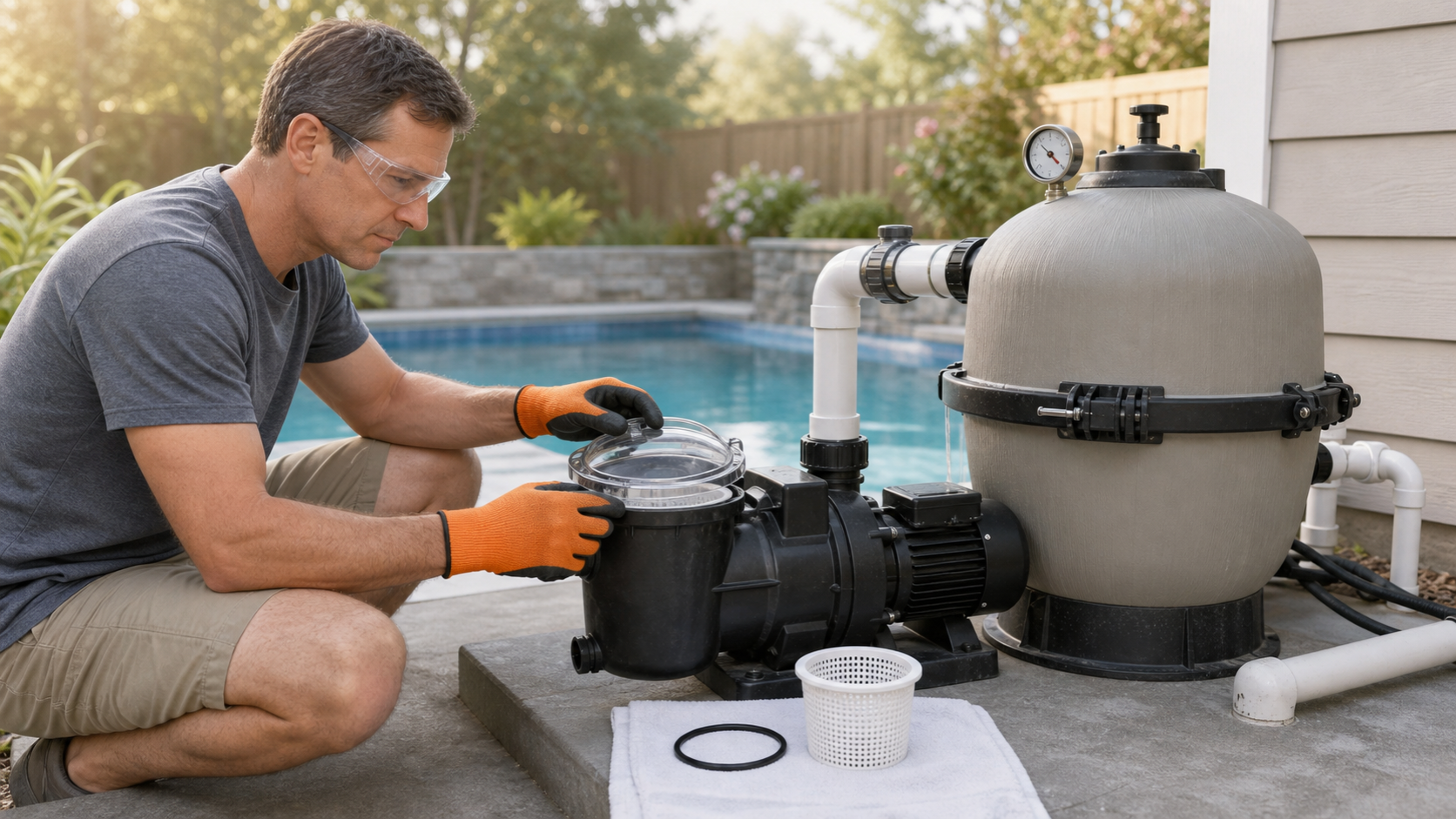
Only after power is off and pressure is zero, open the pump lid according to its manual. Lift out and clean the basket. Do not reach through the basket opening toward the impeller; an internal obstruction is a professional-service threshold.
Inspect the lid and O-ring
Clean the lid’s sealing surfaces and inspect the O-ring for cuts, flattening, swelling, grit, or displacement. Reinstall it exactly as the manual shows, using only manufacturer-approved lubricant if specified. Replace a damaged O-ring with the exact model-compatible part.
Confirm the required valves are open
Compare valve positions with the system’s normal operating setup and the equipment manual. Open the necessary suction and return paths; do not force a stuck valve or change an unfamiliar multiport valve under pressure. Photograph positions before moving anything.
Prime the pump by its manual
Fill the strainer pot with water if the model requires it, seat and secure the lid, and follow the pump and filter startup sequence. Keep the manual air relief open only as directed, stand clear, and close it when a steady stream appears. Stop if prime does not establish within the manual’s limit.
Watch pressure and flow during restart
From a safe distance, check for a stable pump basket, normal return flow, and a pressure-gauge reading consistent with the system’s clean baseline. Shut off immediately for leaks, persistent bubbles, abnormal noise, rapidly rising pressure, or no solid water stream.
Common reasons a pool pump loses prime
- Pool water below the skimmer opening allows the suction line to draw air.
- A clogged skimmer or pump basket restricts flow into the pump.
- An empty strainer pot prevents the model’s required startup prime.
- A loose lid, dirty sealing surface, or damaged lid O-ring admits air on the suction side.
- A closed valve or suction-line restriction blocks the intended circulation path.
- A leak in suction piping or a clogged impeller needs professional diagnosis if external checks do not isolate it.
Separate low flow from high filter pressure
Pentair’s OptiFlo guide separates low flow with high filter pressure from low flow with low filter pressure. High pressure points toward a dirty filter or return-side restriction; low pressure can accompany clogged baskets, a suction restriction, or air entering the suction line.
Do not use that distinction as permission to open a filter. Filter cleaning and valve changes must follow the exact equipment manual, with power off, the manual air relief open, and the gauge at zero. A clamp, tank, gauge, or relief-valve concern belongs with a qualified pool professional.
When to call a pool professional or electrician
- Prime fails again after water-level, basket, lid, O-ring, and valve checks.
- Air bubbles persist and an external suction-side leak is not obvious or safely accessible.
- The impeller appears obstructed, the shaft seal leaks, or the pump or motor grinds, hums, or overheats.
- The filter leaks, the pressure gauge or air-relief valve fails, or any clamp or tank part is damaged.
- A breaker or GFCI trips again, wiring is damaged, bonding is suspect, or water reaches electrical equipment.
Common questions
How long should I let a pool pump try to prime?
Use the limit in the exact pump manual; it is not universal. Stop immediately if the pot remains dry, the pump sounds abnormal, or a leak appears. Repeated dry starts can damage the pump.
Can I open the pump basket if the pressure gauge reads zero?
Only after the pump is off at the breaker, the manual air-relief valve is open, water flow has stopped, and the equipment manual’s shutdown steps are complete. A zero gauge alone is not a complete lockout procedure.
Do bubbles under the pump lid prove the lid O-ring is bad?
No. A dirty, displaced, or damaged lid seal can admit air, but low water, a skimmer issue, loose suction fitting, closed valve, or suction-line leak can produce similar symptoms. Start with visible, power-off checks and call a professional if air persists.
Sources and further reading
This article is original FixMate editorial content informed by the references below. Always follow manufacturer instructions and local code.