Quick answer
LG says OE means the washer could not drain the wash water. Turn the washer off and unplug it, then check the visible drain hose for a kink or compression. On LG front-load washers and combo units with a lower service cover, drain residual water into a shallow pan before removing and cleaning the pump filter. LG says top-load washers do not have this user-accessible drain pump filter. Reassemble the cap and filter fully, run a model-appropriate spin or rinse-and-spin test, and request service if OE returns, the pump is silent or unusually loud, water leaks from the cabinet, or the breaker trips.
Safety before you start
Water trapped after a hot cycle can cause burns, and spilled water can create shock and slip hazards. Cancel the cycle, unplug the washer, and let hot water cool before opening any residual drain hose or filter. Never pull a washer over a wet floor, reach behind it while plugged in, open the outer cabinet, or touch a wet plug or receptacle. Call an electrician if the outlet became wet or the circuit will not stay reset.
What you need
- Owner’s manual for the exact LG model
- Shallow pan or low bucket
- Several absorbent towels
- Soft-bristle brush or sponge
- Flashlight
- Phone camera for the model label and any leak location
Step-by-step
Cancel the cycle and make the area safe
Turn the washer off, unplug it with dry hands, and keep people away from the wet floor. If water is hot, wait until it cools. Do not force the door open while the tub is full.
Inspect the external drain hose
Use a flashlight to look for a hose crushed between the washer and wall, a sharp kink, or a standpipe connection pushed out of position. Straighten only the accessible flexible hose without pulling the machine across water or disconnecting plumbing you cannot control.
Confirm whether your washer has a user-cleanable filter
LG says the lower drain pump filter is present on front-load washers and combo units, not top-load washers. Look for the small lower service cover shown in the exact owner’s manual. If there is no documented access door, do not remove a panel to search for one.
Drain residual water slowly
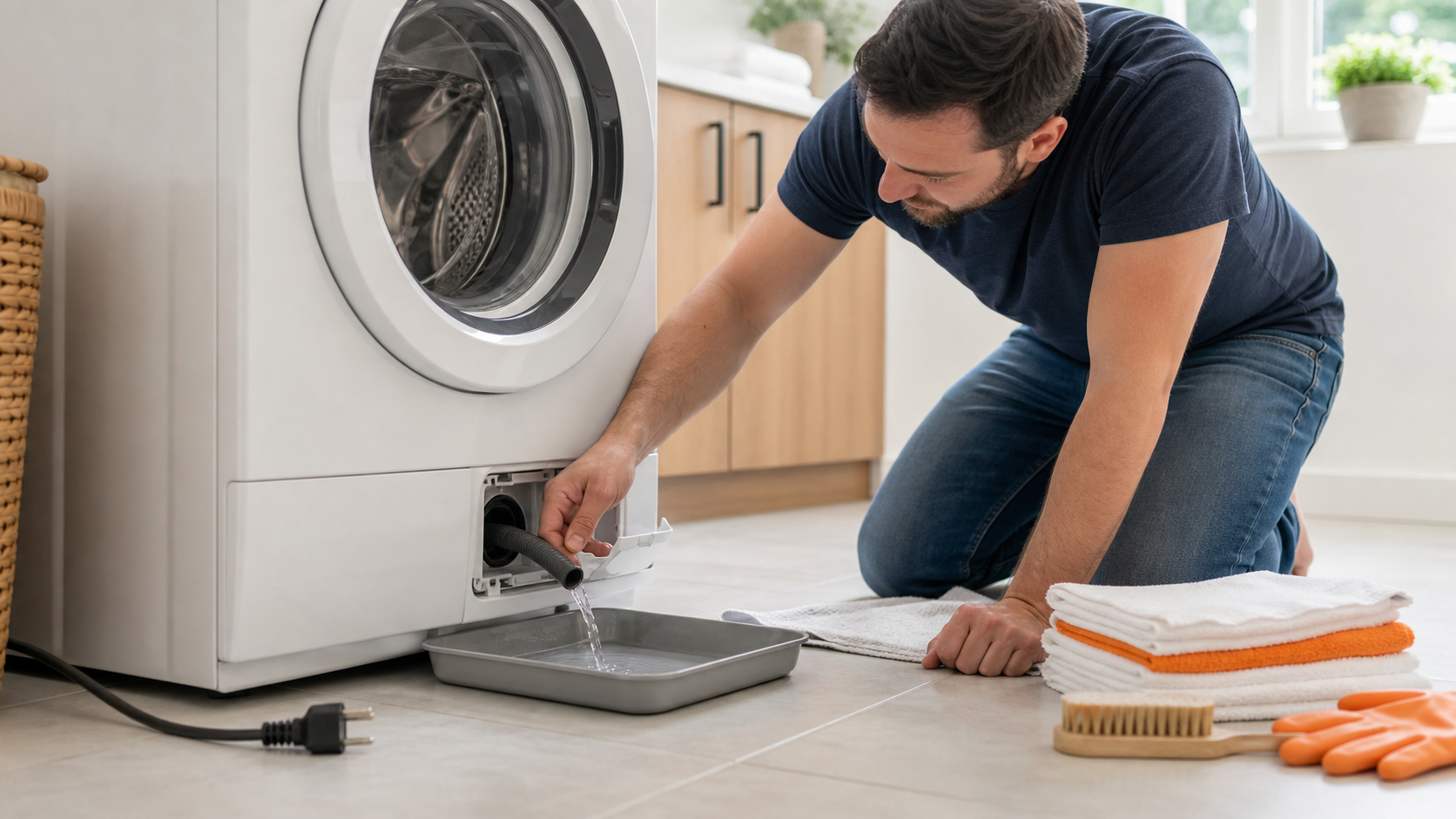
Place towels and a shallow pan at the service opening. Pull the small residual-water hose only as far as the manual shows, remove its cap, and drain in batches. Stop if water is hot, the hose is damaged, or the volume cannot be contained safely.
Clean and reinstall the pump filter
After the residual hose stops flowing, turn the filter counterclockwise and expect a little more water. Remove lint, coins, buttons, and debris; wash the filter by hand with warm water and a soft brush. Reinstall it clockwise until it stops, recap and secure the small hose, and close the service cover.
Run one controlled test
Dry the floor and your hands before reconnecting power. Follow the control-panel directions for the exact model and run an empty spin or rinse-and-spin test. Stay nearby to watch the filter cover, drain hose, and floor for leaks.
What the OE code does—and does not—tell you
LG defines OE as a water-outlet or no-drain condition. The code confirms the washer did not remove water as expected; it does not identify one failed part. Manufacturer guidance lists a kinked or compressed hose and a clogged pump filter among common causes.
Excess detergent can also create suds and air pockets that interfere with pumping. If the filter and hose are clear, use only the detergent type and amount specified by the manual rather than adding a drain chemical or household cleaner.
Front-load and top-load instructions are different
The user-cleanable pump-filter procedure applies to LG front-load washers and washer-dryer combo units that have the documented lower access cover. LG’s June 2026 support page specifically says the filter is not available on top-load washers.
For a top-loader, keep troubleshooting to the external hose, installation height, load balance, and model-specific support steps. Removing the rear, lower, or control cabinet to reach a pump is appliance repair, not routine owner maintenance.
Use sound as a stop signal, not a parts diagnosis
- A normal pump hum with no flow can accompany a restriction, but it does not prove the pump is healthy.
- Grinding, scraping, repeated clicking, or a hot electrical smell means stop the test and unplug the washer.
- Silence during the documented drain portion can involve controls, wiring, or a pump and belongs with service after simple checks.
- A tripped breaker or GFCI is an electrical warning; do not keep resetting it to finish the cycle.
When to stop and request appliance service
Request service when OE returns after one correctly reassembled filter-and-hose check, when the filter cannot be removed without force, or when the residual hose, cap, or filter seal is damaged. Also stop for water from underneath or inside the cabinet, a burned smell, abnormal noise, or any electrical trip.
Tell the technician the complete model number, when OE appears, whether the tub contains water, what the pump sounded like, and whether the external hose and documented filter were clear. That evidence is more useful than ordering a pump from an unverified parts list.
Common questions
What does OE mean on an LG washing machine?
LG defines OE as a drain or water-outlet error: the machine was unable to drain the wash water within the expected time.
Does an LG top-load washer have the same pump filter?
No. LG says the user-cleanable drain pump filter described in its support procedure is on front-load washers and combo units, not top-load washers.
Should I replace the drain pump if it hums?
No. Humming does not confirm a failed pump. Check only the documented hose and filter first, then use service if the code returns or flow does not recover.
Prefer to hire a professional?
Find a local appliance repair company
Browse business profiles with published services, coverage, and direct contact information in the FixMate directory.
Sources and further reading
This article is original FixMate editorial content informed by the references below. Always follow manufacturer instructions and local code.