Quick answer
If your garage door won't close during hot weather, first clean and realign the photoelectric safety sensors near the floor. Check that sunlight is not shining directly into the sensor lens. Inspect the tracks for metal expansion binding, apply silicone-based lubricant to the rollers and hinges, and confirm the opener motor has not tripped its thermal protection. If the door reverses immediately or the opener clicks but does not move, the springs or track may need a professional.
Safety before you start
Garage door springs are under extreme tension and can cause serious injury or death if they break or are adjusted improperly. Never attempt to adjust or remove torsion springs yourself. If the door is hard to lift by hand, falls quickly when released, or the spring has a visible gap, stop and call a professional garage door technician. Always disconnect power to the opener before working near the tracks or motor.
What you need
- Soft cloth or microfiber towel
- Level (small bubble level)
- Silicone-based garage door lubricant (not WD-40)
- Screwdriver set
- Flashlight
- Step ladder
Step-by-step
Clean the photoelectric sensor lenses
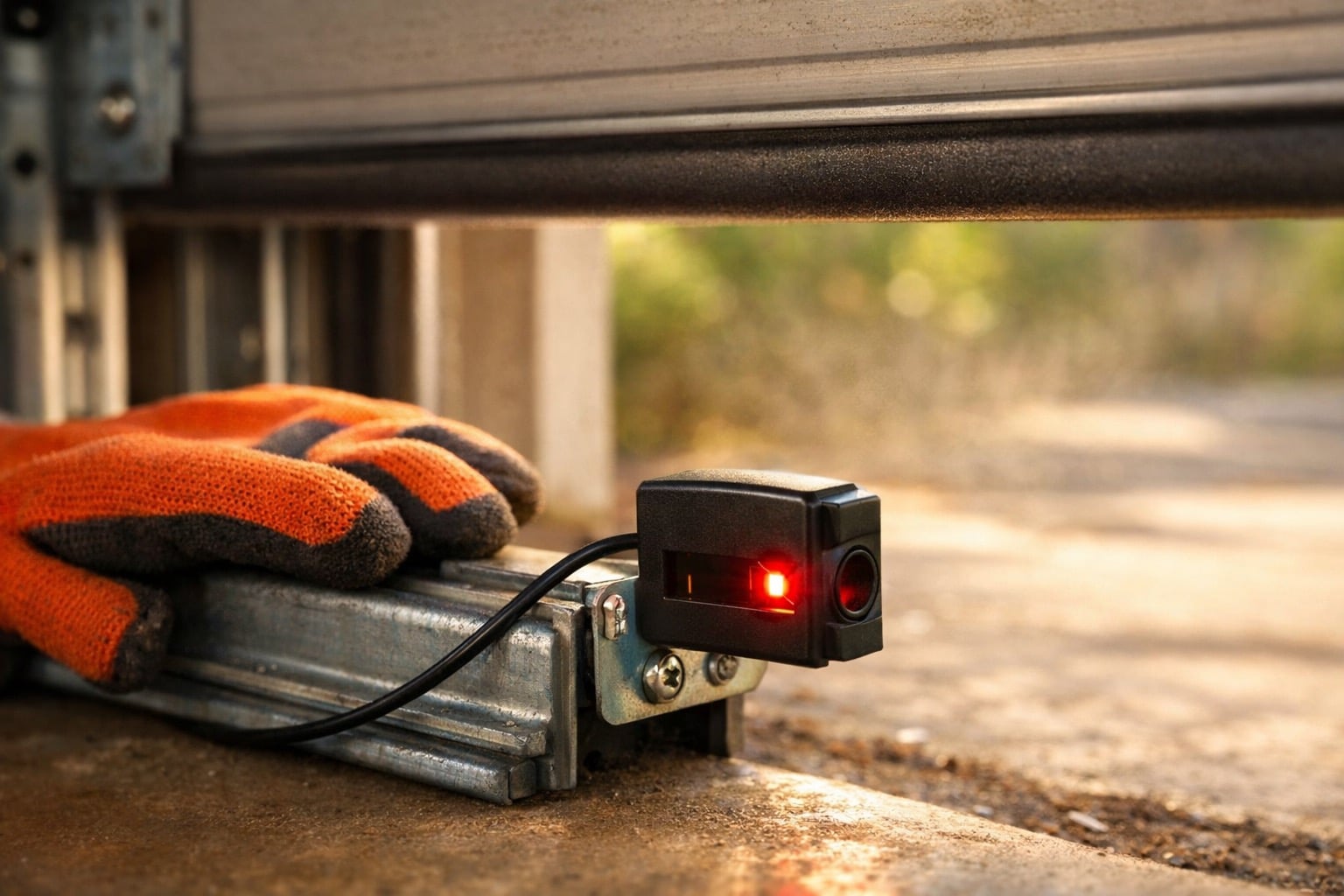
The safety sensors sit on each side of the door near the floor. Dust, cobwebs, or summer debris can block the infrared beam. Wipe both lenses gently with a soft cloth. Confirm the receiving sensor's LED indicator is steady, not blinking.
Realign the sensors
Both sensors must face each other at the same height. Use a level to confirm they are aligned. Heat expansion can shift a bracket a fraction of an inch, just enough to break the beam. Loosen the wing nut, adjust, and retighten. The receiving sensor LED should glow steadily when aligned.
Check for direct sunlight interference
Strong afternoon sun can flood the receiving sensor with infrared light and prevent it from detecting the beam from the sending unit. If the problem only happens at certain times of day, try shading the receiving sensor with a small piece of cardboard or PVC pipe as a sun shield.
Lubricate the rollers, hinges, and track
Heat can dry out the lubricant on metal rollers and hinges, causing binding. Apply a silicone-based garage door lubricant to the roller stems, hinge pivots, and the outside of the coil springs. Avoid WD-40—it is a solvent, not a long-term lubricant, and attracts dust.
Check the tracks for metal expansion
Steel tracks expand in heat. Look for rub marks or shiny spots on the rollers or track. If a roller is binding, loosen the track bolts slightly to give the roller room, then retighten so the track is parallel. Do not pry the track—severe misalignment or bent track needs a professional.
Test the opener motor for thermal cutoff
Garage door openers have a thermal protection switch that shuts the motor off when it overheats—common in hot garages. If the opener hums but does not move, or stops mid-cycle, let it cool for 20–30 minutes and try again. If it trips repeatedly, the motor may be aging or the door may be too heavy due to spring wear.
Match the symptom to the cause
- Door starts down then reverses immediately: sensor misalignment, blocked beam, or sunlight interference.
- Door won't start at all, opener clicks: thermal cutoff tripped or capacitor failing.
- Door moves a few inches then stops: track binding, dry rollers, or spring tension problem.
- Door closes partway, reverses: something in the travel path, or the down-travel force setting is too low.
- Door works fine in the morning but fails in afternoon: sunlight on the sensor or thermal cutoff in a hot garage.
Why heat specifically causes these problems
Steel tracks and hardware expand as temperature rises. On a 100°F day, a 16-foot steel track can grow nearly 1/8 inch longer and shift its position on the brackets, enough to rub on a roller that had 1/16 inch of clearance in spring.
Heat also dries out the light lubricant on rollers and hinges, so a door that moved smoothly in May can bind in July. Hot garages above 100°F can push the opener motor past its thermal limit, especially if the door is heavy due to worn springs.
Common mistakes to avoid
- Using WD-40 as a long-term lubricant—it dries out and attracts dust.
- Adjusting torsion springs without training—this is one of the most dangerous DIY tasks in a home.
- Over-tightening the up-travel force setting to compensate for binding instead of fixing the cause.
- Ignoring a door that reverses repeatedly—the safety system is doing its job; find the obstruction first.
- Skipping the simplest check: verify nothing is physically blocking the door path, including stored items.
When to call a garage door technician
- The door is hard to lift by hand or falls quickly when disconnected from the opener.
- A torsion spring has a visible gap or the door is noticeably heavier on one side.
- The track is bent, the door panels are misaligned, or rollers are jumping the track.
- The opener motor trips its thermal protection repeatedly even after the door is lubricated.
- The door reverses but the sensors are clean and aligned and nothing is in the path.
Common questions
Why does my garage door only fail in the afternoon?
Afternoon sun can flood the receiving photoelectric sensor with infrared light and break the beam, or the garage interior may reach temperatures that trip the opener motor's thermal protection. Try shading the sensor and improving garage ventilation.
Can I adjust the down-force setting myself?
Most openers have a force adjustment screw, but increasing force to overcome binding can damage the door or make it unsafe. Fix the underlying cause—dry rollers, misaligned track, or spring tension—before changing the force setting.
Is it safe to lubricate the garage door springs?
Yes. Applying a thin coat of silicone-based lubricant to coil springs helps them flex smoothly and resist rust. Never attempt to adjust, tighten, or remove torsion springs—leave that to a professional.
Sources and further reading
This article is original FixMate editorial content informed by the references below. Always follow manufacturer instructions and local code.